


AGV Batteries: Custom Battery Pack for Powering the Future of Automated Guided Vehicles
Automated Guided Vehicles (AGVs) have become integral components in modern industrial automation, offering unmatched efficiency and precision in handling materials. At the heart of these vehicles lies a crucial element — AGV batteries.
Understanding the role, types, and advancements in AGV battery technology is essential for optimizing operational efficiency and ensuring the seamless integration of AGVs into industrial processes.
 The Challenge:
A premier American logistics AGV manufacturer required a power solution that could support increased automation levels. Their existing systems were hindered by long charging cycles and bulky battery packs that limited the AGV’s payload capacity.
Our Solution:
Long Sing’s engineering team developed a bespoke LiFePO4 48V 80Ah Battery Pack. Unlike off-the-shelf modules, this system was built from the ground up:
The Challenge:
A premier American logistics AGV manufacturer required a power solution that could support increased automation levels. Their existing systems were hindered by long charging cycles and bulky battery packs that limited the AGV’s payload capacity.
Our Solution:
Long Sing’s engineering team developed a bespoke LiFePO4 48V 80Ah Battery Pack. Unlike off-the-shelf modules, this system was built from the ground up:

The Role of AGV Batteries
AGVs are employed in a variety of settings, from warehouses and manufacturing plants to distribution centers. They perform tasks such as transporting goods, assembling products, and managing inventory. To perform these tasks effectively, AGVs rely on robust and reliable power sources. AGV batteries supply the energy required for movement, navigation, and communication with central systems. The efficiency and longevity of an AGV largely depend on the quality and capability of its battery. As AGVs are often expected to operate continuously or for extended periods, having a battery that can provide sustained power and quick recharging is vital. This ensures that downtime is minimized and productivity is maximized.Types of AGV Batteries
Several types of batteries are used in AGVs, each with its own advantages and disadvantages. The choice of battery depends on factors such as the specific application, operating environment, and budget.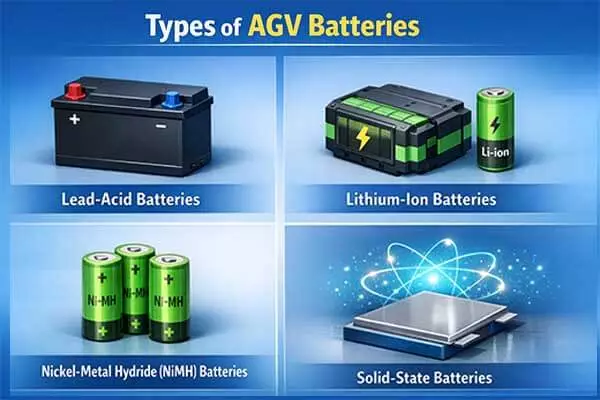
- Lead-Acid Batteries : These are the most traditional type of batteries used in AGVs. They are reliable and cost-effective but have limitations in terms of energy density and weight. Lead-acid batteries require regular maintenance, including water refilling and equalization charging, which can lead to increased downtime.
- Lithium-Ion Batteries : Increasingly popular in modern AGVs, lithium-ion batteries offer higher energy density, longer life cycles, and faster charging times compared to lead-acid batteries. They are maintenance-free and can endure more charge-discharge cycles, making them ideal for environments that require high efficiency and minimal downtime.
- Nickel-Metal Hydride (NiMH) Batteries : These batteries provide a balance between cost and performance. They offer better energy density than lead-acid batteries and are relatively maintenance-free. However, they are generally outperformed by lithium-ion batteries in terms of longevity and efficiency.
- Solid-State Batteries : An emerging technology, solid-state batteries promise even higher energy densities and improved safety features compared to lithium-ion batteries. While still in the development and testing phase for widespread industrial use, solid-state batteries could revolutionize AGV power systems in the future.
Rigorous Testing for Industrial Reliability
To ensure a “set and forget” experience, AGV batteries must undergo:- Vibration & Impact Stress: Simulating years of travel over uneven warehouse floors and expansion joints.
- Environmental Chamber Testing: Ensuring the battery performs in both cold-chain storage (-20℃) and high-heat manufacturing zones.
- BMS Logic Validation: Testing the State of Charge (SOC) accuracy to ensure an AGV never “dies” in the middle of a high-traffic aisle.
Advancements in AGV Battery Technology
Recent advancements in battery technology have significantly impacted the performance and efficiency of AGVs. Innovations focus on enhancing energy density, reducing charging times, and prolonging battery life.- Fast Charging Solutions : Modern battery management systems (BMS) have enabled fast charging capabilities, reducing downtime and allowing AGVs to be operational for longer periods. This is crucial in industries with 24/7 operations, where every minute of downtime can translate to significant losses.
- Wireless Charging : Wireless or inductive charging systems represent a breakthrough, offering seamless energy transfer without the need for physical connections. AGVs can charge during brief stops at designated points, ensuring they maintain optimal power levels without interrupting their tasks.
- Battery Management Systems : BMS technology has evolved to include features such as real-time monitoring, predictive maintenance, and adaptive charging. These systems ensure that batteries are used optimally, extending their lifespan and improving overall AGV performance.
- Sustainability and Recycling : As industries become more environmentally conscious, the focus has shifted toward developing sustainable battery technologies. This includes creating batteries with recyclable materials and implementing recycling programs to minimize environmental impact.
Choosing the Right Battery for Your AGV
Selecting the appropriate battery for an AGV requires careful consideration of several factors:- Operational Requirements : Assess the AGV’s energy needs based on its tasks, load capacity, and operational hours. This will help determine the type and size of the battery required.
- Environmental Conditions : Consider the operating environment, such as temperature extremes and humidity levels, which can affect battery performance and lifespan.
- Budget Constraints : While lithium-ion batteries offer numerous benefits, they come at a higher initial cost. Weigh the long-term cost savings from reduced maintenance and longer life against the upfront investment.
- Future Scalability : As technology evolves, ensure that the chosen battery system can be easily upgraded or replaced to accommodate advancements without significant disruption.
Powering the Future of Logistics: Custom Solutions for High-Stakes Automation
In the world of autonomous logistics, a battery is more than just a component—it is the heartbeat of the supply chain. At Long Sing Technology, we leverage decades of electrochemical expertise to solve the most demanding integration challenges for AGV (Automated Guided Vehicle) manufacturers worldwide.Expertise in Motion: Custom Cell Engineering
General-purpose batteries often fail to meet the rigorous demands of modern “lights-out” warehouses. Our approach focuses on Custom Cell Synthesis, where we balance two critical, often competing factors:- Ultra-High Energy Density: Maximizing watt-hours per kilogram to extend AGV runtimes without increasing vehicle footprint.
- Rapid Charge Architecture: Engineering internal cell chemistry to support high-current “Opportunity Charging,” allowing AGVs to regain significant power during short idle periods.
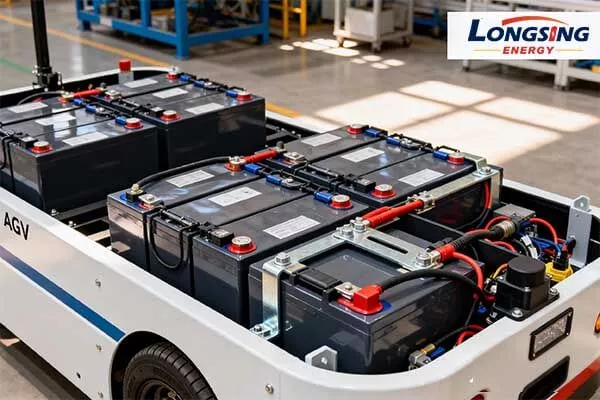
Case Study: Driving 15 Months of Continuous Uptime for a US AGV Leader
 The Challenge:
A premier American logistics AGV manufacturer required a power solution that could support increased automation levels. Their existing systems were hindered by long charging cycles and bulky battery packs that limited the AGV’s payload capacity.
Our Solution:
Long Sing’s engineering team developed a bespoke LiFePO4 48V 80Ah Battery Pack. Unlike off-the-shelf modules, this system was built from the ground up:
The Challenge:
A premier American logistics AGV manufacturer required a power solution that could support increased automation levels. Their existing systems were hindered by long charging cycles and bulky battery packs that limited the AGV’s payload capacity.
Our Solution:
Long Sing’s engineering team developed a bespoke LiFePO4 48V 80Ah Battery Pack. Unlike off-the-shelf modules, this system was built from the ground up:
- Custom Cells: We manufactured high-density cells specifically tuned for the client’s high-torque motor profiles.
- Integrated BMS: A proprietary Battery Management System was calibrated to communicate directly with the client’s AGV controller for precise reporting.
- Thermal Management: Optimized for the high-intensity duty cycles typical of 24/7 US logistics hubs.
- Operational Duration: This custom fleet has been in continuous operation for 15 months (since late 2024) without a single power-related failure.
- Enhanced Automation: The short charging window allowed the client to increase their fleet’s “Active Duty” ratio by 25%, directly boosting their facility’s throughput.
- Reliability: Even under heavy-load cycles, the 48V 80Ah packs have maintained consistent voltage stability, protecting sensitive onboard LiDAR and sensor arrays.
Conclusion
AGV batteries are more than just power sources; they are pivotal components that define the efficiency, reliability, and sustainability of automated guided vehicles. With advancements in battery technology, AGVs are poised to become even more indispensable in industrial automation. By understanding the nuances of AGV batteries and selecting the right technology, businesses can maximize their operational efficiency and maintain a competitive edge in the ever-evolving industrial landscape. Long Sing Technology Group (Hong Kong) Limited is an high-tech energy management company located in HKSTP Data Technology Hub, focusing on the research and development of Lithium Thionyl batteries, IoT series batteries, AGV batteries and Hybrid Pulse Capacitors. Our research activities include the research, development, testing and commercialization of high-performance batteries (capable of working in extreme temperatures, low self-discharge rate, long lifespan) and battery packs. Consult our experts on any requirements you may have on AGV batteries.
Automotive Electronic Power Supply System
The voltage and current fluctuation of automotive electronic equipment due to the change of load wou

Transport and Monitoring in Logistics System
With the development of logistics transportation industry, new requirements for technology are const
Smart Lock of Cabinet Management
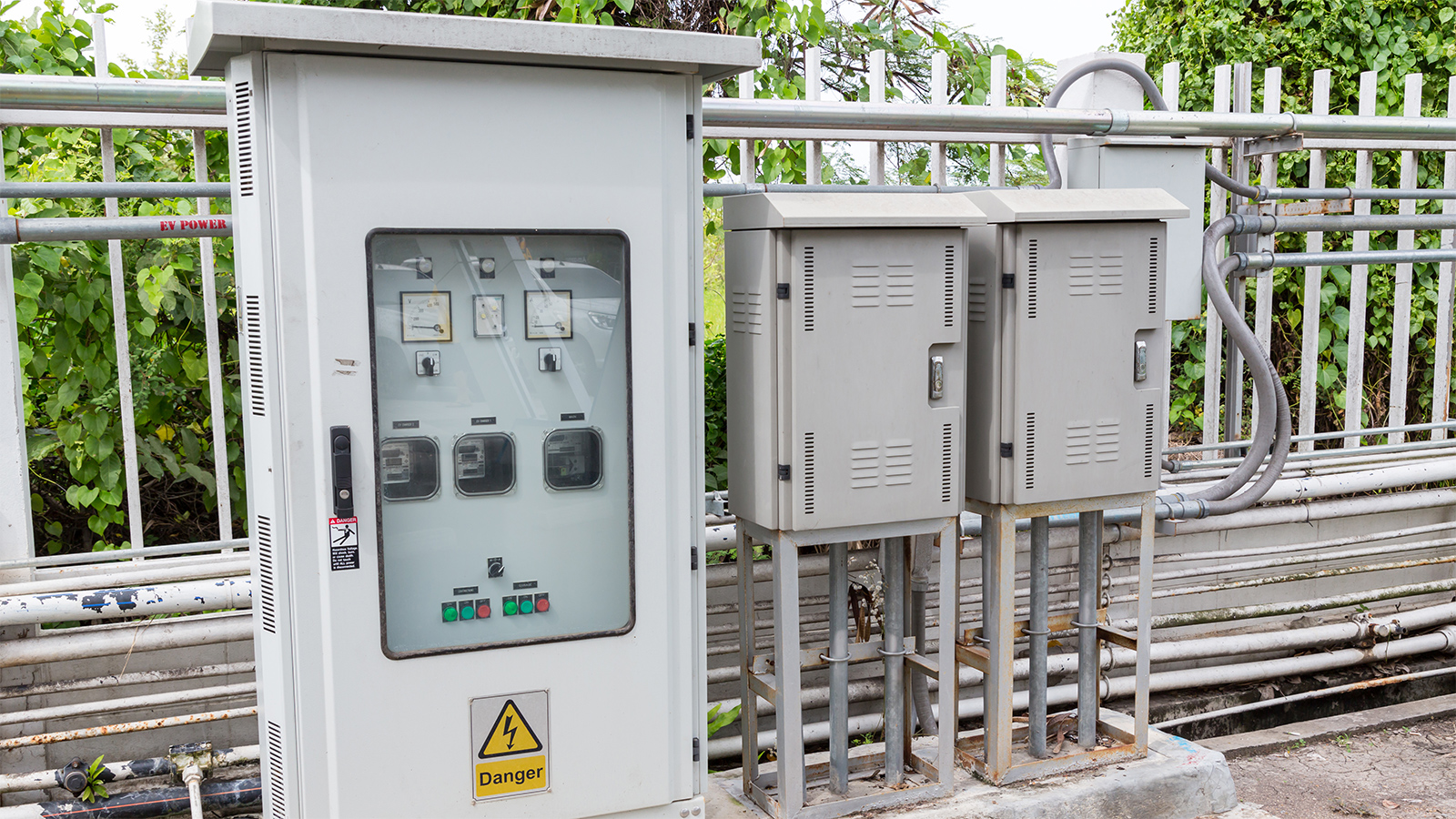
• In order to facilitate the management of outdoor base stations and cabinets that need maintainin