

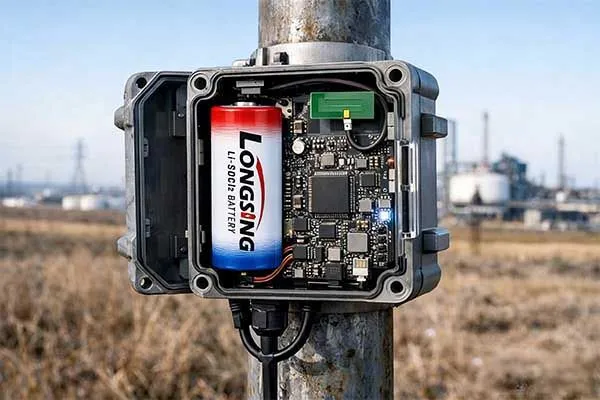
IoT Battery Optimization Strategies: Proven Hardware, Firmware & Connectivity Strategies for Industrial Deployments
Deploying industrial sensors often leads to premature field failures due to unoptimized power profiles. High maintenance costs and data loss create significant operational bottlenecks. By implementing advanced IoT battery optimization strategies, we ensure your devices survive a decade of service through precise hardware-firmware synchronization.
Optimizing industrial IoT batteries requires a multi-layered approach involving selecting high-energy chemistry like a lithium thionyl chloride battery IoT cell, minimizing quiescent current in firmware, and managing peak pulses using hybrid supercapacitors.
Key strategies include dynamic duty-cycle adjustment, LPWAN protocol tuning, and hardware-level isolation. Successful implementation results in extended replacement cycles and significantly lower total cost of ownership for utility metering and safety infrastructure.
Achieving a 10-year lifespan requires more than just a large cell; it demands an engineering-first perspective on power management. Let’s explore the technical framework for maximizing field endurance.
Table of Contents
- 1. What is IoT Battery Optimization Strategies
- 2. How Does the IoT Power Consumption Model Dictate Battery Life?
- 3. What Are the Core Optimization Strategies for Reliable Industrial Deployments?
- 4. How Can You Build an Accurate Battery Lifetime Calculation Model?
1. What is IoT Battery Optimization Strategies
For a battery manufacturer, IoT battery optimization strategies mean designing the cell, electronics, and connectivity stack together so the device survives the real field load, not just the lab test. The main commercial goal is lower service cost, fewer truck rolls, and better uptime for industrial deployments.
This is why IoT battery optimization strategies matter most where access is difficult and replacement cost is high.
IoT deployment challenges usually come from three places: pulse peaks, temperature swings, and communication overhead. A unit can look healthy on paper and still fail in the field.
Pulse Current Failure happens when battery capacity is enough but the device reboots under a radio burst or actuator pulse. Voltage Drop Failure appears when low temperature increases internal resistance and the device stops working even though the battery still has energy left. Communication Overhead Failure shows up when a tiny data packet consumes too much power because of wake time, retries, or modem initialization.
Long Sing Technology approaches these cases by matching chemistry, buffer support, and firmware timing so the customer gets predictable runtime and lower battery replacement cost. That is the practical side of IoT battery optimization strategies: reduce risk before mass deployment, then verify the final load profile under the same temperature and interval conditions used in the real project.
For utilities and metering, this also protects revenue and service continuity.
2. How Does the IoT Power Consumption Model Dictate Battery Life?
The IoT power consumption model is defined by the ratio between sleep-state leakage and active-state transmission pulses.
In industrial environments, the “average current” is often a misleading metric if the peak current during LPWAN[1] transmission exceeds the battery’s pulse capability, leading to voltage drops and premature shutdown.
A robust model must account for the IoT battery optimization strategies used to buffer these high-drain events while maintaining ultra-low quiescent current during the 99% of time the device spends in deep sleep.
The Myth of the Low-Power MCU
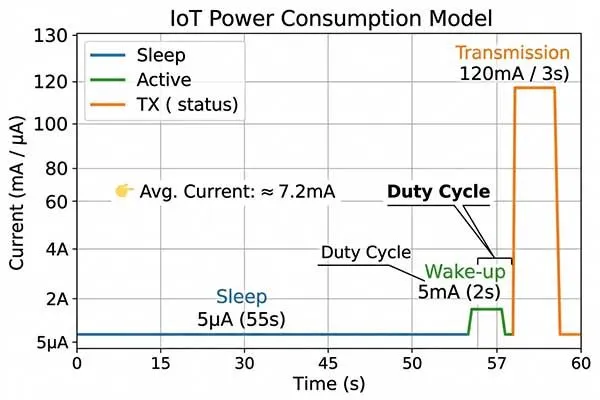
Many system designers fall into the trap of believing that a low power IoT design begins and ends with selecting an ultra-low-power microcontroller. While MCU sleep currents are critical, the hidden “battery killers” in industrial deployments are often the peripheral leakage and the impedance growth of the power source.
As a long life lithium primary battery manufacturer, we frequently observe that even an MCU drawing only 2 μA can be undermined by a poorly designed LDO or a sensor that remains powered during sleep cycles. To achieve true battery life extension IoT, engineers must adopt a holistic view of the power rail.
| Component State | Typical Current Draw | Impact on Strategy |
|---|---|---|
| Deep Sleep | 1.5 μA – 5 μA | Determines the baseline “floor” of battery life. |
| Sensor Sampling | 500 μA – 5 mA | Requires fast wake-up and immediate return to sleep. |
| LPWAN TX Pulse | 50 mA – 150 mA | Most critical for IoT battery selection and chemistry choice. |
| Flash Writing | 10 mA – 20 mA | Adds cumulative energy debt that must be modeled. |
We recommend using high-resolution power analyzers (like the Joulescope or Keithley 2281S) to map the device’s current profile across different temperatures. This testing method reveals the “current-voltage” (I-V) characteristics that simple multimeters miss.
By analyzing these profiles, we can implement an industrial IoT battery solution that pairs a high-capacity Li-SOCl2 cell with a Hybrid Pulse Capacitor (HPC) to handle the 150 mA peaks of NB-IoT or LoRaWAN without stressing the main cell.
3. What Are the Core Optimization Strategies for Reliable Industrial Deployments?
Effective IoT battery optimization strategies focus on the coupling between the power source and the communication hardware. For industrial deployments, this involves LPWAN battery optimization where the firmware dynamically adjusts transmission power based on signal quality (RSSI).
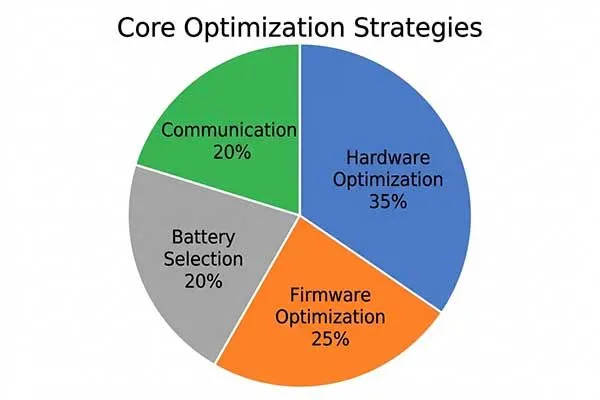 Furthermore, hardware strategies like using low-leakage MOSFETs for power gating and selecting a UL certified lithium primary battery factory ensure that the energy stored is actually available for use over the device’s intended 15-year lifespan.
Hardware-Level Optimization
Hardware efficiency is the bedrock of longevity. Selection focuses on Ultra-Low-Power (ULP) microcontrollers that offer deep-sleep modes with current draws in the nano-ampere range. Engineers must implement efficient power management ICs (PMICs) and high-quality Low-Dropout regulators (LDOs) to minimize quiescent current loss.
Additionally, choosing batteries with low self-discharge rates, such as Lithium Thionyl Chloride (LiSOCl2), ensures energy is preserved during long periods of inactivity common in industrial sensing environments.
Communication Optimization
Communication is typically the most energy-intensive task for an IoT device. Optimization involves shifting from high-bandwidth protocols to Low-Power Wide-Area Networks (LPWANs) like LoRaWAN, NB-IoT, or Sigfox. Strategies include minimizing “on-air” time through data compression and reducing the frequency of transmissions.
Implementing Adaptive Data Rating (ADR) allows devices to dynamically adjust transmission power and data rates based on signal strength, ensuring the radio only consumes the exact amount of energy required to reach the gateway.
Firmware Optimization
Firmware acts as the intelligent conductor of energy usage. Effective strategies center on Duty Cycling, where the device remains in a “Deep Sleep” state for 99% of its life, waking up only briefly to sample data. Developers should use interrupt-driven programming instead of “polling” to prevent the CPU from idling in a high-power state.
Furthermore, implementing edge computing—processing data locally to determine if an anomaly exists before triggering a radio transmission—drastically reduces the energy-expensive overhead of constant connectivity.
Battery Selection Strategy
| Feature | Li-SOCl2 (Primary) | Li-ion (Secondary) | Hybrid Pulse Capacitor (HPC/SPC) |
|---|---|---|---|
| Typical Use Case | Long-term sensing (10+ years), low power. | Energy harvesting, high-frequency reporting. | High-pulse support for primary batteries. |
| Energy Density | Very High (up to 650 Wh/kg) | Moderate (up to 250 Wh/kg) | Low (serves as a buffer) |
| Self-Discharge | <1% per year | 2% – 5% per month | N/A (Storage component) |
| Operating Temp | Extreme (-55°C to +85°C) | Moderate (-20°C to +60°C) | Wide (-40°C to +85°C) |
| Cycle Life | Single use (Primary) | 500 – 1000+ cycles | 100,000+ cycles |
| Peak Current | Low (Limited by passivation) | High | Very High |
| Maintenance | Zero (Deploy and replace) | Requires charging circuitry | Maintenance-free addon |
Case Study: German Smart Metering Deployment
In a recent collaboration with a German smart metering manufacturer, we addressed a critical design flaw. Their initial system used a standard D-size Li-SOCl2 cell, assuming that a massive capacity would compensate for high peak currents. However, they ignored the “Passivation Effect[2]” and the voltage dip caused by high-frequency pulses in cold winters. The system suffered from a 25% failure rate within two years.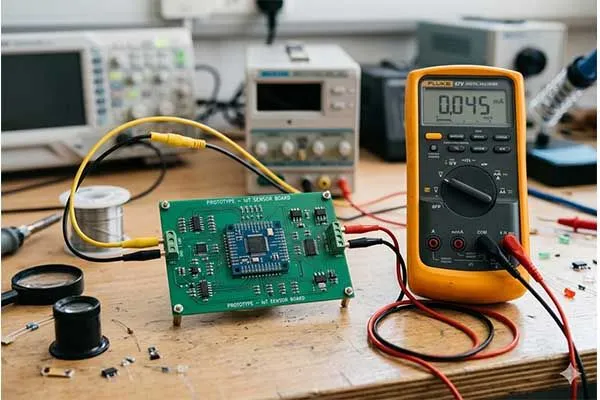
We recommended a transition to our IoT battery pack design, utilizing an ER14505 (AA) cell coupled with an HPC1520 hybrid supercapacitor. This industrial IoT battery solution allowed the capacitor to provide the necessary 100 mA burst for the M-Bus transmission[3], while the ER14505 provided a steady, low-current trickle to recharge the HPC.
The Implementation & ROI:
- Problem: Excessive peak current causing voltage drop below MCU cutoff (2.2V).
- Strategy: Integration of a custom BMS to manage the HPC recharge rate, preventing the main battery from ever seeing a pulse > 10 mA.
- Result: The battery replacement frequency dropped from every 2.5 years to an estimated 12 years.
- ROI: Operational maintenance costs were slashed by 65% due to reduced site visits in remote industrial zones.
| Parameter | Original Design (D-size) | Optimized Design (AA + HPC) | Improvement |
|---|---|---|---|
| Peak Current on Cell | 120 mA | < 8 mA | 93% Reduction |
| Operating Temp Range | -20°C to +40°C | -40°C to +85°C | Significant Extension |
| Dynamic Power Savings | 0% | 40% (via Firmware) | 40% Efficiency Gain |
| Estimated Field Life | 2.8 Years | 13.5 Years | ~4.8x Increase |
By focusing on low power IoT design, specifically the hardware-level peak shaving, the client achieved a more robust system that maintained network security during power-intensive encryption tasks without sacrificing longevity.
4. How Can You Build an Accurate Battery Lifetime Calculation Model?
A reliable battery life calculation must move beyond the simple “Capacity / Average Current” formula. In the real world, optimizing battery usage requires accounting for self-discharge (typically 1-2% per year for Li-SOCl2), temperature-dependent capacity loss, and the “voltage delay” caused by passivation.
To provide an accurate estimate, we use an advanced derivative of the Peukert equation[4], adapted for the non-linear discharge of primary lithium chemistries.
Engineering-Grade Life Estimation Formula
To calculate the expected life (L) in years, our chief engineer, Wilson Lu, employs the following formula:
| L = |
|
× |
|
where L is lifetime in years, C is nominal capacity in Ah, S is annual self-discharge rate, f(T) is temperature derating (0.85 at –40 °C for Li-SoCl₂), Iavg is microampere average from the power model, and D is duty-cycle multiplier[5].
Example: Standard Remote Utility Meter (Moderate Climate)
- Battery: Long Sing ER14505 Li-SoCl₂ (2.0 Ah nominal capacity)
- Hybrid supercapacitor: HPC1520 for pulse support
- Average current: 8 µA (includes MCU sleep + daily LoRaWAN transmission)
- Self-discharge rate (S): 1.5 % per year
- Temperature derating f(T): 0.95 (average 10–30 °C)
- Duty cycle multiplier (D): 1.08 (mild peak current impact)
Calculation:
| L = |
|
× |
|
≈ | 12.8 years |
Result: With proper IoT battery optimization strategies, this configuration delivers approximately 12.8 years of service life. The HPC1520 effectively buffers transmission peaks, keeping voltage stable and preventing premature capacity loss.
As a leading IoT battery supplier, Long Sing Technology provides the discharge curves and ESR (Equivalent Series Resistance) data required to populate this model. We emphasize that IoT battery selection should always include a safety margin of at least 20% to account for unpredictable network re-transmissions.
If your device is located in an area with poor signal, the battery life extension IoT strategy must include a firmware “back-off” algorithm to prevent the device from draining the battery while searching for a gateway.
Testing and Validation Logics
For rigorous engineering verification, we suggest a two-step testing protocol. First, use “Accelerated Aging” by storing cells at 70°C for 2 weeks to simulate one year of self-discharge. Second, implement a “Pulse Stress Test” where the cell is subjected to the maximum expected TX current at the lowest rated temperature (-40°C).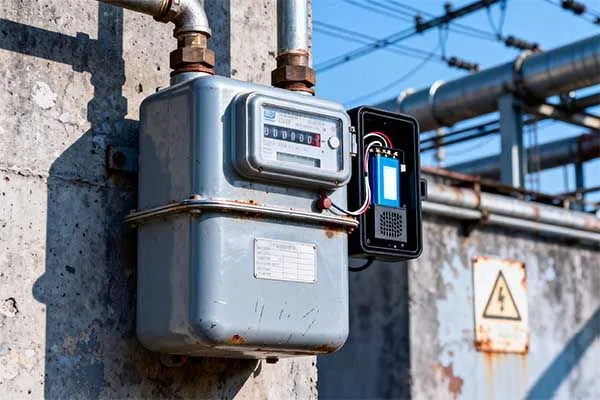
This ensures that your IoT battery optimization strategies hold up under the worst-case scenarios found in industrial and utility environments. Buying competitive price lithium primary batteries is only half the battle; ensuring they are integrated via a validated industrial IoT battery solution is what guarantees project success.
IoT Battery Optimization Real Industrial Use Cases
| Industry | Primary Use Case | Connectivity Choice | Power Strategy | Env. Challenges | Expected Lifespan |
|---|---|---|---|---|---|
| Asset Tracking | Geofencing & Location | LTE-M / NB-IoT | Li-SOCl2 + Hybrid Capacitor | High vibration, rapid temp shifts | 3 – 5 Years |
| Smart Agriculture | Soil & Weather Monitoring | LoRaWAN | Li-ion + Solar Harvesting | High UV, moisture, extreme heat | 5+ Years (Indefinite) |
| Industrial Sensors | Vibration & Pressure | WirelessHART / ISA100 | High-Cap Li-SOCl2 | Chemical exposure, shielding | 8 – 10 Years |
| Manufacturing | Predictive Maintenance | Private 5G / Wi-Fi 6 | AC Power w/ Li-ion Backup | High EMI (Electrical Noise) | N/A (Always on) |
| Logistics | Cold Chain Monitoring | BLE + NB-IoT | Low-Temp Li-SOCl2 | Sub-zero temperatures (-30°C) | 1 – 2 Years |
| Energy (Utilities) | Smart Metering | NB-IoT / Wi-SUN | High-Capacity Li-SOCl2 | Decades-long “Set & Forget” | 10 – 15+ Years |
Conclusion
Maximizing the lifespan of industrial devices requires a meticulous integration of chemistry and code. By applying rigorous IoT battery optimization strategies, such as the use of Li-SOCl2 + HPC combinations and precise power consumption modeling, manufacturers can achieve the decade-long reliability required for utility and safety sectors.
Whether you need an OEM lithium primary battery supplier for high-volume production or custom engineering support for an IoT battery pack design, focusing on the synergy between the battery and the communication protocol is the only way to reduce TCO. Let Long Sing Technology help you engineer a solution that lasts.
Frequent Asked Questions about IoT Battery Optimization Strategies
(Click to Unfold)
Q: What is IoT optimization?
A: It is the systematic refinement of hardware, firmware, and connectivity to maximize operational lifespan and reliability, crucial for Long Sing’s industrial Li-SOCl2 deployments.
Q: How to understand battery performance of IoT devices?
A: Analyze the discharge curve, pulse handling (using Hybrid Pulse Capacitors), and environmental impacts on voltage delay to ensure consistent power delivery.
Q: Why does transmission consume the most power in IoT?
A: RF transceivers require high peak currents for signal modulation and handshaking, significantly draining energy compared to low-power sleep modes.
Q: What’s the strategies to know the remaining battery life?
A: Utilize Coulomb counting for usage tracking and voltage-under-load monitoring to account for the flat discharge profile of lithium batteries.
Q: Is there any best practice for measurement current consumption?
A: Use specialized power profilers or shunt resistors with high-dynamic-range oscilloscopes to capture both micro-amp sleep currents and milli-amp transmission pulses.
Q: What are common techniques to reduce power consumption?
A: Implement deep-sleep cycles, optimize data packet frequency, and use Long Sing HPCs to buffer pulse loads, reducing battery internal stress.
Note:
[1]Find sources on LPWAN power strategies and how firmware adjustments can reduce energy drain.↪
[2]Learn how passivation causes voltage dips and how to mitigate with proper design.↪
[3]Investigate energy management during M-Bus transmissions to reduce peak currents.↪
[5]Learn how duty-cycle multipliers model device duty cycles for lifetime estimates.↪

Long Life Batteries: How to Validate Primary Lithium Battery Longevity
When your device depends on long life batteries, ensuring their actual lifespan is critical. Many en
10 Real-World Hybrid Supercapacitor Use Cases in 2026
Struggling with frequent battery replacements in remote industrial sites? Power failures cost time a

Looking for LS14500 equivalent? Reliable Power Supply on Lithium ER14505 Battery for OEMs
Lithium ER14505 battery specification ER14505 + HPC 1550 discharge pulse curve (the pulse capacity i