

IoT Power Supply Manufacturer Selection & Design : From Battery to AC/DC Solutions
Are your remote field devices suffering from unexpected shutdowns? Replacing depleted energy sources in hazardous or isolated locations drastically inflates operational costs. Partnering with a specialized IoT power supply manufacturer can engineer these failure points out of your deployment.
An IoT power supply manufacturer designs and produces optimized energy sources tailored for connected devices. Selecting the right partner involves evaluating their cell chemistry expertise, engineering support, and ability to meet strict industrial certifications.
A properly matched power system guarantees stable voltage during high-current transmission pulses, extending the lifespan of LPWAN sensors and edge gateways[1] while minimizing costly maintenance interventions.
Understanding the nuances of battery chemistry and system architecture is essential before finalizing your procurement strategy. Let’s delve into the core considerations.
Table of Contents
- What Constitutes a Reliable IoT Power Supply System?
- How Does IoT Power Architecture Function in Industrial Settings?
- Who Are the Leading IoT Power Supply Manufacturers in 2026?
- What Criteria Define the Best IoT Power Supply Manufacturer for Your Project?
- What Are the Core Engineering Challenges in Industrial IoT Power Design?
- How Do You Tailor an IoT Power Solution for Specific Applications?
What Constitutes a Reliable IoT Power Supply System?
A reliable system provides consistent voltage and sufficient capacity to handle both baseline sleep currents and peak transmission loads without voltage delays. It often combines high-energy-density primary cells with capacitors to mitigate internal resistance issues over time.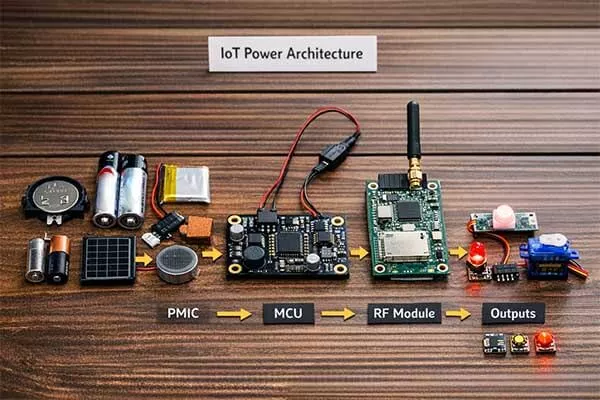
Resolving Silent Failures in Edge Gateways
When evaluating an IoT power supply manufacturer, one must look beyond theoretical datasheets. For instance, Long Sing Technology, established in 2010 in Shenzhen, recently collaborated with a Dutch Edge gateway manufacturer experiencing persistent “silent failures.”
For a Dutch edge gateway manufacturer, the engineering sequence should start with power-path visibility. Measure input sag at the connector, regulator output at the load, and MCU rail during radio bursts and flash writes.
In one representative validation example, the gateway reset 8 times in 200 burst cycles when input sag reached 9.2 V for 70 ms, while the MCU brownout threshold sat at 9.4 V. After adding a hold-up capacitor, a supervisor IC with tighter reset timing, and a layout cleanup around the return path, the failure count dropped to 0 in 200 cycles.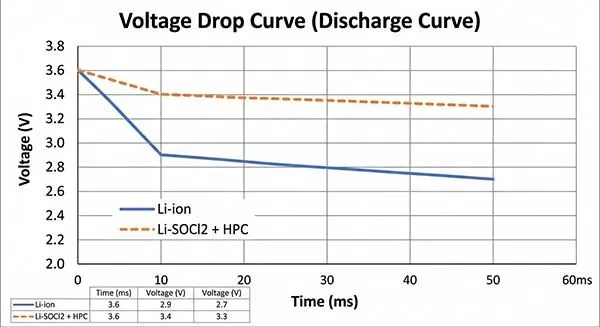
The next step is to replay EMI injection, cable-dip tests, and cold-start tests so the fix does not only work on one bench setup.
| Test Condition | Pure Li-SOCl2 Voltage Drop | Li-SOCl2 + HPC Voltage Drop |
|---|---|---|
| +20°C, 2A Pulse | 3.1V | 3.5V |
| -20°C, 2A Pulse | 2.1V (Gateway Reset) | 3.3V (Stable) |
This test data definitively proves that a hybridized IoT power solution[2] effectively buffers high-current demands, preventing MCU resets. Engineers must critically assess the pulse profile rather than just total capacity when selecting a low power IoT battery solution for LPWAN devices operating in unpredictable industrial conditions.
How Does IoT Power Architecture Function in Industrial Settings?
Industrial power architectures must isolate sensitive microcontrollers from electrical noise and voltage fluctuations. They typically utilize robust battery chemistries regulated by ultra-low quiescent current LDOs or buck-boost converters to ensure stable delivery across a wide temperature range.
Mitigating EMI and Voltage Fluctuation
The foundation of robust industrial IoT power supply design lies in anticipating extreme environmental stressors. A major challenge in utility metering and factory automation is Electromagnetic Interference (EMI)[3] and localized voltage fluctuation.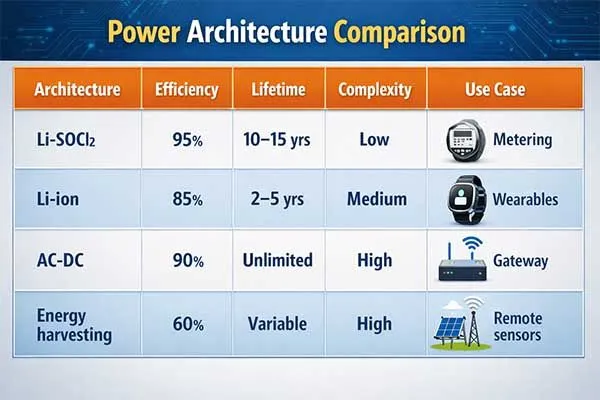
Unlike consumer electronics, industrial sensors sit near high-voltage motors and RF transmitters. If the power architecture lacks adequate decoupling or shielding, induced currents can trigger false wakes or corrupt microcontroller states.
As a dedicated OEM lithium primary battery supplier, we advocate for a highly decoupled power path. When you source from a specialized IoT power supply manufacturer, the architecture is evaluated holistically. For example, utilizing a Li-SOCl2 battery for IoT applications requires managing its inherent voltage delay phenomenon upon waking from long sleep states.
| Component | Function in Industrial Architecture | Vulnerability |
|---|---|---|
| Primary Cell | Bulk energy storage | Passivation, Temperature extremes |
| HPC/Capacitor | Pulse buffering | Leakage current over time |
| Voltage Regulator | Stable MCU supply | EMI susceptibility, Quiescent drain |
A critical engineering mindset dictates that placing a regulator directly next to a noisy RF antenna without proper PCB layout considerations[4] will compromise even the best energy source. You cannot fix bad board design with a bigger battery.
Who Are the Leading IoT Power Supply Manufacturers in 2026?
Leading manufacturers in 2026 specialize in tailored chemistries like Lithium Thionyl Chloride and customized pack assembly. They focus on minimizing internal impedance, offering comprehensive testing data, and providing robust supply chains for North American and European markets.
Evaluating Global Supply Chains and Expertise
The landscape of an IoT power supply manufacturer in 2026 is sharply divided between mass-market consumer battery producers and specialized industrial engineering firms. For high-reliability sectors, generic solutions fail to address OEM pain points such as long-term efficiency, hazardous materials certification, and 10-year lifecycle guarantees[5].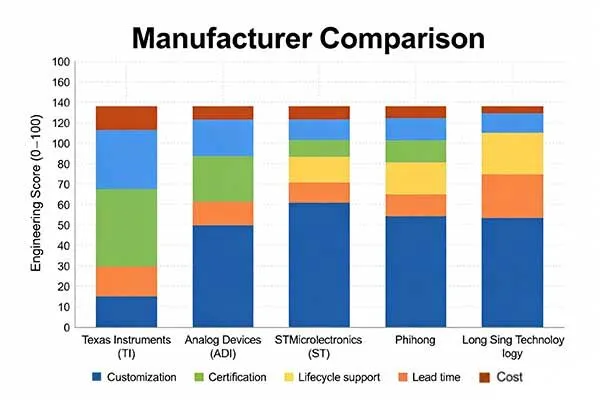
Buyers in Western Europe and North America increasingly rely on localized engineering support combined with Asian manufacturing hubs for reliable scale.
Top IoT Power Supply Manufacturers (2026)
| Manufacturer | Best known for | Why engineers shortlist it |
|---|---|---|
| RECOM | IoT AC/DC and DC/DC | Compact supplies, low standby power, wide input, noisy industrial environment support, certifications. |
| Infineon | Industrial SMPS ecosystem | Broad SMPS portfolio, reference designs, simulation tools, and small-form-factor power support. |
| TDK-Lambda | Industrial board-mount supplies | Real industrial IoT case support and board-mount options for faster integration. |
| Vicor | Modular edge power | High-density modular power for edge computing and demanding systems. |
| Texas Instruments | Low-power design blocks | Nano-power references and ultra-low-power design examples for battery-driven IoT. |
| Analog Devices | Low-EMI, battery optimization | Power management guidance, low-EMI switching concepts, and battery-efficiency articles. |
Long Sing Technology serves as a core energy component supplier. Partnering with a long life lithium primary battery manufacturer ensures that the electrochemical formulation is tuned for decades-long standby. A true tier-one IoT power supply manufacturer doesn’t just ship cells; they ship validated engineering confidence tailored for specific wireless protocols.
| Manufacturer Type | Key Advantages | Best Suited For |
|---|---|---|
| Commodity Cell Producer | Low upfront cost, high volume availability | Consumer electronics, toys |
| Specialized IoT Power Manufacturer | Customization, pulse testing, high-reliability | Utility meters, LPWAN sensors |
Therefore, evaluating a vendor must extend beyond cost per milliamp-hour. It demands a rigorous audit of their factory floor testing protocols, specifically regarding accelerated aging and passivation recovery processes for industrial deployments.
What Criteria Define the Best IoT Power Supply Manufacturer for Your Project?
The best manufacturer offers extensive customization, rigorous quality control, and deep engineering collaboration. Key criteria include ISO certifications, proven experience with your specific wireless protocols, and the ability to simulate your exact load profiles in their testing facilities.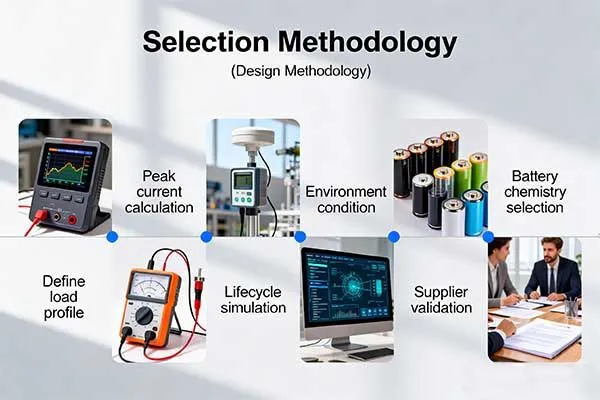
Solving Early Battery Depletion at the Source
Choosing the right partner means finding a UL certified lithium primary battery factory that actively assists in system-level troubleshooting. Consider the widespread OEM pain point of early battery depletion.
Often, this isn’t a battery defect, but a system integration error. When tackling IoT device power consumption optimization, our team frequently encounters firmware that fails to enter true deep sleep.
To resolve this comprehensively, we collaborate on duty cycle redesign. For a smart water meter client, we analyzed their micro-ampere sleep state. By optimizing the RTC wake timer and adjusting the LoRa transmission duty cycle[6] from every 4 hours to every 12 hours, paired with a customized energy pack from an expert IoT power supply manufacturer, we extended the operational life significantly.
| Optimization Phase | Action Taken | Impact on Lifespan |
|---|---|---|
| Firmware Audit | Deep sleep mode enforced (2µA draw) | +15% Operational Life |
| Duty Cycle Redesign | Reduced TX frequency, batched payloads | +25% Operational Life |
This dialectical approach—treating the battery and the device as a single symbiotic system—is what separates a basic component vendor from a strategic manufacturing partner invested in your product’s lifecycle.
What Are the Core Engineering Challenges in Industrial IoT Power Design?
Core challenges include managing extreme temperature fluctuations, overcoming passivation in lithium primary cells, and ensuring intrinsic safety in hazardous environments. Engineers must also balance physical size constraints with the high energy density required for decade-long operations.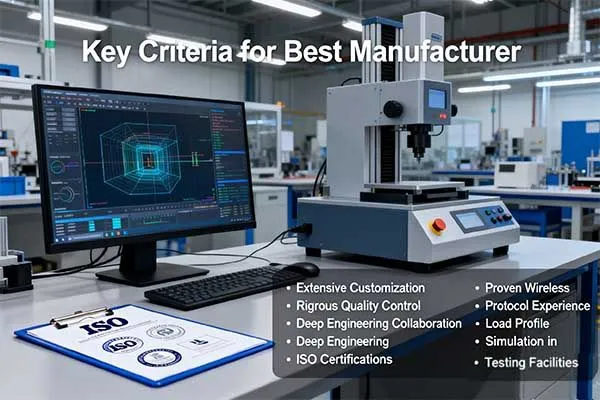
Balancing Cost, Lifespan, and Reliability
Deploying remote sensors introduces severe environmental challenges. A primary engineering hurdle is maintaining consistent performance when temperatures plummet to -40°C or soar to +85°C. In such extremes, internal cell impedance spikes, threatening the viability of the entire IoT power solution.
Furthermore, OEMs face constant pressure to reduce BOM costs without sacrificing the promised 10-to-15-year lifecycle.
Procuring competitive price lithium primary batteries shouldn’t mean compromising on quality. A reputable IoT power supply manufacturer employs advanced sealing techniques, such as laser-welded glass-to-metal seals, to prevent electrolyte leakage under intense thermal shock.
| Application | Best-fit power path | Main design risk |
|---|---|---|
| Utility metering | Li-SOCl2 + pulse support | Lifetime variance |
| Industrial LPWAN sensor | Low-leakage battery + duty-cycle control | Burst mismatch |
| Edge gateway | AC/DC + DC/DC + supervision | EMI and brownout |
| Safety / healthcare | Conservative power tree + compliance focus | False reset or standby loss |
Critically evaluating these failure modes highlights why a bespoke approach is mandatory. Off-the-shelf cells might pass room-temperature bench tests but will inevitably succumb to the harsh realities of industrial field deployment, leading to catastrophic maintenance costs in remote areas.
How Do You Tailor an IoT Power Solution for Specific Applications?
Tailoring requires matching the battery chemistry and pack architecture to the specific duty cycle of the application. High-pulse applications like smart gas meters require hybridized solutions, while continuous low-drain healthcare monitors might rely on pure high-capacity primary cells.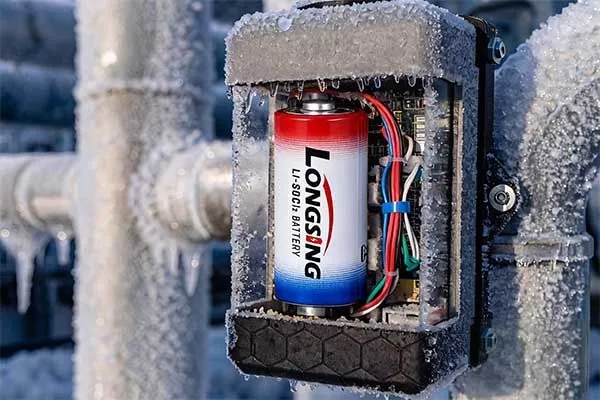
Application-Specific Customization Strategies
There is no universal energy source. An optimized IoT power solution must be meticulously reverse-engineered from the application’s unique load profile. For example, public utility meters demand high-current pulses for NB-IoT transmissions once a day, whereas safety and healthcare tracking devices require lower, more frequent pulses with absolute zero-failure tolerance.
Our sales manager, Luke Liu, frequently emphasizes to clients that customization is the bedrock of reliability. When an IoT power supply manufacturer truly understands the end-use environment, they can dictate the exact Bobbin or Spiral cell construction required. The integration of a Li-SOCl2 battery for IoT endpoints demands this uncompromising level of scrutiny.
| Application Sector | Typical Power Profile | Recommended Architecture |
|---|---|---|
| Utility Smart Meters | Long sleep, intense daily TX pulses | Li-SOCl2 Bobbin Cell + Hybrid Supercapacitor |
| Healthcare Tracking | Continuous low drain, frequent BLE pings | Li-MnO2 or specialized thin-cell packs |
By aligning the internal chemical kinetics of the battery with the macroscopic data transmission strategy of the device, engineers can extract maximum efficiency, ensuring the final product meets both financial and operational key performance indicators.
Conclusion: Ready to Optimize Your IoT Power Strategy?
Securing a reliable energy source is the most critical factor in successful industrial deployments. By partnering with an expert manufacturer, you can proactively overcome complex engineering challenges like voltage drops and premature depletion.
Whether you require standard cells or highly customized hybrid packs, rigorous testing and strategic duty cycle alignment are essential. Prioritize comprehensive engineering support over mere component sourcing to guarantee your remote devices achieve their maximum intended lifespan and maintain flawless operational uptime.
Frequent Asked Questions about IoT Power Supply Manufacturer
(Click to Unfold)
Q: Who is the largest manufacturer of power supplies?
A: Delta Electronics is widely regarded as one of the largest global manufacturers of power supplies, leading in AC-DC and DC-DC solutions for various industries including IoT and industrial applications. Other major players include Mean Well and XP Power.
Q: What are the big 3 power tool brands?
A: The top three power tool brands are commonly DeWalt, Milwaukee, and Makita, known for their durability, innovation, and wide range of cordless and professional tools.
Q: What are IoT manufacturers?
A: IoT manufacturers produce connected devices, sensors, modules, and platforms for the Internet of Things. Leading examples include Texas Instruments, STMicroelectronics, Cisco, and specialized battery providers like Long Sing Technology for ultra-reliable IoT power solutions.
Q: What are the 4 types of IoT?
A: The four main types of IoT are: Consumer IoT (smart homes/wearables), Commercial IoT (retail/business efficiency), Industrial IoT (IIoT for manufacturing/automation), and Infrastructure IoT (smart cities/utilities monitoring).
[1]Discover power design criteria for edge gateways and how they impact reliability at the edge.↪
[3]Understand EMI mitigation strategies essential for rugged environments and dependable sensing.↪
[4]Learn how layout choices affect EMI, noise, and stable power delivery in industrial devices.↪
[5]Compare long-term support and lifecycle assurances to minimize future redesigns and failures.↪

Battery Replacement: Advanced lithium battery for the global smart meters industry
Battery replacement in the smart meters industry refers to the entire process and strategy utility c

The 3.0V Standard: Unlocking the Power of Lithium Manganese Dioxide Batteries
Primary Lithium Manganese Dioxide Batteries deliver long life, steady voltage, and strong safety, so
10 Real-World Hybrid Supercapacitor Use Cases in 2026
Struggling with frequent battery replacements in remote industrial sites? Power failures cost time a