


Smart City
In the drive toward smarter urban environments through smart city, the integration of advanced energy storage solutions such as primary lithium batteries combined with Hybrid Pulse Capacitor (HPC) batteries plays a pivotal role.
Overall reasons to choose primary lithium battery and HPC battery on smart city solutions:
- Municipal governments and city planners focusing on sustainable urban infrastructure and smart city initiatives.
- Utility companies implementing smart grids and advanced metering infrastructure.
- Technology manufacturers specializing in IoT devices and smart infrastructure equipment.
- Transportation and logistics providers integrating connected vehicle and fleet management solutions.
These battery technologies provide the reliable and efficient power necessary to support the extensive network of devices and systems that constitute a smart city project.

What Does Smart City Mean
What is a smart city? A smart city leverages digital technology, IoT (Internet of Things), and data analytics.
What is smart city’s purpose? The smart city internet enhances the quality of life for its citizens, optimize resource management, and improve sustainability.
It integrates diverse sectors such as transportation, energy, water, waste management, public safety, and communication infrastructures into interconnected systems.
In doing so, smart cities depend on reliable power sources to maintain continuous data collection, transmission, and processing capabilities across these smart city infrastructures.
Role of Batteries in Smart Cities
Energy storage is fundamental to smartcity operation, particularly for remote or mobile devices beyond grid access or backup power systems.
For smart city solutions, primary lithium batteries provide long-lasting, stable energy output essential for IoT sensors, street lighting, and smart meters, while HPC batteries deliver high current bursts needed for wireless communication modules and instant power demands.
Main Products that Use These Batteries in Smart Cities
- Smart Street Lighting: Solar-powered or grid-connected smart lamps use primary lithium-HPC battery combos to power sensors and communication units for adaptive lighting based on traffic and environmental conditions.
- Environmental Monitoring Sensors: Air quality, noise, and climate sensors distributed across cities employ these batteries for constant operation and data transmission in often harsh environments.
- Smart Metering (Water, Gas, Electricity): Utilities deploy IoT-enabled smart meters powered by these batteries for extended maintenance-free durations with reliable data communication.
- Public Safety and Surveillance: Wireless cameras, emergency communication devices, and traffic management sensors depend on this battery combination for reliable, uninterrupted service.
- Electric Mobility Infrastructure: Electric scooters, bikes, and connected transport stations often use HPC-assisted lithium battery packs to manage sudden current demands during charging or acceleration phases.
Battery Applications in Smart City Ecosystems
Batteries as the backbone for connectivity and sustainability, the versatile demands of smartcity applications require batteries that can:
- Deliver consistent, low-drain power over extended periods to sensors, meters, and communication devices, ensuring long maintenance intervals and operational reliability.
- Supply rapid bursts of high current to support wireless data transmission, especially in devices using LPWAN (Low Power Wide Area Network) technologies or 5G communications.
- Endure challenging urban outdoor conditions including extreme temperatures, moisture, and vibrations, which primary lithium and HPC batteries are well suited for smart city technology.
- Support renewable energy setups by storing and managing energy for solar streetlights and other decentralized energy assets.
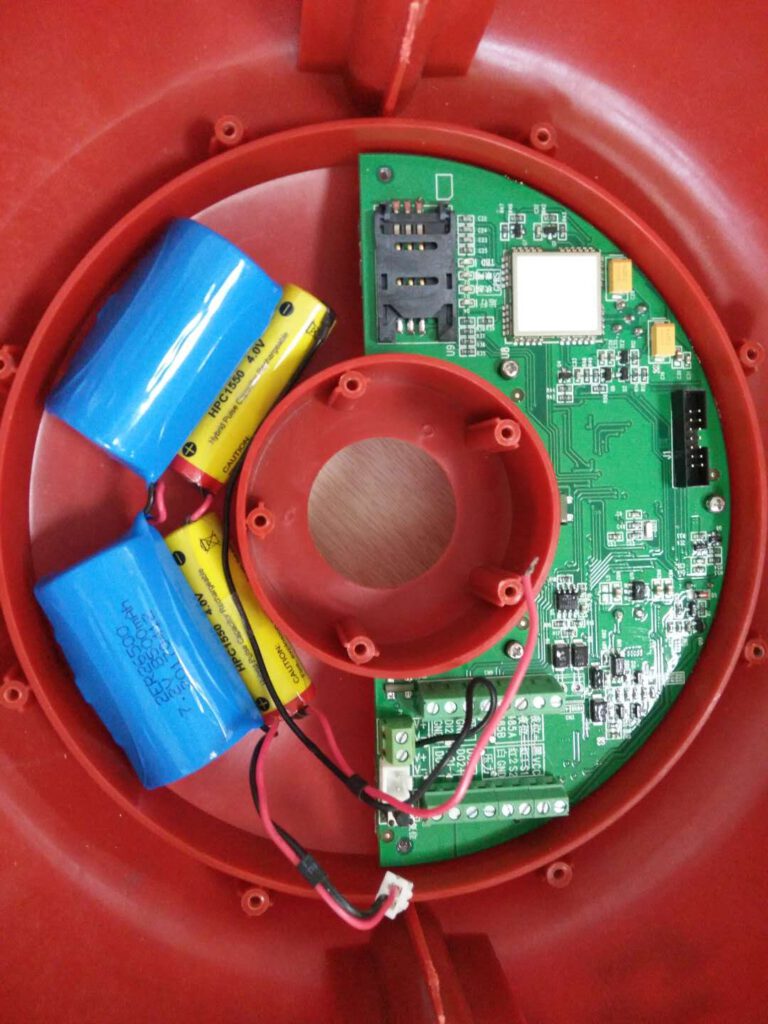
Examples of Battery Usage in Smart City Solutions
- IoT Sensor Networks: Designed for a “fit and forget” approach, working a lot on monitoring traffic flow, public parking, and environmental data with industrial IoT sensors and others.
- Smart Grid Components: Typically not for large-scale energy storage, but widely used in substations, transformers, grid monitoring sensors, and smart meters with battery-backed communication modules.
- Emergency and Security Systems: Primary lithium batteries are highly valued wireless smoke and carbon monoxide (CO) Alarms, backup power for alarms, emergency call boxes, surveillance cameras, etc.
- Mobility Devices: Emergency call buttons or sensors, dashboard displays and on-board electronics, tire pressure monitoring systems (TPMS), etc, equipped with HPC-enhanced lithium battery packs.
- Smart Manhole Cover: Remote IoT monitoring devices including sensor modules, wireless communication units, positioning modules, and alarm &tracking devices. ER26500 plus HPC1520 is recommended.
- Smart Waste Management: IoT devices are deployed inside trash bins, recycling containers, and waste collection systems with ER34615+HPC1550 battery.
- Smart Fire Hydrants:Sensors and communication modules are necessary to provide real-time data and monitoring. It goes to ER26650 and HPC1550 battery.
- Smart Parking: For those installed in outdoor, hard-to-reach locations, primary lithium batteries and HPC batteries can enhance greatly their performance and stability.

AGV Batteries: Custom Battery Pack for Powering the Future of Automated Guided Vehicles
Automated Guided Vehicles (AGVs) have become integral components in modern industrial automation, of

How Do Lithium Batteries Manufacturers Support IoT in Water Metering?
Lithium battery manufacturers play a vital role in powering IoT-based smart water metering systems b

Elevate Your Battery Game: Understanding Battery Placement Effects
This article comprehensively explores the differences in capacity of lithium thionyl chloride batter