

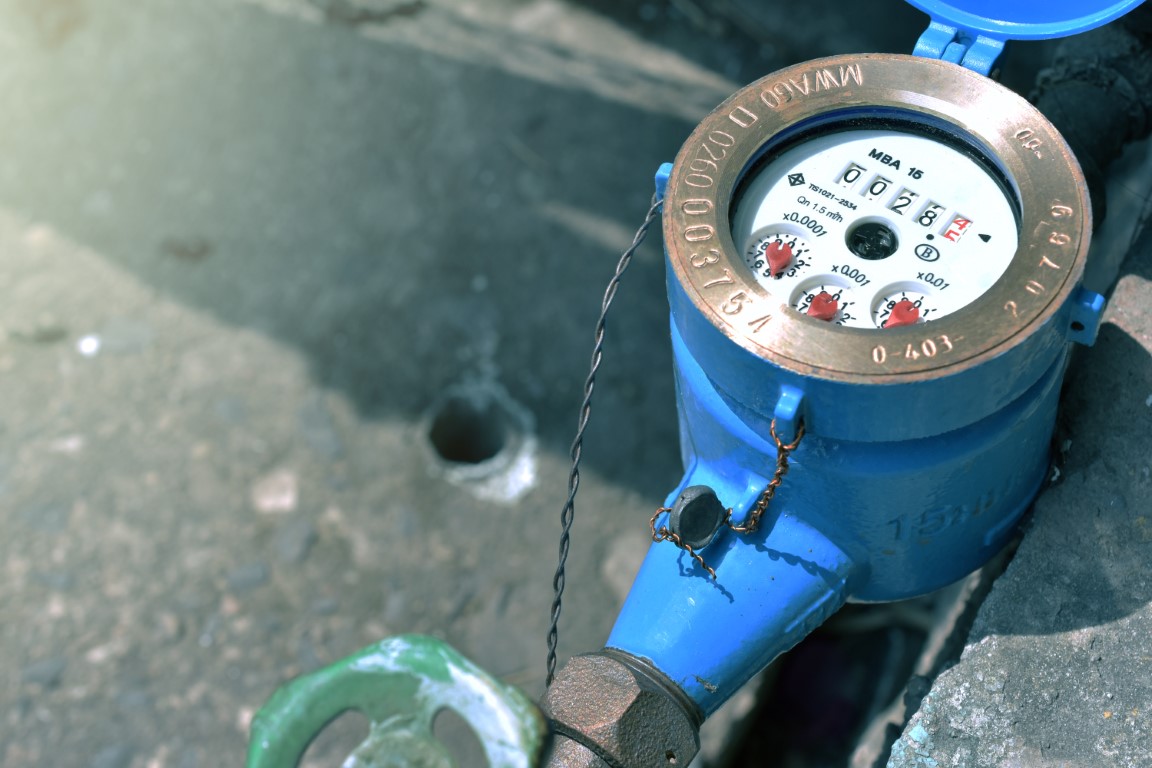
Smart Water Meter: Project with Primary Lithium Battery Solution
A smart water meter measures water usage electronically and transmits the data remotely (via RF, cellular, or IoT networks).
This eliminates the need for manual meter reading and allows real-time monitoring of consumption.
Is it a good idea to have a smart water meter?
Smart water meter is still a good idea to track water usage and increase the billing accuracy, it also provides detailed insights into usage for future reference.
Compared with traditional mechanical meters, smart water meters are more accurate at low flows, and less prone to mechanical wear.
It reduces much errors over time consistently that often occur as traditional meters age.
Since most smart water meters are installed underground or in hard-to-access locations, it requires long-life, maintenance-free power such as primary lithium battery.
How We Help With Smart Water Meter Manufacturing?
Project Background

NB-IoT, as an emerging internet communication technology, is a new narrow-band cellular communication – LPWAN (low-power dissipation wide area network) technology.
LPWAN has advantages like wide coverage, low power consumption, low-rate, low cost, great connection and high security.
It is suitable for long distance, low-rate, low power consumption and multi-terminal services, which could be applied to various applications.
On June 16 in 2016, NB-IoT technological agreement was granted by 3GPP Radio Access Network (RAN) Technical Specification Group.
Its accomplishment of standard work marked that NB-IoT was about to enter the commercial stage of scale.
In December 2015, we signed a memorandum of strategic cooperation with Huawei, initiated research and development based on smart metering products.
Their management platform for intelligent water meters data collection of NB-IoT technology is also part of the project with us.
The following year at that time, the NB-IoT smart water meter passed Huawei’s NB-IoT smart water scene interoperability test and then was tested for installation in Melbourne, Australia.
In February 2017, NB-IoT ultrasonic remote water usage meter was shown in the 2017 World Mobile Communications Conference, integrated with Huawei’s OceanConnect IoT platform to launch the smart meter reading business.
Then the basic functionality performance of NB-IoT smart metering was tested and certified by an overseas third-party testing agency before put into trial in the Australian market.
In September 2017, the NB-IoT smart meter passed through the test of function and performance held by China Telecommunication Technology Labs.
That was the first NB-IoT product to receive the certification by the labs in China.
Up to this day, Long Sing Technology has developed optoelectronic, non-magnetic, and ultrasonic series of NB-IoT smart water meters.
We are fully prepared the NB-IoT for even much large-scale commercial use.
Yingtan city of China is a city with “Internet + Government Services” pilot policy, integrating the national initiatives for information-based public welfare, smart cities, and universal telecommunications services.
It is the first city to build three global coverage networks, establishing a fully functional mobile internet public support platform.
It initiats the formation of the entire internet industry chain, provide a good foundation for the successful deployment of smart water usage meter WiFi services.
Project Implementation Status

In response, we produced the first 400 units NB-IoT photoelectric internet installed in three districts of the East, north, South of Yingtan city, China.
Several months later, the daily usage of these NB-IoT products was maintained at 100%.
That was a big step to help build the city under a large-scale network connection towards a smart city.
In June 2020, Yingtan municipal government further developped a smart city construction with Alliance of Industrial Internet.
It had installed and reconstructed about 65, 000 units of narrow-band internet automatic water meters.
Until the end of September, as supported by Yingtan government, we cooperated with Division of Chinese Academy of ICT, Huawei, China Telecom, and China Mobile.
20,608 units of NB-IoT digital smart meter products were developped together and deployed around the whole city.
The usage rate has remained above 99.2% nowadays, which fully showed that the commercial application scale of Sanchuan Smart NB-IoT smart water meter device has reached the level of 10,000.
It has promoted the large-scale commercial use of NB-IoT water usage meter and created the country’s first city-level benchmark for NB-IoT smart meter reading.
Currently, the solution in Yingtan has been around NB-IoT and formed a complete industrial chain – from chip manufacturers to water meter module production and manufacturing enterprises.
Right now, more than 20 million units of smart water flow meter devices are required to use NB-IoT products by water meter suppliers already.
Project Promotion Plan

Daily Life Requirement
Integrate meter data with the water management platform of the water supply company to meet the daily management.
It also easures the accurate water flow and mobile payment to visualize the water operation management and digitalize the water information.
Nothing wrong has happened inside the smart reading system from Yingtan residential water metering device project.
Data Analysis for Better Management
Applying DMA regional measurement management and big data analysis of water affairs information to enforce intelligent water affairs management.
Including analysis of user habits, hydrological change data analysis, regional characteristic data analysis, pipe network data analysis and etc..
It can effectively reduce the low rate of sales of water supply companies, and improve the overall water cycle management efficiency of the city.
NB-IoT product iteration, water quality information integration, water pressure sensor collection, geographic information analysis and some others make a great smart water meter.
We aim to transform NB-IoT smart meters into comprehensive urban data collection terminals.
Conclusion
The smart water meter, as part of an advanced Automatic Meter Reading(AMR) System, delivers accurate consumption data, enables real-time monitoring, and improves efficiency for both utilities and consumers.
Primary lithium batteries have been successfully used in smart water meters for more than 10 years.
These battery solution ensures long service life, stable performance, and reliable data transmission for over a decade without replacement.
More Information about Smart Water Meter Battery:
- Real Solution: Revolutionizing Water Management: Smart Meter Batteries
- Battery Guide:How to Choose a Long Life Smart Meter Battery?
On Board Unit OBU & Toll Tags: Perfect Dual Power Supply Solution
On Board Unit OBU has become an essential component for Electronic Toll Collection(ETC), fleet manag
Intelligent Well Cover: Digitization, Quick Warning, and Forecast Solution
Guangzhou NB-IOT Intelligent Manhole Cover System

Custom Battery Packs: From Design to Assembly
We offer all battery chemistries, specializing in lithium rechargeable and lithium primary battery p