


IoT in logistics: Why Using Hybrid Supercapcitor Battery
What is IoT in Logistics?
IoT in logistics refers to the use of Internet of Things (IoT) technology to enhance and optimize logistics and supply chain operations.
IoT in logistics drives efficiency, visibility, cost reduction, and improved customer satisfaction by automating and enhancing visibility across the entire supply chain.
It empowers logistics companies with better control, timely decision-making, and the ability to proactively handle issues before they escalate.
How we Help With IoT in Logistics Manufacturing?
Project Background
IoT is transforming logistics and supply chain management as IoT transportation industry.
The core principle in logistics and IoT is simple: attach smart sensors and trackers to physical assets to collect data, which is then analyzed to optimize operations.
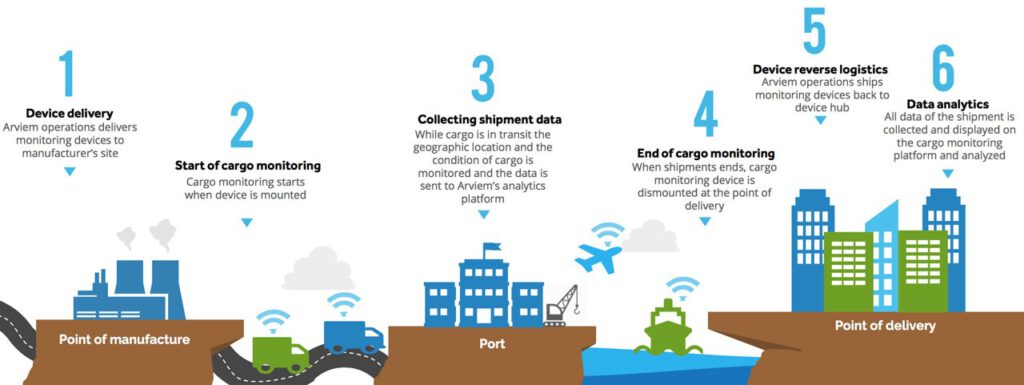
Figure 1. IoT in Smart Logistics Process
While sensors and networks are innovating, especially on goods and assets, batteries with ultra long lifespan are required for such technology as well:
High pulse power is required between IoT devices and end users during the signal communication, which is generally over 2 Amperes in 10 seconds even under extreme temperatures.
And higher pulse power demand will greatly shorter effective life span due to voltage drop, chemical degradation, and heat.
The traditional lithium ion battery is not the high-current-output type battery, and their capacity losses under extreme low or high temperatures.
That really shortens the life span significantly.
What Battery Fits Logistics IoT?
Commercially available lithium thionyl chloride battery (Li-SOCl2) is one of the longest-life primary batteries in the market – about 10 years without maintenance.
Primary lithium battery has very high energy density and low self-discharge, serving as base energy supply for long duration operations.
But primary lithium battery alone supports high pulse within a really short time.
That comes to an innovation of high pulse battery – or rather Hybrid Supercapacitor battery.
Hybrid supercapacitor battery, or Hybrid pulse capacitor(HPC) battery is a sustaining power booster, safely outputs high pulse power from primary battery to NB-IoT/LTE-M module, GPS/GNSS, alarm and other emergency signaling.
The combining battery pack is a complementary option for ultra long life span solution for IoT in Logistics project and smart cabinet lock – supports extreme temperature conditions from -55℃~+85℃.
Workflow in Intelligent Logistics
1. Asset tracker stays in sleep mode, consuming µA-level current from the primary battery.
2. When it needs to transmit data via NB-IoT, the HPC supplies the burst current.
3. After transmission, the HPC recharges slowly from the lithium battery.
Result: The device operates for many years, even with frequent data bursts.
In this case under internet of things transportation, we focused on the HPC1520 type of rechargeable lithium ion battery with different materials development to ER26500 primary lithium battery.
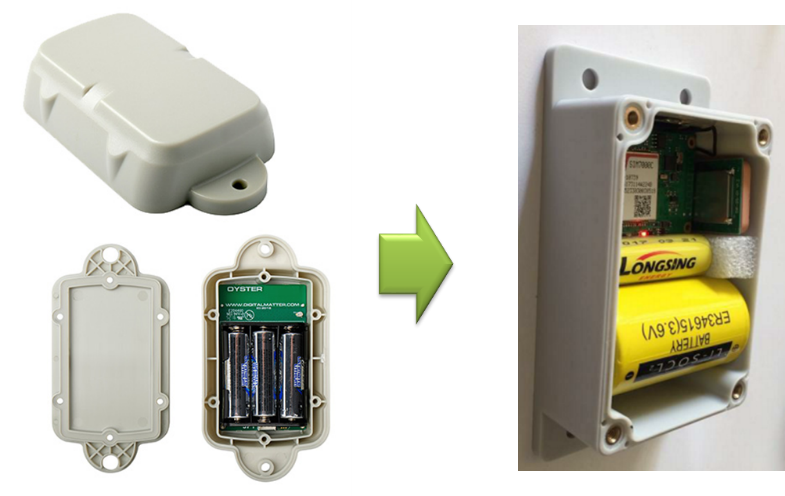
Figure 2. Traditional battery (left) and ER26650+HPC1520 battery pack in this project (right) for the smart cargo tracker
Pulse cycle test under GSM protocol
A GSM module for IoT transportation and logistics is actually a power-intensive, pulsed current draw.
They don’t draw power continuously, but they require a very short, high-power bursts.
They use both TDMA and FDMA techniques in the module.
The FDMA element involves the division by frequency of the (maximum) 25 MHz bandwidth into 124 carrier frequencies spaced 200 kHz apart as already described.The carriers are then divided in time, using a TDMA scheme as shown in Figure 3.
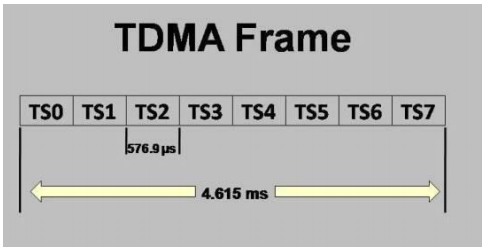
Figure 3. TDMA Frame Time Slots
This enables the different users of the single radio frequency channel to be allocated different times slots.
They are then able to use the same RF channel without mutual interference. The slot is then allocated to the particular user.
That is the moment GSM burst transmits for 0.577 ms.
Eight of these burst periods are grouped into a TDMA frame.
This lasts for approximately 4.615 ms and it forms the basic unit for the definition of logical channels as shown in Figure 3 and Figure 4.
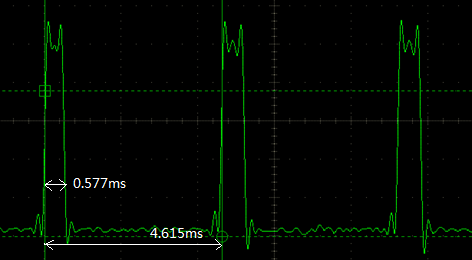
Figure 4. Transmit Power Waveform of TDMA Frame
Each physical channel is one burst period allocated in each TDMA frame inside the IoT application in logistics.
How We Test for Internet of Logistics
GSM for IoT in transport and logistics requires 2 A peak current for a power rail.
Most power supplies, batteries, or other components in a internet of things shipping system cannot deliver this amount of current instantaneously without a significant voltage drop.
Therefore, we test our battery HPC1520+ER26500 under two conditions:
- Discharging 2 A constant current for 1 ms, which is the GSM transmission peak current;
- Discharging 200 mA constant current for 4 ms, Which forms a TDMA frame as non-transmission power consumption.
After testing with 100 Bytes data in laboratory, the overall transmit time is about 5 s as shown in Figure 5 – that makes the frame to be repeated on 1000 times.
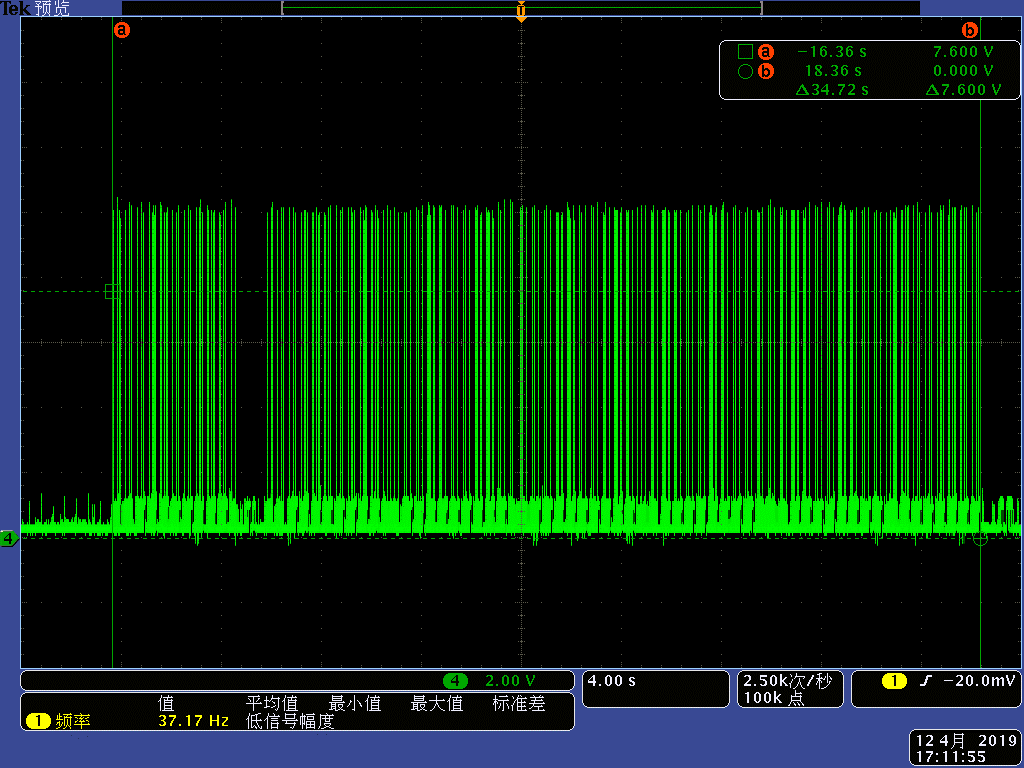
Figure 5. Transmit Power Waveform of 100 Bytes Data
This battery pack can pulse discharge for more than 40,000 transmit times from voltage 3.67 V to 2.5 V in as a cycle, and fulfill eventually 20,000 cycles as a complete life span.
This is why primary lithium battery and hybrid pulse capacitor battery can be one of the perfect solutions for GSM module of IoT in logistics for more than 10 years.
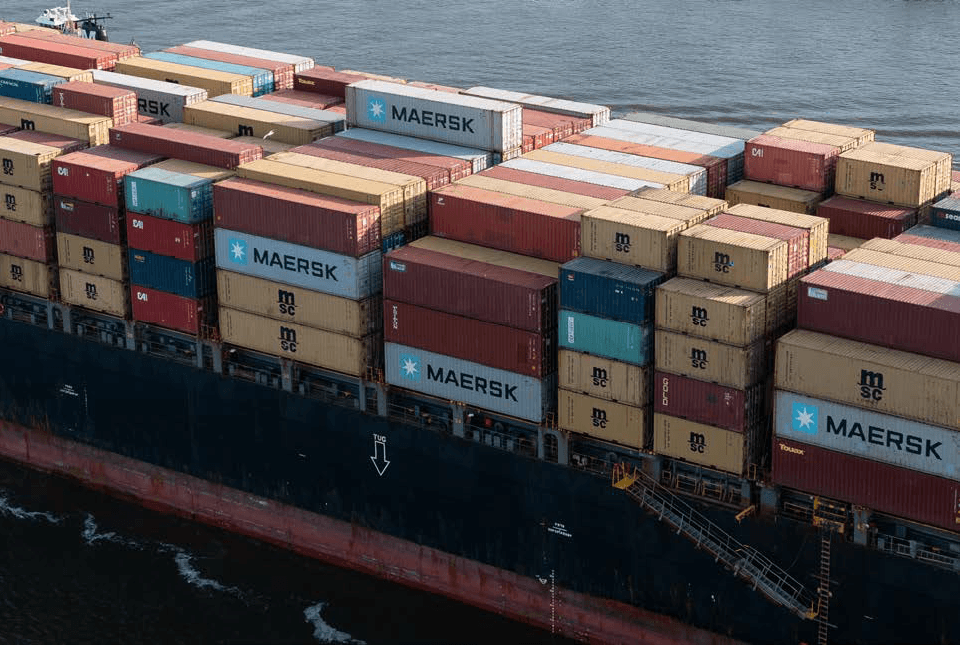
Intelligent Logistics: Safety, Visualization, and Rational Deployment Solution
“GOOCONTAINER” Intelligent Container Project
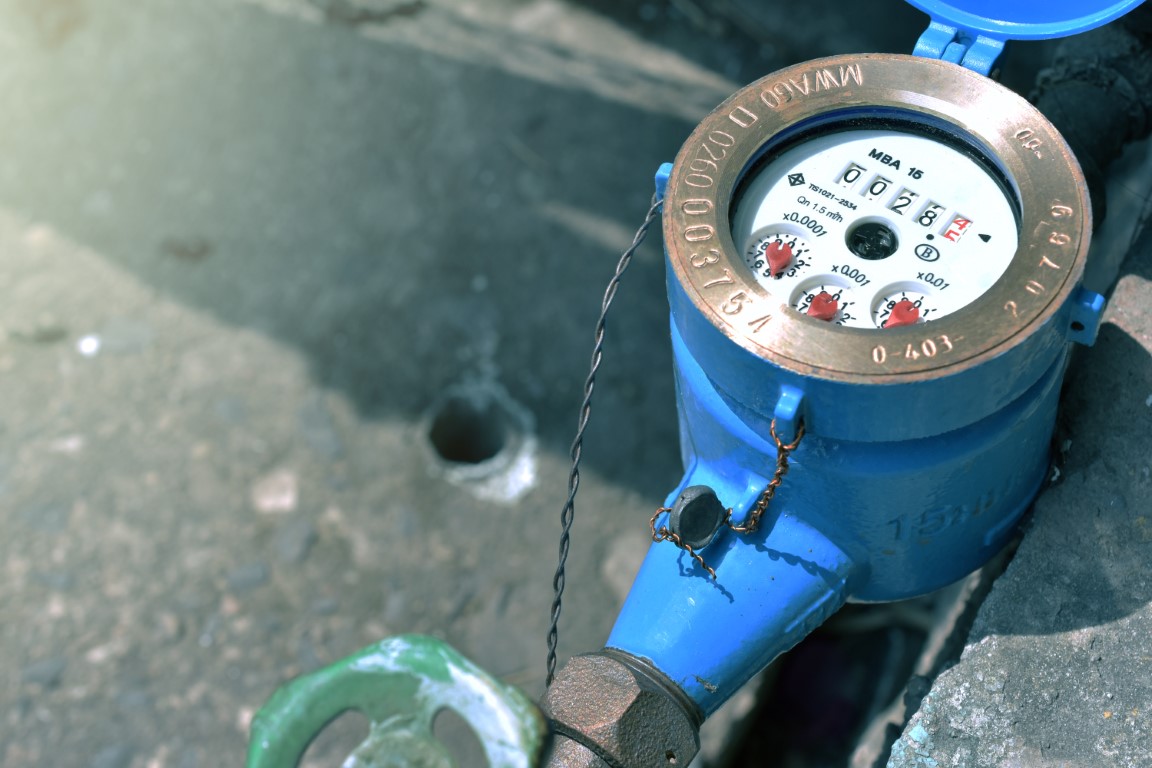
Smart Water Meter: Project with Primary Lithium Battery Solution
A smart water meter measures water usage electronically and transmits the data remotely (via RF, cel

Custom Battery Packs: From Design to Assembly
We offer all battery chemistries, specializing in lithium rechargeable and lithium primary battery p