

Key Advantages: Design Considerations for Li-SOCl₂ Military Battery
Li-SOCl₂ military battery technology serves as the tactical energy backbone for modern defense systems that demand unfailing performance in the most hostile environments on Earth.
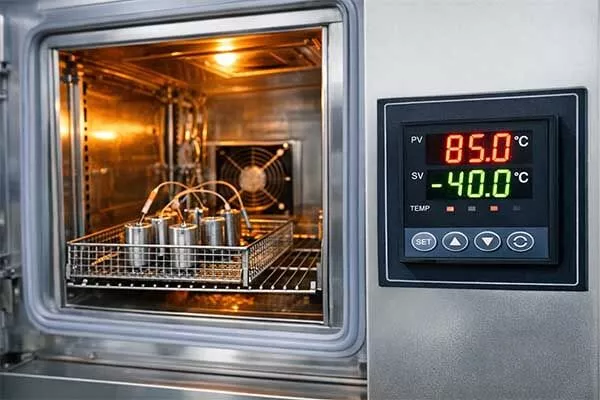
The key design considerations for Li-SOCl₂ military batteries include extreme temperature resilience (-55°C to +85°C)[1], hermetic sealing against leakage, ultra-low self-discharge rates (<1% annually), and specialized safety mechanisms.
These features ensure uninterrupted power for communication systems, sensors, and backup equipment during decade-long deployments in harsh conditions.
Military operations face tough power needs in harsh spots. Bad batteries cause failures and risks lives. Li-SOCl₂ military battery offers high energy and long life to solve these issues.
As a core category of lithium primary batteries, lithium thionyl chloride batteries provide high energy density, long shelf life, and wide temperature range.
They suit military use with stable voltage and low self-discharge. Design focuses on size, safety, and pulse handling. These features make them reliable for defense gear.

Read on to learn how these batteries boost military tech.
Table of Contents
- What Are the Main Advantages of Li-SOCl₂ Batteries in Military Applications?
- How Does the Performance of Li-SOCl₂ Batteries Suit Defense Needs?
- What Makes Li-SOCl₂ Batteries Reliable for Military Electronics?
- What Are Common Field Applications of Li-SOCl₂ Batteries in Military Settings?
What Are the Main Advantages of Li-SOCl₂ Batteries in Military Applications?
Li-SOCl₂ batteries offer high energy density for compact power, long life up to 20 years, and operation from -55°C to 85°C. They have low self-discharge at 1% per year.
These advantages support military needs for reliable, lightweight energy in extreme conditions.

Li-SOCl₂ military battery stands out in defense work. But we must think about both sides.
High energy density helps in small devices, yet it demands careful handling to avoid risks. Long life reduces replacements, but costs more upfront. Wide temperature range fits cold or hot zones, though extreme heat might shorten life a bit.
Key Trade-offs in Battery Selection
| Advantage | Benefit | Drawback |
|---|---|---|
| High Energy Density | Lightweight gear | Higher cost |
| Long Shelf Life | Less maintenance | Non-rechargeable |
| Wide Temp Range | Versatile use | Performance drop at edges |
Engineers pick Li-SOCl₂ for its strengths, but they weigh if other types like LiMnO₂ fit better for high pulses.
In military, reliability matters most. Thionyl chloride battery chemistry gives stable power, but passivation can delay start-up. Designers add circuits to fix that.
High energy density Li-SOCl₂ battery lets soldiers carry less weight. Yet, in wet areas, seals prevent leaks.
We at Long Sing Technology test seals hard. Low self-discharge battery for defense devices keeps gear ready. But over-discharge harms cells. Safety features stop that.
Lisocl2 batteries resist shock and vibration. Still, drops might crack cases. Rugged designs help.
Thionyl chloride lithium battery handles high temps well. But cold slows reactions. Heaters sometimes aid. Military battery for remote sensing equipment needs no upkeep. Advantages shine here.
But initial voltage dip needs management. Circuits smooth it. Lithium thionyl chloride offers 3.6V stable. Other batteries drop faster. This helps electronics run steady.
In design, size fits tight spaces. Cylindrical or prismatic shapes vary. Each has pros. Bobbin type gives more energy, spiral for pulses. Choose based on need.
Costs add up in bulk. But long life saves money over time. Environment impacts matter too. Disposal rules apply. Recycle where possible. Li-SOCl₂ military battery excels in advantages, but thoughtful design maximizes them.
How Does the Performance of Li-SOCl₂ Batteries Suit Defense Needs?
Li-SOCl₂ batteries deliver stable 3.6V output, handle temperatures from -55°C to 85°C, and resist shock. They provide high capacity with low weight. This performance fits defense for consistent power in tough settings like deserts or arctic zones.
Performance of Li-SOCl₂ military battery drives its defense role. But let’s examine pros and cons.

Stable voltage keeps devices running smooth, yet initial delay from passivation needs fixes. Wide temperature lithium battery military works in extremes, but very high heat reduces capacity. Designers add insulation.
Performance Metrics Comparison
| Metric | Li-SOCl₂ | Alternative |
|---|---|---|
| Voltage Stability | High | Varies |
| Temp Range | Wide | Narrower |
| Shock Resistance | Strong | Weaker |
Thionyl chloride battery performs well under load. Pulses for comms work fine. But constant high drain shortens life. Hybrid with hybrid supercapacitor helps.
Lisocl2 chemistry resists corrosion. Yet, in salt air, extra seals protect.
Li-SOCl₂ battery high temperature performance stands out. Tests show it holds capacity at 70°C. Cold starts slow, so warm-up aids.
Long life battery for military electronics lasts decades. Storage tests confirm low loss. But humidity can enter if seals fail. Dry storage matters.
Lithium thionyl chloride provides even discharge. Devices predict end-life easy. Other batteries drop sudden.
In design, current needs guide cell type. Bobbin[2] for low drain, spiral for bursts. Weight savings aid mobility. Soldiers carry less. But pack assembly adds bulk. Streamline it. Vibration in vehicles tests durability.
Li-SOCl₂ military battery passes mil-specs[3]. Drops or impacts might dent. Reinforce cases. Energy efficiency cuts resupply. Logistics improve. But non-recharge means plan spares.
Thionyl handles altitude changes. No pressure issues. In subs or planes, it works.
Safety in performance key. No leaks under stress. We ensure that. Performance suits defense by balancing power and toughness.
What Makes Li-SOCl₂ Batteries Reliable for Military Electronics?
Li-SOCl₂ batteries achieve reliability through low self-discharge, hermetic seals, and stable chemistry. They last 10-20 years in storage. Fault tree analyses show low failure rates. This makes them dependable for military electronics in critical missions.
Reliability of thionyl chloride lithium battery comes from design. But consider flaws. Low self-discharge keeps power, yet manufacturing defects cause leaks. Strict quality checks prevent that. Hermetic seals block moisture, but damage opens paths. Rugged builds help.

LiSoCl2 batteries endure long storage. Tests show 1% loss yearly. But heat speeds it. Cool storage extends.
Lithium thionyl chloride resists overcharge. Built-in safety stops issues.
In military, failures cost lives. Redundancy adds layers. Thionyl chloride battery uses pure materials. Impurities cause shorts. Clean production key.
Li-SOCl₂ military battery passes vibration tests. Electronics stay on. But resonance harms. Dampers fix.
Long shelf life military battery ready anytime. No prep needed. Yet, check dates. Reliability data from field use guides improvements.
We analyze returns. Consistent performance builds trust. Variations upset plans. Control processes ensure uniformity.
In wet conditions, seals hold. But prolonged exposure tests limits. Coatings add protection. Fault analyses identify weak spots. Fix them early. Reliability suits military by minimizing downtime.
Reliability Factors
| Factor | Impact | Mitigation |
|---|---|---|
| Self-Discharge | Low loss | Quality materials |
| Seals | Prevent entry | Testing |
| Chemistry | Stable output | Additives |
What Are Common Field Applications of Li-SOCl₂ Batteries in Military Settings?
Li-SOCl₂ batteries power communication devices, sensors, radars, and backup systems in military. They work in satellites, portable gear, and remote monitors.
Their durability supports operations in harsh fields like battle zones or remote bases.

Field use of Li-SOCl₂ military battery shows strengths. But challenges exist.
In comms, stable power keeps links, yet interference disrupts. Shielding helps. Sensors need long life, but dirt clogs. Clean designs aid.
Li-SOCl₂ battery for military communication systems ensures signals. In fields, it powers radios. But range limits need boosters.
Lithium thionyl chloride battery for radar systems provides backup. Detects threats. Power spikes handled with capacitors. Thionyl in remote gear lasts years. No visits needed. But signals weak in areas. Amps help.
Li-SOCl₂ military battery in drones gives flight time. Light weight aids. Crashes risk loss. Redundant packs. In subs, pressure resistance key. Seals hold. Applications vary by need.
Application Examples
| Application | Battery Role | Challenge |
|---|---|---|
| Comms Systems | Steady power | Interference |
| Sensors | Long monitoring | Environment |
| Radars | Reliable backup | High drain |
Case Study: Navigating Technical Frontiers in UK Heat Meter Certification
Project Overview
The UK heat meter market demands rigorous adherence to high-precision standards and long-term reliability. Our recent campaign to certify a new series of ultrasonic heat meters was not merely a compliance exercise; it was a grueling test of engineering resilience and technical problem-solving.
The Challenge: Battery Integrity and Safety
During the accelerated life testing phase, our team encountered a critical bottleneck: electrolyte leakage and safety instability in the high-capacity lithium batteries required for the 10-year service life.
- The Symptom: Minor seepage was detected under extreme temperature cycling, which threatened to corrode the internal PCB.
- The Stakes: In the UK market, any risk of leakage or thermal instability is a non-starter for safety certifications. A failure here meant restarting a multi-month testing cycle from scratch.
Engineering Leadership: The Wilson Lu Approach
Our Chief Engineer, Wilson Lu, took direct command of the crisis. His analytical process transformed a potential project failure into a technical breakthrough.
1. Root Cause Analysis (RCA)
While the initial assumption was a faulty batch of cells, Wilson conducted a deep-dive into the mechanical stress distribution of the battery housing. He identified that the seal failure was actually caused by micro-expansions in the potting compound during rapid temperature shifts.
2. The Solution Matrix
Wilson spearheaded a two-pronged strategy to resolve the issue:
- Material Re-engineering: He led the transition to a specialized medical-grade sealing gasket combined with a redesigned battery compartment that allowed for controlled thermal expansion.
- Safety Circuit Optimization: To address safety concerns, he integrated a redundant protection circuit that could isolate the power source instantly if impedance fluctuations were detected.
3. Rigorous Validation
Under Wilson’s “zero-margin-for-error” philosophy, the samples underwent an additional 500 hours of stress testing beyond the standard requirements. He personally supervised the pressure-drop analysis and electromagnetic compatibility (EMC) tests to ensure the new battery configuration didn’t interfere with ultrasonic signal processing.
| Temperature | Voltage Stability Under 1A Pulse |
|---|---|
| +20°C (Standard) | 3.2 V – 3.4 V |
| -20°C (Cold) | 2.8 V – 3.0 V |
| -40°C (Extreme Cold) | 2.4 V – 2.6 V |
| +85°C (High Temp) | 3.5 V – 3.6 V |
The Outcome
Through the arduous months of testing and iterative refinement, the samples finally achieved full compliance with UK standards. The final product boasted:
- Zero-Leakage Guarantee: Validated through extreme thermal shock testing.
- Enhanced Longevity: Confirmed 10+ year operational lifespan without maintenance.
- Safety Excellence: Exceeding the standard safety benchmarks for residential and industrial deployment.
“The UK market doesn’t just demand a product that works; it demands a product that cannot fail,” Wilson Lu remarked during the final review. “We didn’t just fix a battery; we refined our entire philosophy on hardware reliability.”
Conclusion
Li-SOCl₂ military battery offers key advantages like high energy density and long life. Design considers temperature, size, and safety. Performance suits defense with stable power in extremes. Reliability comes from low discharge and seals. Field applications include comms, sensors, and radars. These features make it vital for military success. Choose it for tough needs.
Quick FAQ About Li-SoCl₂ Military Battery
(Click to Unfold)
Q: What are the advantages of Lithium Thionyl Chloride batteries in military applications?
A: Lithium thionyl chloride (Li-SOCl₂) batteries offer very high energy density, ultra-low self-discharge, long shelf life (up to 20 years), and wide operating temperature range, making them ideal for military equipment requiring long-term, maintenance-free power.
Q: What is the use of a lithium thionyl chloride battery?
A: Li-SOCl₂ batteries are used as primary (non-rechargeable) power sources for devices that require long operational life, stable voltage, and reliable performance, especially in remote or harsh environments.
Q: What is the difference between Li-SOCl₂ and LiFePO₄?
A: Li-SOCl₂ batteries are primary batteries designed for long shelf life and low current consumption, while LiFePO₄ batteries are rechargeable and suitable for high-cycle applications. Li-SOCl₂ excels in long-term standby use, whereas LiFePO₄ is used for frequent charge-discharge systems.
Q: What is the difference between Li-ion and Li-SOCl₂ batteries?
A: Li-ion batteries are rechargeable and optimized for high power output, while Li-SOCl₂ batteries are non-rechargeable and optimized for long service life, low self-discharge, and extreme temperature performance, which are critical for military devices.
Q: What are the common military applications of Li-SOCl₂ batteries?
A: Common military applications include communication systems, remote sensors, GPS trackers, surveillance equipment, emergency backup power, munitions electronics, and unmanned systems.
Q: How do Li-SOCl₂ batteries compare to other battery types in military devices?
A: Compared to alkaline, Li-MnO₂, or Li-ion batteries, Li-SOCl₂ batteries provide longer operating life, better high- and low-temperature stability, and superior energy density, making them more suitable for long-duration military missions.
Q: What are the safety standards for Li-SOCl₂ batteries in defense applications?
A: Military-grade Li-SOCl₂ batteries typically comply with UN38.3, IEC 60086-4, MSDS requirements, and relevant transportation regulations, with additional focus on controlled passivation, hermetic sealing, and quality inspection.
Q: Can Li-SOCl₂ batteries be used for long-term military communication devices?
A: Yes. Li-SOCl₂ batteries are widely used in long-term military communication systems due to their stable voltage, low self-discharge, and ability to operate reliably for 10–20 years without maintenance.
Q: Where can I buy military-grade Li-SOCl₂ batteries online?
A: Military-grade Li-SOCl₂ batteries can be sourced directly from qualified manufacturers or industrial battery suppliers through official websites or B2B platforms, ensuring compliance with technical and transportation requirements.
Q: Which manufacturers produce Li-SOCl₂ batteries for military equipment?
A: While Saft and Tadiran are well-known global brands, Long Sing Technology serves as a specialized assembly factory providing customized, high-reliability battery packs that meet the exact form factors and technical specifications required by defense contractors and industrial OEMs.
Note:
Keep Reading further on Lithium Primary Batteries
- Lithium Primary Batteries: Types, Performance, and Selection Guide
- Choosing Li-SoCl₂ High Capacity Battery for IoT, Metering, and Monitoring Systems: What Buyers Need to Know
- Bobbin Type vs Spiral Type Battery Long-Life Applications
- 2026 Procurement Outlook: Navigating Lead Times and Raw Material Trends in Lithium Coin Cell Battery
- CR123A, CR17450, and CR14505 The Ultimate CR Li-MnO2 Cylindrical Battery Comparison
- Survival in -40°C: Li-SOCl2 vs. Li-Po battery for Outdoor Monitoring
- Lithium D Batteries for Industrial Applications: Specifications, Lifespan, and OEM Solutions
- Primary Lithium vs. NiMH Batteries Engineering Trade-Offs for Long-Term Power Applications
- Battery Selection Guide: Primary vs Secondary Lithium Batteries for Industrial Projects?
- Solid state batteries vs lithium metal batteries: Which One Elevates Your Product Performance?

Geotechnical Monitoring: How Li/SoCI2 Battery Powering Remote Landslide Warning System
Remote landslide sites lose power often, and devices fail early. Engineers pay for visits and data l

Hybrid Supercapacitors (HPC): The Ultimate Guide to Lithium-Ion Pulse Power Solutions
Hybrid supercapacitor technology bridges the gap between traditional supercapacitors and lithium-ion

Lithium D Batteries for Industrial Applications: Specifications, Lifespan, and OEM Solutions
Imagine your critical industrial equipment suddenly fails because of a dead battery. Your operations