

On Board Unit OBU & Toll Tags: Perfect Dual Power Supply Solution
On Board Unit OBU has become an essential component for Electronic Toll Collection(ETC), fleet management, and vehicle-to-infrastructure (V2I) communication.
But what battery is used in On Board Unit OBU, even under harsh automotive environments?
The ETC systems around the world maybe differ in technology and implementation, whether it is a On-Board Unit or toll transponder.
They share the same basic goal and use primary lithium battery to collect and communicate towards the electronic toll payment without stopping.
Li-SoCl2 of the primary lithium battery stands out as an ideal solution, offering exceptional energy density, wide temperature tolerance, and maintenance-free performance.
A dual power supply solution of ER14250 (1400mAh) +HPC1520+photovoltaic panels for the On Board Unit OBU provides high reliability, long lifespan and high power output.
What is on board unit OBU?

An On Board Unit (OBU) is an electronic device installed inside a vehicle.
It primarily used in Intelligent Transportation Systems (ITS) to enable communication between the vehicle and the surrounding transportation infrastructure.
On Board Units OBU facilitate Vehicle-to-Everything (V2X) communication, allowing the vehicle to exchange data with roadside units, other vehicles, traffic signals, and network systems.
In addition to tolling, OBUs support safety features by receiving real-time traffic updates, helping emergency vehicles get priority, and enhancing overall road safety.
What Is The Technology For Electronic Toll Collection?

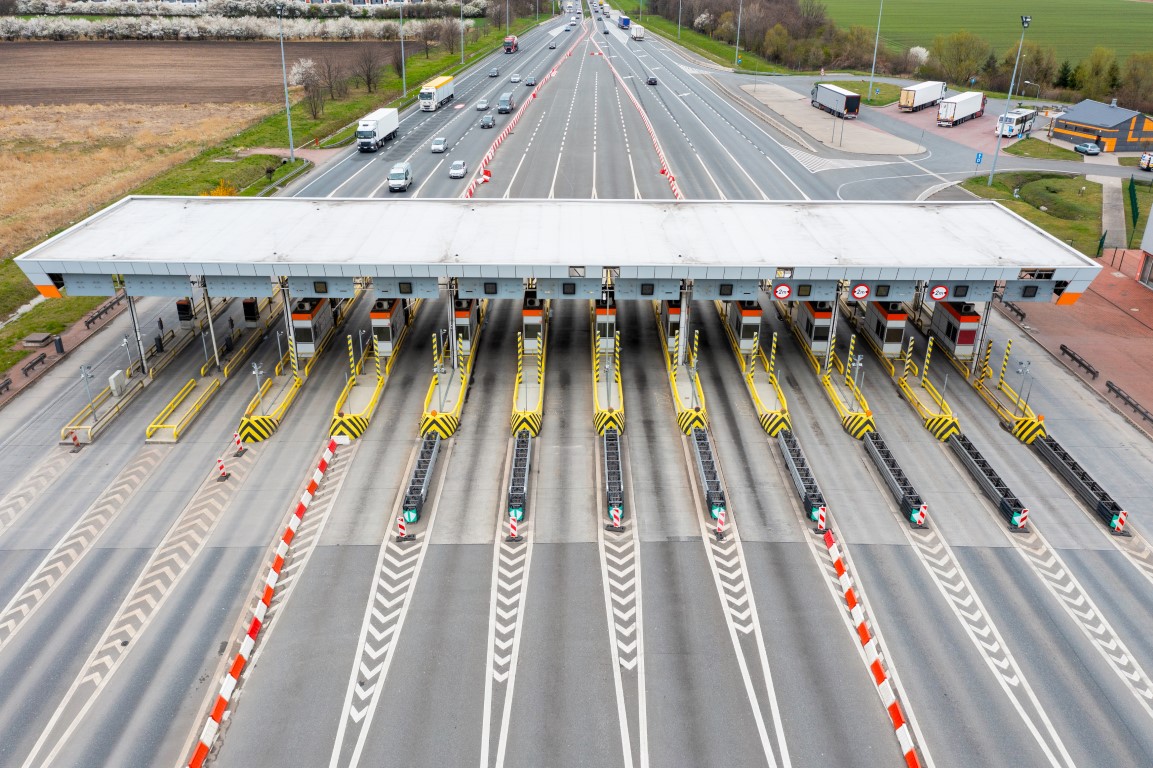
Electronic Toll Collection (ETC) is a cashless, automated toll payment system that allows vehicles to pass through toll stations without stopping.
ETC technology around the world
The technology relies on a combination of wireless communication, identification, and backend billing systems:
- RFID (Radio Frequency Identification): Uses a transponder/OBU (On-Board Unit) in the vehicle and a reader at the toll gate.
- DSRC (Dedicated Short-Range Communication): Enables two-way communication between the onboard units(OBU) and roadside units.
- ANPR (Automatic Number Plate Recognition): Works as a backup or primary system where OBUs are not used.
- GNSS/GPS-based Tolling: Vehicle’s OBU contains a GNSS/GPS receiver that calculates traveled distance on tolled roads.
- Mobile Network & Cloud Integration: Cellular IoT (NB-IoT, LTE-M, 4G/5G) for real-time transaction data transfer.
OBUs differences among CN, US & EU
The core RFID and the durability of lithium batteries on the On Board Unit OBUs system among China, The United States and Europe lie on the same.
However, China focuses on the technology towards large-scale and low-cost, the United States goes for convenience, and Europe makes it sustainable.
| Region | Typical OBU Type | Primary Power Source | Key Characteristic |
|---|---|---|---|
| CN | Integrated, Passive, National unified ETC, 5.8GHz DSRC, high penetration rate | Sealed Primary lithium battery + Supercapacitor (with Solar Assist) | Low-cost, long-life, no battery degradation. |
| US | Active Transponder, State-level systems, RFID/DSRC(5.9GHz), toll/transponder tag, credit card binding | Sealed primary Lithium Battery | High functionality, fixed lifespan (~5-10 years), entire unit replacement. |
| EU | Active OBUs, Country-specific OBUs(Toll Europe), DSRC(5.8 GHz) + GNSS, cross-border EETS, mainly truck tolling | Mixed: Vehicle Powered, Sealed Primary Lithium Battery, or Replaceable Batteries | Reflects the diverse and competitive market models. The “corkscrew” model avoids battery issues entirely. |
There is no functional difference between a toll tag/toll transponders and an OBU when discussing electronic toll collection devices.
The distinction is largely semantic and depends on the region or specific terminology used by a toll authority or manufacturer.
And primary lithium battery are frequently found in more advanced or modern OBUs and toll tags, because OBUs and toll tags are all sealed and not user-replaceable.
How Long Does OBU Last?

The lifespan of OBUs (On-Board Units) is 5~10 years, depends on the technology, battery type, and usage environment.
RFID-based OBUs often last longer, DSRC/GNSS OBUs consume a little bit more energy, shortening battery life.
While the power consumption of On-Board Unit (OBU) is very low, which allows its battery to have an exceptionally long lifespan under high-temperature performance.
The key to this is the device’s operational mode and the type of battery it uses.
What kinds of batteries used in OBU?
There are two types of batteries used in On Board Units OBU: Rechargeable batteries and primary batteries.
- Vehicle-powered OBUs:
Some OBUs are powered directly from the car battery (via cigarette lighter or OBD port) with rechargeable batteries inside.
These don’t need battery replacement – As long as your vehicle battery is fine, the OBU works.
- Battery-powered OBUs:
Most small, sticker-type, or self-contained OBUs (common in RFID/DSRC tolling) use primary lithium batteries.
These are sealed onboard units. The battery is not designed to be replaced by the user, it needs to be exchanged for new device from the sevice center.
Some advanced OBUs use HPC batteries, combining lithium cells with supercapacitors to handle high-current pulses.
How does a OBU work?
An OBU’s power consumption isn’t constant. It fluctuates dramatically based on its state.
The largest power consumption in the whole trading process is the card reading process in the trading state, and the instantaneous current can reach more than 150mA.
- Standby/Sleep Mode:
When the vehicle is parked or not near a toll gate, the OBU enters a deep sleep mode.
In this state, it consumes a minimal amount of power, often just a few microamperes (μA).
The device’s microcontroller is in a low-power state, and the communication modules are turned off.
- Active/Listening Mode:
As the vehicle approaches a toll gate, the OBU’s sensors and communication modules are activated to listen for a signal from the toll transponder.
The power consumption increases slightly, but it’s still relatively low.
- Transmission Mode:
This is where the highest power consumption occurs.
When the On Board Unit OBU communicates with the toll gate to send and receive data, its radio frequency (RF) module transmits a strong signal.
This requires a high-current pulse that can momentarily draw up to 2 amperes — lasting only a few milliseconds.
Usage Environment
The harsh usage environment directly impacts the On Board Unit OBU’s lifespan, primarily affecting its internal battery.
- Temperature: A vehicle usually has a much higher temperature than outside – sometimes 80℃(170℉) under direct solar radiation, and lower temperature reduces the performance a lot.
- Vibration and Shock’s Effect: The constant mechanical stress can damage the internal components or lead to poor connections.
- Using Frequency: From a few times per day to a few times per month, usually no more than 10 times a day.
This usage pattern — infrequent, high-power bursts followed by long periods of inactivity — is the main reason why OBUs are perfectly suited for primary lithium batteries or HPC batteries
From what we have tested in laboratory, as long as the power supply has more than 1000mAh capacity, it can theoretically achieve 20 thousand times of usage and a working life of more than 5 years.
How We Help With OBUs Manufacturing?
Comparison of OBU Power Solutions
Therefore, a dual power solution ensures reliable operation across different conditions for On Board Unit OBU.
| Power Source | Features | Challenges |
|---|---|---|
| Primary Lithium Battery+HPC Battery | Very long life (5-10+ years), low self-discharge, “fit-and-forget” design. | Non-rechargeable (creates e-waste), more expensive to replace, can be less suited for high-power bursts without an HPC. |
| Vehicle’s Electrical System | Continuous, reliable power supply. | Can drain the car’s battery if the OBU is not designed to turn off with the ignition, requires professional wiring. |
| Rechargeable + PV System | Self-sustaining, environmentally friendly, reduces e-waste, simplifies installation. | The efficiency of the PV panel depends on sunlight, can be affected by weather or parking in a garage, rechargeable batteries may have a shorter lifespan in extreme heat compared to primary lithium. |
Rechargeable Batteries + Photovoltaic Batteries
The photovoltaic batteries have the panel to continuously harvests solar energy.
The rechargeable battery inside the solar energy is then used to charge the OBU device as a self-sustaining equipment.
The advantage of this self-sustaining power is that it won’t drain the car battery and easy installation on car.
- Pros
Low material cost, High discharge current, High self-discharge rate, Great voltage stabilization performance, etc
- Cons
Narrow range of applicable temperature, Low capacity retention, Complex power management circuits, High cost voltage conversion chip, Electrical interference with an OBU’s sensitive electronics, etc
ER14250+HPC1520 + Photovoltaic Batteries
The Photovotaic batteries is the first stage of the system, acting as a constant, self-sustaining energy source to primary lithium battery.
Li-SoCl2 battery is working as energy storage component with high energy density, and hybrid supercapacitor is a high-current bursts.

- Pros
Improved safety & data integrity, High energy density, Low cost, High reliability, pretty Wide operating temperature range, Efficient high pulse handling, Low self-discharge rate, Maintenance-free, etc
- Cons
Larger size, Higher initial cost, End-of-life management, etc
We have designed and developped a battery technology combines the lithium-thiony chloride batteries ER14250 and hybrid supercapacitor HPC1520.
When PV battery is not working, the primary lithium battery can supply a low, continuous current to hybrid supercapacitor without trouble to the onboard units.
This dual power supply provides a much safer, more reliable, long-term and environmental adaptability energy solution for On Board Unit OBU perfectly.
Tracking evaluation of long-term reliability
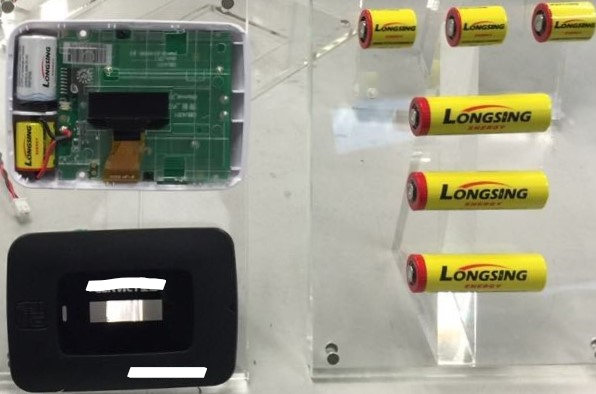
Can a composite power supply really maintain stable output capacity throughout the entire lifespan of a On Board Unit OBU?
This is an important consideration in practical applications to be evaluated.
Test of performance reliability
Now we have a hybrid supercapacitor HPC1520, which has been serving in on-board unit OBU for ETC systems for 5 years.
It is tested for discharge performance against a new battery under the following condition: -10℃(14℉) 800mA, 10 ms/1min pulse discharge.
The result shows that the 5-year hybrid supercapacitor is only 0.1V lower than the new one during a 800mA pulse discharge test.
Nevertheless, it still demonstrates the capability to provide large-current pulse discharge in practical applications.
Test of long-term reliability
Now we have a battery pack of primary lithium battery ER14250 and hybrid supercapacitor HPC1520.
Put the battery pack in the glass sun room to conduct insolation experiment to simulate the actual working conditions: 60℃(140℉) for 450 days under sun glass room.
According to Arrhenius Equation, the reaction rate constant is exponentially related to temperature.
That means the rate of chemical reaction increases by 2 to 4 times for every 10 degree increase in temperature.
While 200 days at 60℃ at experimental condition is equivalent to 10 years at room temperature, we still test both open circuit voltage and load voltage 450 days later.
No failure happens on the battery!
Conclusion
The dual power solution for an On-Board Unit (OBU) in an Electronic Toll Collection (ETC) system uses both the vehicle’s electrical system and an internal, long-lasting battery.
For different OBUs or toll/tranponder tag systems around the world, they must operate reliably for many years without frequent maintenance.
This makes primary lithium batteries critical to ensuring uninterrupted On Board Unit OBU performance as Automotive Electronic Power Supply System.
The solution with ER14250+HPC1520+photovoltaic batteries allows the feasibility of full sealing on OBU device: wide temperature range, low self-discharge rate, long lifespan, high reliability, light weight, safe design, etc
They are also successfully applied in various products of intelligent transportation system and modern electronics, particularly in IoT (Internet of Things) devices.
The dual power solution is the go-to power solutions for applications where battery replacement is difficult, expensive, or impractical.
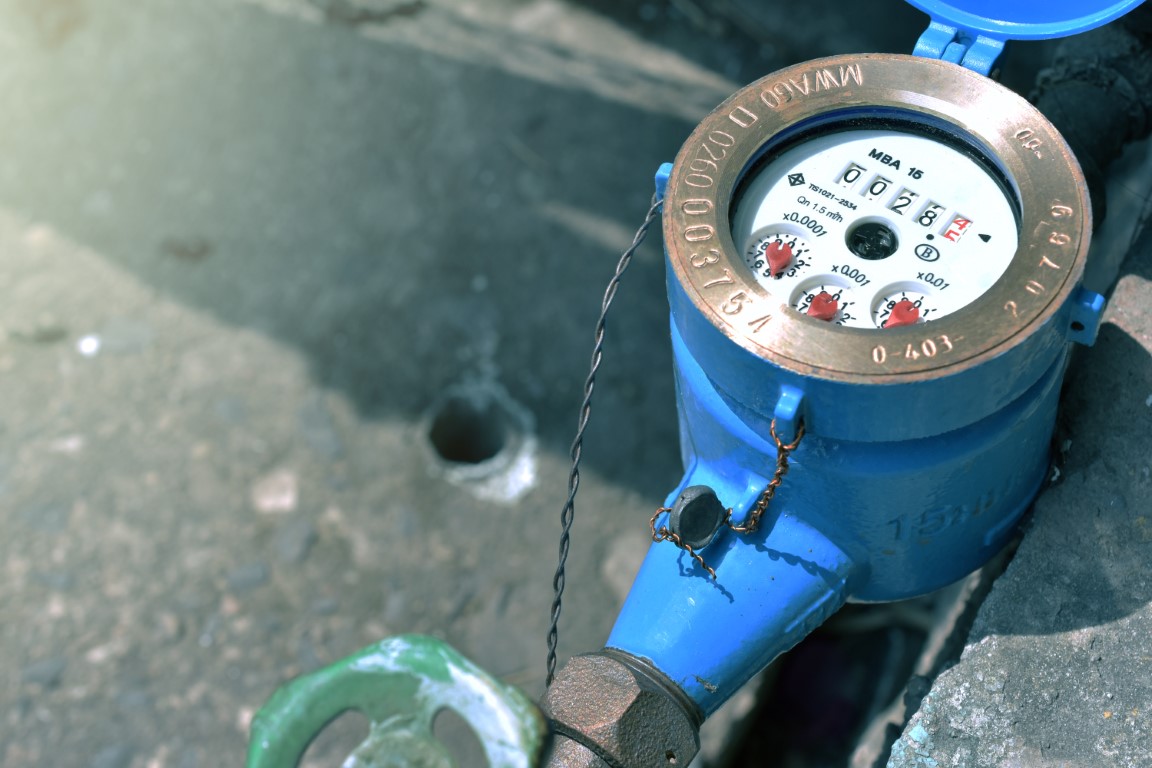
Smart Water Meter: Project with Primary Lithium Battery Solution
A smart water meter measures water usage electronically and transmits the data remotely (via RF, cel

Intelligent Well Cover: Digitization, Quick Warning, and Forecast Solution
Guangzhou NB-IOT Intelligent Manhole Cover System

Intelligent Logistics: Safety, Visualization, and Rational Deployment Solution
“GOOCONTAINER” Intelligent Container Project