


What Makes the Science Behind Lithium Thionyl Chloride Battery So Unique?
Power systems need reliable energy sources. Industrial applications face harsh conditions every day.
Traditional batteries often fail when temperatures drop or when devices need long-term stability. These failures cost companies money and create safety risks in critical systems.
The lithium thionyl chloride battery operates through an electrochemical reaction between lithium metal and thionyl chloride electrolyte, producing energy with exceptional stability across extreme temperatures (-60°C to +85°C) and delivering the highest energy density among primary batteries at 500-700 Wh/kg.

This chemistry enables ultra-low self-discharge rates below 1% per year, making it ideal for long-term industrial applications requiring 20+ years of reliable operation.
For example, one of our European IoT manufacturers came across stable and long-life power problem on their environmental sensing platform[1], which is deployed across remote forested resions in 2019.
Their earlier battery system failed during winter seasons because of low-temperature voltage drops and irregular pulse loads from the wireless module.
We recommended our ER14505 lithium thionyl chloride (Li-SOCl₂) cell and helped them redesign their power architecture, including pulse-load validation and long-term discharge modeling.
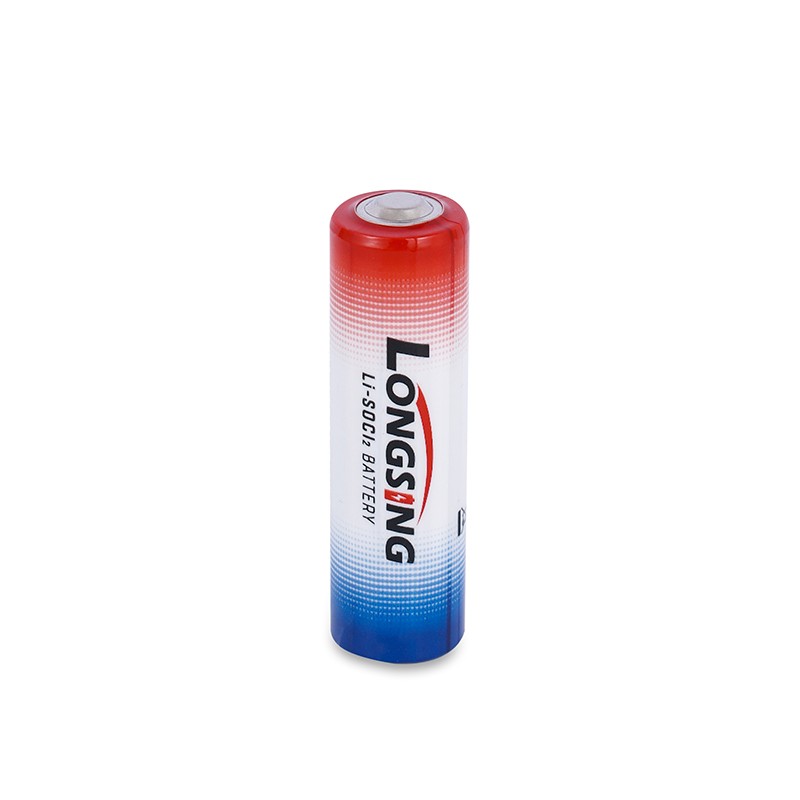
For years, this ER14505-powered devices are still operating without field failures, replacements, or data loss.
That is a great success and encouragement for both of us.
We will explore the chemical principles, performance characteristics, and practical applications that make this technology essential for modern industrial systems.
Table of Contents
- How Does the Chemical Reaction Work in Li SoCl2 Batteries?
- What Physical Properties Define LiSOCl2 Performance?
- Why Do Temperature Ranges Matter for Chloride Battery Systems?
- How Does Self-Discharge Compare to Other Battery Technologies?
- How Do Engineers Judge Lifetime and Reliability?
How Does the Chemical Reaction Work in Li SoCl2 Batteries?
The lithium thionyl chloride battery generates electricity through oxidation-reduction reactions where lithium metal atoms lose electrons at the anode while thionyl chloride molecules gain electrons at the carbon cathode.
The reaction produces lithium chloride salt and sulfur dioxide gas, with each lithium atom releasing 3.6 volts during the electron transfer process, creating one of the highest voltages available in primary battery chemistry.
The fundamental chemistry involves precision engineering at the molecular level. Lithium metal serves as the anode material because it sits at the top of the electrochemical series.
This position means lithium gives up electrons more readily than almost any other element.
The metal exists in pure form, pressed into thin sheets or spiral configurations inside the battery housing.
Thionyl chloride acts as both the cathode material and the electrolyte solution. This dual role makes the design more efficient than batteries requiring separate electrolyte systems.
The liquid chloride battery component surrounds a porous carbon cathode.
Carbon provides the conductive surface where the reduction reaction occurs. The porous structure increases the surface area available for electrochemical reactions.
Chemical Equation and Reaction Mechanism
The overall reaction follows this pathway:
4Li + 2SOCl₂ → 4LiCl + S + SO₂
At the anode, lithium atoms undergo oxidation. Each atom releases one electron and becomes a positively charged lithium ion.
These ions move through the electrolyte toward the cathode. The electron travels through the external circuit, providing useful electrical current to the connected device.
At the cathode, thionyl chloride molecules accept electrons.The reduction breaks chemical bonds within the molecule. This process forms lithium chloride as a solid precipitate.
Sulfur and sulfur dioxide also form as byproducts. The solid products deposit on the cathode surface or settle within the battery structure.
| Reaction Component | Chemical Formula | Role in Process | Electron Transfer |
|---|---|---|---|
| Lithium Anode | Li → Li⁺ + e⁻ | Oxidation Source | Releases Electrons |
| Thionyl Chloride | 2SOCl₂ + 4e⁻ | Reduction Agent | Accepts Electrons |
| Lithium Chloride | 4LiCl | Solid Product | Stable Compound |
| Sulfur Products | S + SO₂ | Byproducts | Neutral Species |
The voltage output remains remarkably stable throughout discharge. Most batteries show declining voltage as they deplete.
The lithium thionyl chloride batteries maintain 3.6 volts until nearly complete discharge.
This flat discharge curve comes from the consistent chemical potential difference between lithium metal and thionyl chloride throughout the reaction cycle.
One interesting aspect involves the formation of a passivation layer. When the battery sits unused, a thin lithium chloride film forms on the anode surface.
This layer acts as a protective barrier. It dramatically slows the self-discharge reaction.
However, it also creates a delay when the battery first activates. The initial current must break through this protective layer.
Engineers team lead by Wilson Lu at Long Sing Technology design cells to minimize this voltage delay while maintaining the protective benefits during storage.
The reaction kinetics depend on temperature. Cold conditions slow molecular movement. This reduces the rate at which lithium ions travel through the electrolyte.
The viscosity of thionyl chloride increases at low temperatures. Higher viscosity means ions face more resistance as they move.
However, the basic chemistry remains functional even at -60°C, though at reduced power levels.
Heat accelerates the reaction rate. Higher temperatures increase molecular kinetic energy. Ions move faster through the electrolyte. The carbon cathode surface becomes more active.
However, excessive heat can cause problems.
The socl2 density changes with temperature. Pressure inside the battery housing increases. Engineers must balance these factors when designing cells for high-temperature applications.
The carbon cathode requires careful engineering. Simple carbon black provides good conductivity.
However, it may lack sufficient surface area for high-rate applications.
Many manufacturers use specially treated carbon materials. These processed carbons feature carefully controlled pore sizes.
The pore network allows thionyl chloride to penetrate deeply. This maximizes the active surface area where reactions occur.
Some designs incorporate additives to improve the cathode’s electronic conductivity and chemical stability.
What Physical Properties Define LiSOCl2 Performance?
LiSOCl2 batteries deliver energy density values between 500-700 Wh/kg and 1000-1400 Wh/L, which exceeds all other primary battery chemistries by significant margins.

The socl2 density of 1.66 g/cm³ combined with lithium’s low atomic mass creates this superior power-to-weight ratio, enabling compact battery designs for space-constrained industrial applications.
Energy density represents the amount of energy stored per unit mass or volume.
This metric determines how much power a device can access from a given battery size.
The combination of lightweight lithium and energy-rich thionyl chloride produces exceptional results.
A typical AA-sized li socl2 cell stores approximately 2.7 amp-hours of capacity. This far exceeds alkaline batteries of the same physical size.
Comparing Primary Battery Technologies
The voltage remains another critical parameter.
At 3.6 volts, these cells deliver three times the voltage of standard alkaline batteries. Higher voltage means fewer cells needed in series configurations.
A device requiring 7.2 volts needs only two lithium thionyl chloride cells compared to six alkaline cells. This reduces system complexity and overall size.
| Battery Chemistry | Nominal Voltage | Energy Density (Wh/kg) | Operating Temperature | Self-Discharge Rate |
|---|---|---|---|---|
| Li-SOCl₂ | 3.6V | 500-700 | -60°C to +85°C | <1% per year |
| Alkaline | 1.5V | 80-150 | 0°C to +50°C | 2-3% per year |
| Lithium Manganese | 3.0V | 280-300 | -20°C to +60°C | 1-2% per year |
| Zinc-Air | 1.4V | 400-450 | -10°C to +55°C | N/A (activated) |
Internal resistance affects how much current a battery can deliver. Lower resistance means higher available power.
The liquid electrolyte in lisocl2 cells provides excellent ionic conductivity. Ions move freely through the liquid medium.
This results in internal resistance values typically below 50 ohms for standard cells. Special high-rate versions can achieve resistance below 10 ohms.
The liquid nature of thionyl chloride creates both advantages and challenges. Liquids conform to container shapes, allowing flexible cell designs. The liquid maintains contact with both electrodes throughout discharge.
As the reaction proceeds and solid products form, the liquid can still reach unreacted portions of the electrodes. This ensures consistent performance throughout the battery’s life.
However, liquid electrolytes require sealed containers. The battery housing must prevent leakage while withstanding internal pressure changes.
Manufacturers use specialized seals and hermetic designs[2]. Glass-to-metal seals provide excellent long-term integrity. These seals maintain their barrier properties for decades.
The robust construction allows chloride battery systems to function reliably in harsh industrial environments.
Physical size options range from small button cells to large cylindrical designs.
Button cells power memory backup systems and small sensors. They typically measure 6-25mm in diameter.
Cylindrical cells come in standard sizes like AA, C, and D formats. These provide higher capacity for utility meters and tracking devices.
Large cylindrical cells can exceed 50mm in diameter and 100mm in length. Such cells power equipment in oil fields and remote monitoring stations.
Weight considerations matter for portable devices and aerospace applications. A D-sized lithium thionyl chloride battery weighs approximately 35 grams while storing 19 amp-hours.
An equivalent alkaline battery weighs over 140 grams but delivers only 12 amp-hours. This four-fold advantage in energy-to-weight ratio proves crucial for battery-powered devices that must operate for years without replacement.
The mechanical stability of the electrodes affects long-term reliability.
Lithium metal can form dendrites under certain conditions. These needle-like structures can grow across the electrolyte gap.
If dendrites reach the cathode, they create internal short circuits.
Battery designers prevent this through careful separator design and controlled manufacturing processes. The protective passivation layer also helps limit dendrite formation during storage periods.
Thermal management becomes important in high-power applications.
Rapid discharge generates heat from the electrochemical reactions and from internal resistance losses. The battery housing must dissipate this heat effectively.
Metal cases provide better thermal conductivity than plastic housings.
Our engineers select materials based on the expected discharge rates and ambient conditions.
Some high-power designs incorporate internal heat-dissipating structures to manage temperature rises during pulse discharge events.
Want to try our long life lithium batteries?
Submit the form below, and Long Sing Technology engineers will analyze your power profile for free.
Why Do Temperature Ranges Matter for Chloride Battery Systems?
Lithium thionyl chloride battery systems maintain functionality from -60°C to +85°C because the liquid thionyl chloride electrolyte remains fluid across this range while lithium metal’s electrochemical activity persists even at extreme cold.

This temperature tolerance enables operation in Arctic oil wells, desert solar installations, and aerospace applications where other battery chemistries fail or require expensive thermal management systems.
Temperature directly influences the physical and chemical properties of all battery components.
The electrolyte viscosity changes significantly with temperature.
At room temperature, thionyl chloride flows easily. As temperature drops, the liquid becomes more viscous.This slows ionic movement through the electrolyte.
However, unlike aqueous electrolytes that freeze, thionyl chloride remains liquid even at -60°C. This prevents the catastrophic failure that occurs when water-based batteries freeze.
Performance Across Temperature Ranges
Cold temperatures reduce available capacity and power output.
At -40°C, a li socl2 cell might deliver only 30-50% of its room-temperature capacity at normal discharge rates.
The increased viscosity of the electrolyte raises internal resistance. Higher resistance means more voltage drop under load.
Devices might see terminal voltage fall below their minimum operating threshold.
| Temperature Range | Capacity Retention | Internal Resistance | Typical Applications |
|---|---|---|---|
| +20°C to +60°C | 95-100% | Baseline | Standard Industrial Meters |
| -20°C to +20°C | 80-95% | 1.5x Baseline | Outdoor Sensors |
| -40°C to -20°C | 40-70% | 3x Baseline | Arctic Monitoring |
| -60°C to -40°C | 20-40% | 5x Baseline | Aerospace Systems |
| +60°C to +85°C | 90-100% | 0.8x Baseline | Downhole Tools |
Designers compensate for cold-temperature effects in several ways.
Using lower discharge rates allows the chemistry more time to proceed. The battery can still deliver the needed energy, just at a slower rate.
Some applications incorporate hybrid pulse capacitor systems. These capacitors handle brief high-current demands while the primary lithium thionyl chloride battery charges the capacitor during low-demand periods.
This hybrid approach ensures reliable operation across the full temperature range.
High temperatures accelerate chemical reactions. At +85°C, the battery delivers excellent power and capacity.
However, elevated temperatures also increase self-discharge rates. The protective passivation layer becomes less effective.
Chemical side reactions occur more readily. These factors reduce the battery’s shelf life and operational lifespan at high temperatures.
Some applications experience temperature cycling. A utility meter in a temperate climate might see -10°C winter nights and +50°C summer days.This repeated expansion and contraction can stress battery seals and internal structures.
Manufacturers test cells through hundreds of temperature cycles to ensure reliability. The hermetic seals must maintain integrity despite these thermal stresses.
The socl2 density changes with temperature. Liquids expand when heated and contract when cooled.
Battery designers account for this by including void space within the cell. This empty volume accommodates electrolyte expansion without generating excessive internal pressure.
The amount of void space represents a careful balance. Too much reduces energy density. Too little risks pressure buildup at high temperatures.
Pressure relief mechanisms protect against catastrophic failure. If internal pressure exceeds safe limits, a vent releases gases before the case ruptures.
The vent typically consists of a calibrated weak point in the battery housing. This might be a scored section of the case or a pressure-sensitive seal.
When activated, the vent releases gases while maintaining enough integrity to prevent violent disassembly.
This safety feature proves essential for batteries operating in enclosed equipment or hazardous environments.
Different applications require different temperature-optimized designs.
A battery for Arctic service uses additives that improve low-temperature conductivity. The internal structure might feature thinner electrodes for lower resistance.
Conversely, high-temperature cells use more robust seals and larger void volumes. The cathode formulation might include stabilizers that resist thermal degradation.
Long Sing Technology offers various specifications optimized for specific temperature profiles. This customization ensures optimal performance in each application’s unique conditions.
Real-world testing validates temperature performance.
Laboratory tests provide controlled data, but field conditions add variables.
Batteries in outdoor sensors face not just temperature extremes but also humidity, vibration, and electromagnetic interference.
Extensive field trials in representative environments confirm that laboratory performance translates to actual applications.
These tests might run for years to verify long-term reliability across seasonal temperature variations.
How Does Self-Discharge Compare to Other Battery Technologies?
Lithium thionyl chloride batteries exhibit self-discharge rates below 1% per year at room temperature due to the lithium chloride passivation layer that forms spontaneously on the anode surface, creating an ionic barrier that nearly halts unwanted chemical reactions.

This exceptional storage stability enables 10-20 year shelf life with minimal capacity loss, making these cells ideal for applications where battery replacement proves difficult or expensive.
Self-discharge represents energy loss when a battery sits unused.
All batteries experience some self-discharge, but rates vary dramatically across chemistries.
Alkaline batteries lose 2-3% of capacity per year. Nickel-metal hydride cells can lose 30% in just a few months.
These losses limit how long batteries can sit on shelves or in deployed devices before requiring replacement.
Long-Term Storage Characteristics
The passivation layer forms naturally when lithium contacts the thionyl chloride electrolyte. This thin lithium chloride film grows to a stable thickness within hours or days after cell assembly.
The layer acts as a solid electrolyte. It blocks electronic conduction while allowing some ionic transport.
This unique property dramatically slows the self-discharge reaction while still permitting the cell to function when current is drawn.
| Battery Type | Self-Discharge Rate | Shelf Life | Storage Temperature Impact |
|---|---|---|---|
| Li-SOCl₂ | <1% per year | 10-20 years | Minimal Below 30°C |
| Alkaline | 2-3% per year | 5-7 years | Moderate |
| Li-MnO₂ | 1-2% per year | 8-10 years | Moderate |
| NiMH | 30% per month | 1-2 years | High |
| Lead-Acid | 5% per month | 6-12 months | Very High |
Temperature significantly affects self-discharge rates.
Chemical reactions generally double in rate for every 10°C temperature increase. Storage at elevated temperatures accelerates capacity loss.
A lisocl2 battery stored at +60°C might experience 3-5% annual self-discharge compared to less than 1% at room temperature.
For maximum shelf life, cool storage proves beneficial. Batteries stored at +10°C retain capacity even better than at standard room temperature.
The voltage delay phenomenon relates to the passivation layer. When a cell sits unused for months or years, the protective layer thickens.
Upon initial use, current must reduce this layer before normal operation begins.
Users might observe a temporary voltage drop lasting seconds to minutes. The duration depends on storage time and the magnitude of the initial current draw.
This delay does not indicate battery failure but rather demonstrates the effectiveness of the passivation layer in preventing self-discharge.
Applications benefit differently from low self-discharge rates.
Emergency beacons might sit unused for a decade before activation. Memory backup systems operate continuously at microampere levels. Utility meters draw current sporadically for years.
In all these scenarios, the near-zero self-discharge of lithium thionyl chloride technology ensures available power when needed.
Manufacturing quality influences self-discharge characteristics.
Contamination during production can create current paths through the passivation layer.
Trace amounts of water cause side reactions.
Metallic particles might bridge the gap between electrodes.
Rigorous quality control prevents these defects.
Clean-room assembly, high-purity materials, and thorough testing ensure cells meet specifications.
Manufacturers like Long Sing Technology implement multiple quality checkpoints throughout production to guarantee consistent low self-discharge performance.
The economic implications prove substantial. A utility meter might require battery replacement every 20 years with lithium thionyl chloride batteries versus every 3-5 years with alkaline batteries.
The labor cost for technicians to access remote locations, open equipment, and replace batteries far exceeds the battery cost itself.
Reducing replacement frequency generates significant savings over the life of the installation. This economic advantage drives adoption in large-scale deployments like smart meter networks that might encompass millions of units.
Environmental considerations also matter. Fewer battery replacements mean less waste.
The long service life reduces the total number of batteries manufactured, shipped, and eventually recycled or disposed.
While all batteries require proper end-of-life handling, minimizing the quantity produced represents the most effective environmental approach.
Applications that might consume dozens of alkaline batteries over 20 years instead use a single long-lived chloride battery, substantially reducing environmental impact[3].
Testing protocols verify self-discharge claims. Manufacturers store sample batteries at various temperatures and periodically measure capacity.
These accelerated life tests use elevated temperatures to simulate years of storage in shorter timeframes.
Statistical analysis of the results predicts long-term behavior.
Independent testing laboratories validate manufacturer specifications, providing customers confidence in advertised shelf life values.
Such rigorous verification ensures batteries perform as specified across their intended service life.
How Do Engineers Judge Lifetime and Reliability?
Engineers judge lifetime using models that include load, temperature, pulse current, self-discharge, internal resistance growth, and passivation.
This gives a predictable estimate of field life.

Lifetime Model, Supplier Consistency & Safety
A lithium thionyl chloride battery fits long-term projects because lifetime modeling gives predictable results.
Engineers run load tests, pulse simulations, and temperature cycling. They measure resistance changes and voltage steps under pulse load.
These results help them estimate lifetime.
Supplier consistency matters. A global supplier like Long Sing Technology controls cathode purity, electrolyte formulation, and mechanical tolerance.
These factors help system makers reduce failure rates.
Safety compliance is required. Many industries ask for UN38.3 and IEC tests. This includes mechanical shock, thermal tests, and altitude tests. The battery must pass these tests before mass deployment.
Key Information You Must Know When Purchasing Li-SOCl₂ Batteries
1. Battery Type & Structure
- Bobbin type vs. spiral type
- Trade-off between energy density and pulse capability
2. Nominal Voltage & Discharge Profile
- Nominal voltage: 3.6V
- Flat discharge curve and voltage delay behavior
- Impact on MCU and radio modules
3. Capacity & Energy Density
- Rated capacity (Ah)
- Usable capacity under real load conditions
- Effect of temperature and pulse current on effective capacity
4. Pulse Current Capability
- Peak pulse current (mA / A)
- Voltage drop during transmission (LoRa, NB-IoT, LTE-M)
- Need for hybrid supercapacitor or pulse buffer
5. Internal Resistance (Ri)
- Initial vs. end-of-life resistance
- Ri variation with temperature
- Influence on system brownout risk
6. Operating & Storage Temperature Range
- Typical range: –55°C to +85°C
- Low-temperature performance degradation
- High-temperature self-discharge increase
7. Self-Discharge Rate
- Usually <1% per year
- Key factor for 10–20 year device lifetime
- Shelf life vs. service life difference
8. Passivation Effect
- Causes voltage delay after long storage
- Impact on device startup
- Mitigation techniques (pre-discharge, pulse assist)
9. Form Factor & Mechanical Constraints
- Common sizes: AA, 2/3AA, C, D, custom packs
- Terminal options: axial leads, tabs, connectors
10. Safety & Compliance
- UN38.3
- IEC 60086-4
- UL certification (if required)
- Transportation and storage regulations
11. Lifetime Estimation Model
- Average current
- Pulse frequency & duration
- Temperature profile
- Self-discharge loss
- Aging margin
12. Supplier Capability & Consistency
- Batch consistency
- Long-term availability (10–20 years)
- Traceability & test data
- Customization capability
Conclusion
The science behind lithium thionyl chloride battery technology combines exceptional electrochemistry with practical engineering solutions.
The unique reaction between lithium metal and thionyl chloride produces the highest energy density available in primary batteries while maintaining stable 3.6-volt output.
This chemistry enables operation across extreme temperature ranges from Arctic cold to desert heat, addressing challenges that defeat conventional battery technologies.
The spontaneous passivation layer provides remarkable storage stability with self-discharge rates below 1% annually, ensuring reliable power delivery after years of standby operation.
These combined characteristics make lithium thionyl chloride batteries indispensable for industrial metering, remote monitoring, safety systems, and any application demanding long-term reliability without maintenance.
We understand these principles translate directly into reduced operational costs and enhanced system dependability for our customers worldwide.
Quick Lithium Thionyl Chloride Battery FAQ Review
(Click to Unfold)
Q: What is a lithium thionyl chloride?
A: A lithium thionyl chloride (Li-SOCl₂) battery is a primary lithium system that uses lithium metal as the anode and thionyl chloride as the liquid cathode and electrolyte.
Q: Are lithium thionyl chloride batteries safe?
A: Lithium thionyl chloride batteries are safe when designed, certified, transported, and used according to standards.
They must comply with safety and transport regulations (such as UN38.3 and IEC 60086-4), and users must avoid short circuits, overheating, incorrect disposal, and mechanical damage.
Q: Can lithium thionyl chloride batteries be recharged?
A: No. Lithium thionyl chloride batteries are primary (non-rechargeable) cells. They are not designed for charging, and any attempt to recharge them can cause leakage, venting, or fire.
Q: What is the difference between Li-ion and Li-SOCl₂?
A: Li-ion batteries are rechargeable and use intercalation materials for repeated charge–discharge cycles, usually in consumer and industrial electronics.
Li-SOCl₂ batteries are primary, non-rechargeable cells that prioritize very high energy density, low self-discharge, and 10–20-year life for meters, IoT devices, and backup systems.
Q: What is the difference between Li-SOCl₂ and LiFePO₄?
A: Li-SOCl₂ is a primary lithium system with very high energy density and long shelf/service life, but it is not rechargeable.
LiFePO₄ is a rechargeable lithium-ion chemistry with lower energy density per cell but excellent cycle life and high safety for applications that need frequent charging, such as energy storage and e-mobility.
Q: What is the life of a Li-SOCl₂ battery?
A: Under suitable load and temperature conditions, Li-SOCl₂ batteries can support service lives of 10–20 years in low-drain or pulse-load devices.
Q: What is the high temperature for lithium thionyl chloride battery?
A: Many lithium thionyl chloride batteries are rated for operation up to about +85 °C, depending on design and manufacturer.
Q: Is there a theory behind “refreshing” a lithium thionyl chloride battery before use?
A: Yes. Li-SOCl₂ cells can build a passivation layer on the lithium surface during storage, which causes voltage delay at first load.
A short, controlled “refresh” or conditioning pulse before full operation can partially break this layer, reduce initial voltage delay, and stabilize the voltage response without harming long-term life when done correctly.
Q: Where to buy high quality/capacity lithium thionyl chloride batteries?
A: High quality Li-SOCl₂ cells and battery packs are available from specialized industrial suppliers.
Manufacturers like Long Sing Technology focus on lithium thionyl chloride cells and custom pack assembly for IoT, metering, safety, and backup power, and can provide test data, long-term availability, and application support.
Note:
[2]Learn about hermetic designs and their role in ensuring battery longevity and reliability.↪
[3]Explore how battery choices can affect environmental sustainability.↪
Further information about Lithium Metal Battery
- The Ultimate Guide to Lithium Metal Battery for Professionals
- The 3.0V Standard: Unlocking the Power of Lithium Manganese Dioxide Batteries
- How to Choose Between Lithium Metal vs Lithium Ion?
- Beyond 500 Wh/kg: Lithium Metal Battery Energy Density Under Real IoT Load Conditions
- The Science of the Plateau: Why Voltage Stability is the Lifeline of in Power System
- Operating Temperature Range: How temperature affects lithium metal battery performance
- The Real Cost of Cheap Batteries: How High Self Discharge Rate Increase Your TCO
- The Silent Shelf-Life Secret: Why Battery Passivation is Actually a Good Thing
- Mechanical Robustness: Designing Robust Battery That Survive Shock, Vibration, and Long-Term Stress
- Lithium Metal Batteries for Long-Life Industrial Applications: Design and Performance Insights
- Thermal Runaway Prevention: Why Factory-Level Testing is Non-Negotiable for Lithium Battery Safety
- Lithium Metal Battery Long Term Cost Analysis: Initial Price vs Lifetime Value
- Solid state batteries vs lithium metal batteries: Which One Elevates Your Product Performance?

Designing Energy-Efficient Wireless Sensor Battery: A Comprehensive Battery Guide for Engineers
A wireless sensor battery powers remote devices that collect and send data. Discover the key factors

Supercapacitor vs Battery: The Truth Engineers Need to Know
Engineers face a critical challenge every day. Power storage decisions can make or break product rel
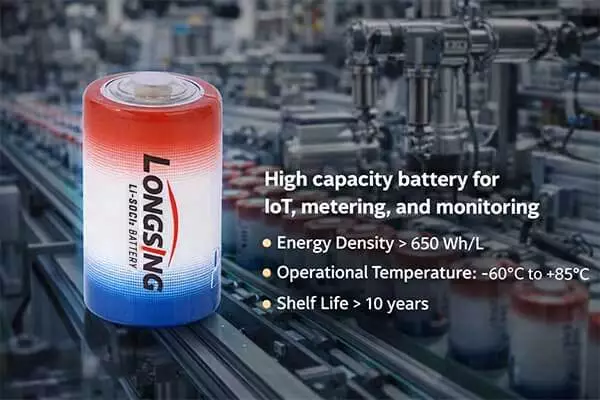
Choosing Li-SoCl₂ High Capacity Battery for IoT, Metering, and Monitoring Systems: What Buyers Need to Know
Li-SOCl₂ High Capacity Battery solutions are widely recognized as a reliable power choice for IoT,