

Top OEM Lithium Primary Battery Manufacturers for Industrial Projects in 2026
Industrial projects can spend months validating electronics, then lose schedules to late battery surprises. Procurement teams face unclear test data, inconsistent batches, and long lead times without proper lithium battery OEM process. This article helps you qualify OEM Lithium Primary Battery Manufacturers with factory-testable criteria[1], including how OEM Lithium Primary Battery Manufacturers support pulse loads with buffers[2] and pack engineering.
Choosing top OEM Lithium Primary Battery Manufacturers in 2026 means selecting suppliers who can prove long-life performance with repeatable factory tests, provide compliant shipping documents, and scale from prototype to mass production with batch traceability[3].
The most reliable path is to match chemistry to load profile, validate with pulse and storage tests, and lock a clear OEM workflow that controls risk and after-sales response.
Top 10 OEM Lithium Primary Battery Manufacturers (2026)
| Manufacturer | Headquarters | Key Advantage |
|---|---|---|
| Saft (TotalEnergies) | France | The “Gold Standard” for military, space, and high-end industrial aerospace projects. |
| Tadiran Batteries | Germany | Industry-leading longevity (20+ years) and extremely low self-discharge rates. |
| EVE Energy | China | World’s largest production capacity and leading exporter of primary lithium cells. |
| Panasonic Energy | Japan | Exceptional quality consistency and safety reliability for industrial electronics. |
| VARTA AG | Germany | High-precision micro-batteries and specialized cells for high-drain industrial tools. |
| Ultralife Corporation | USA | Specializes in high-energy 9V and thin-cell primary lithium for medical and defense. |
| FDK Corporation | Japan | Leaders in high-temperature Li-MnO2 (CR) cells for automotive and industrial IoT. |
| Maxell, Ltd. | Japan | Pioneer in heat-resistant coin cells and reliable industrial memory backup batteries. |
| Energizer Holdings | USA | Dominates the Li-FeS2 (1.5V) market as a direct high-performance alkaline replacement. |
| Duracell (Berkshire Hathaway) | USA | Massive global supply chain for standard industrial-grade primary lithium cells. |
| Long Sing Technology | HK, CN | Best ER+HPC solutions provider under extreme temperature resilience(-60°C to +85°C) for IoT devices. |
If you are comparing suppliers for meters, industrial sensors, safety devices, or healthcare monitoring, the sections below provide a decision-ready structure and a test-focused OEM checklist.
Table of Contents
- 1. Who is Long Sing Technology for industrial sourcing decisions?
- 2. Our Primary Lithium Battery Series
- 3. OEM/ODM Services: Tailored to Your Exact Specifications
- 4. Applications of Our OEM Lithium Batteries
- 5. How to Evaluate an OEM Primary Battery Manufacturer?
- 6. Detailed Technical Specs You Should Compare
- 7. Success Stories: Our OEM Partners & Cases
- 8. FAQ About Long Sing Technology OEM Manufacturer
1. Who is Long Sing Technology for industrial sourcing decisions?
Long Sing Technology Group (Hong Kong) Limited is a Shenzhen, China manufacturer established in 2010, focused on industrial lithium battery solutions for industrial and public utility meters, plus safety, healthcare, and high-reliability backup power.
In transactional sourcing, buyers typically care less about slogans and more about whether OEM Lithium Primary Battery Manufacturers can support qualification, documentation, and stable mass production.
Manufacturing scalability and lead time: what to verify
Scaling matters because industrial deployments often require consistent shipments across years.
A buyer evaluating OEM Lithium Primary Battery Manufacturers can request capacity planning evidence[4], risk controls, and sample-to-mass timelines, then tie those to acceptance checkpoints. This is especially relevant when projects depend on primary battery suppliers for a multi-year meter rollout.
| What procurement needs to know | What a factory should provide | How it reduces risk |
|---|---|---|
| Prototype and mass production readiness | Sample lead time targets, pilot schedule, mass ramp plan | Prevents design freeze delays |
| Batch consistency control | Batch ID rules, traceability fields, COA template | Improves field stability and warranty predictability |
| Document package availability | UN38.3, MSDS, RoHS/REACH declarations[5], test summaries | Enables shipping and compliance sign-off |
When you present vendor identity in an RFQ, you can reference Long Sing Technology as an OEM lithium primary battery supplier and a long life lithium primary battery manufacturer for metering-centric deployments.
2. Our Primary Lithium Battery Series
Industrial buyers usually compare three deliverables: cell series, chemistry family fit, and pack-level integration.
In practice, the strongest OEM Lithium Primary Battery Manufacturers offer (1) long-life cell options, (2) a clear selection guide, and (3) pack assembly that turns a cell into a verified subsystem. For procurement, this means comparing not only price but also test evidence and repeatability from primary battery suppliers.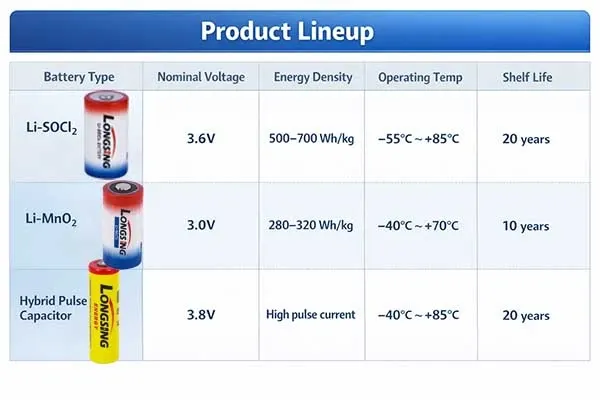
Battery selection guide: what drives the “right” series
- Load profile: steady vs pulse-heavy
- Temperature range and storage time
- Cutoff voltage margin in the device
- Mechanical constraints and connection method
- Documentation and after-sales expectations
For many industrial bids, the “product” becomes custom lithium battery packs rather than raw cells. That is where Lithium battery OEM service makes verification faster and supply more predictable, especially when procurement needs industrial lithium battery solutions that are plug-in ready.
| Use case | Load profile | Selection focus | Typical deliverable |
|---|---|---|---|
| Industrial / public utility meters | Low average + periodic RF pulses | Pulse voltage under storage aging | Li-SOCl2 system + pack verification |
| Industrial sensors | Low average + occasional bursts | Self-discharge, low-temp behavior | Cell + validated pack contacts |
| Safety and alarm | Long standby + event discharge | Storage stability, readiness | Pack with predictable interfaces |
| Healthcare monitoring | Continuous + transmit bursts | Reliability and traceability | Custom pack + documentation |
2.1 Lithium Thionyl Chloride (Li-SOCl2) Batteries
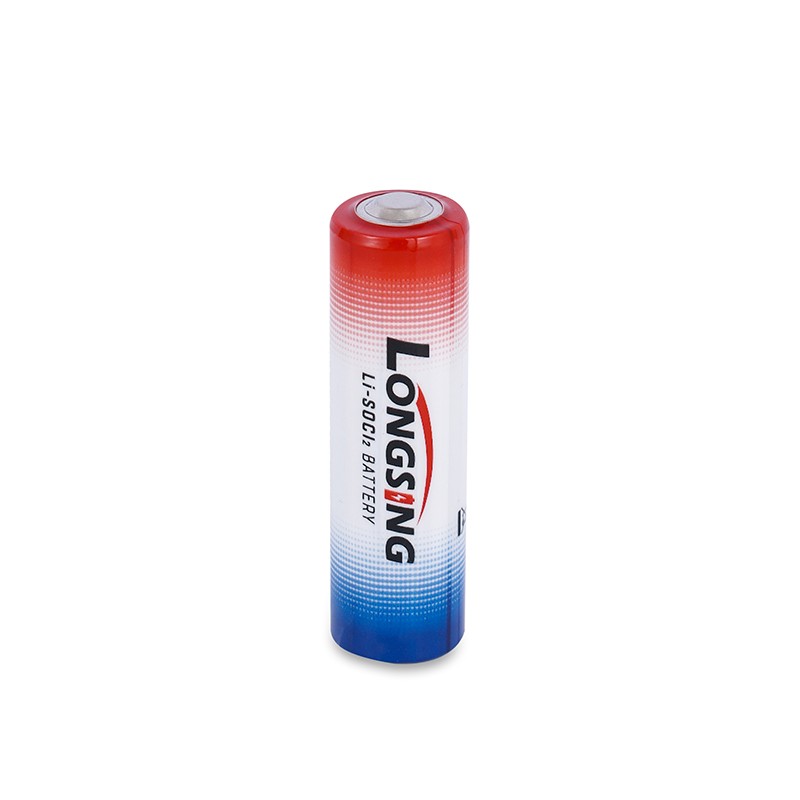
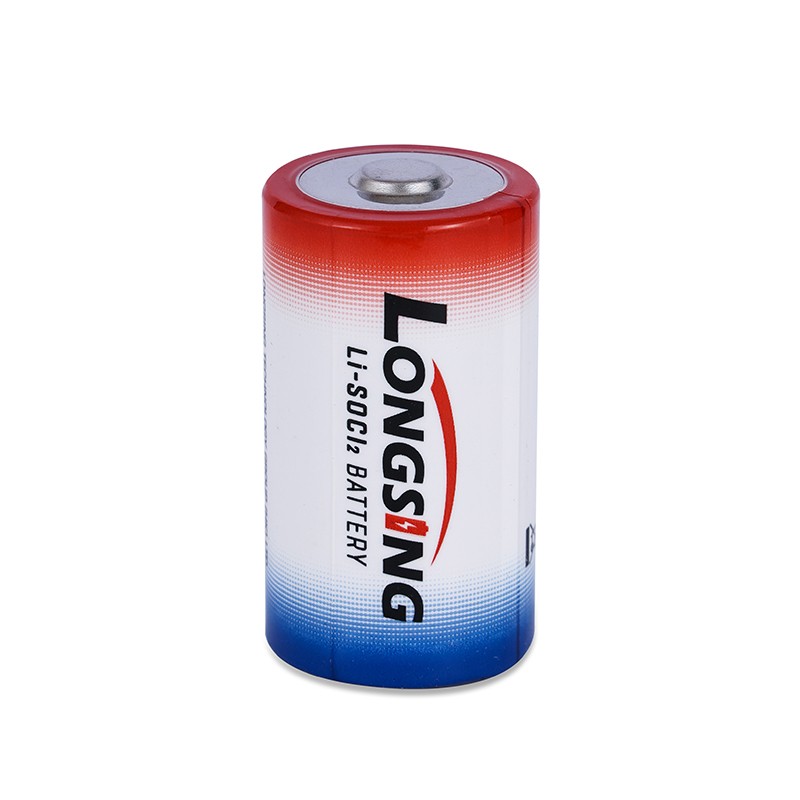
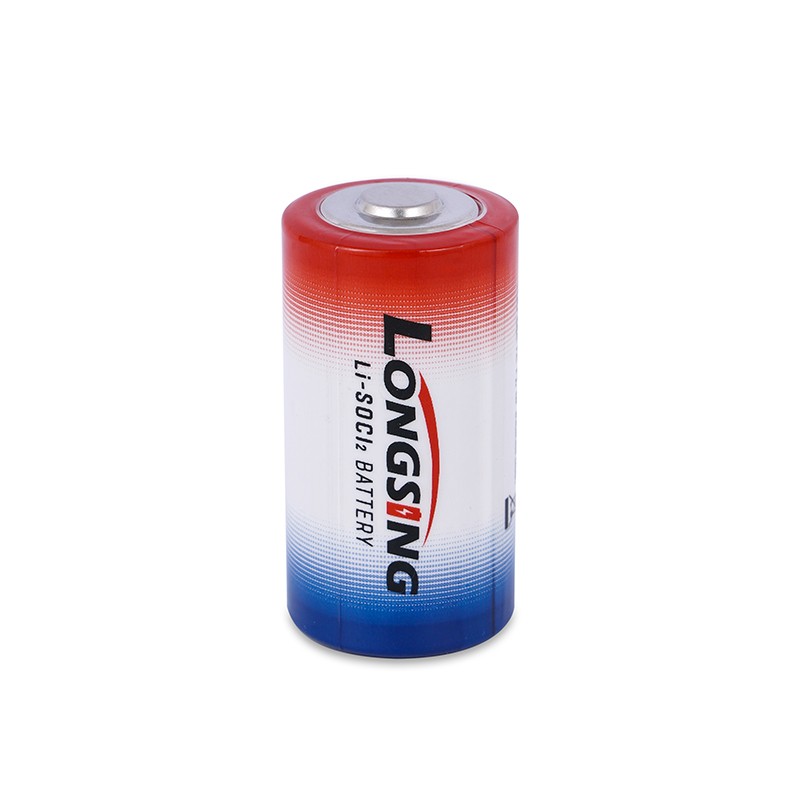
Choose a Li-SOCl2 platform when you need long storage life, low self-discharge, wide temperature operation, and high energy density, and when the supplier can validate pulse behavior with factory tests that match your real load.
In procurement terms, the right OEM Lithium Primary Battery Manufacturers provide not only the lithium thionyl chloride (Li-SOCl2)[6] battery but also test curves, acceptance criteria, and integration options.
Why project teams must test “after storage” pulse performance
Long-life chemistries can behave differently after storage, especially in pulse-driven metering. A defensible sourcing path is to define the device pulse current, pulse width, duty cycle, cutoff voltage, and temperature range, then ask primary battery suppliers to test to that profile.
If the system has tight voltage margins, adding a hybrid pulse capacitor can buffer pulses and reduce “first-load surprises,” which is often the practical outcome of lithium thionyl chloride vs lithium manganese dioxide comparisons in the field.
Example: qualification checklist for long-life deployments
| Qualification item | What to specify | Pass/Fail definition |
|---|---|---|
| Pulse test at temperature | Peak current, pulse width, interval, ambient temp | Minimum voltage stays above device cutoff |
| Storage + pulse retest | Storage time and temperature before retest | Pulse curve remains within allowed droop |
| Contact resistance (pack level) | Tab/weld spec, wire gauge, connector type | Resistance below defined threshold |
| Traceability and COA | Batch ID, test items listed per lot | Complete, repeatable documentation |
A practical OEM narrative can reference models such as ER14505 or ER34615 from Long Sing Technology when discussing form factors for utility meters. In those projects, buyers often purchase custom lithium battery packs so pack-level verification is part of the acceptance plan, and Lithium battery OEM service becomes the mechanism to lock performance. This is also where OEM Lithium Primary Battery Manufacturers differentiate themselves in a transactional shortlist.
2.2 Lithium Manganese Dioxide (Li-MnO2) Batteries
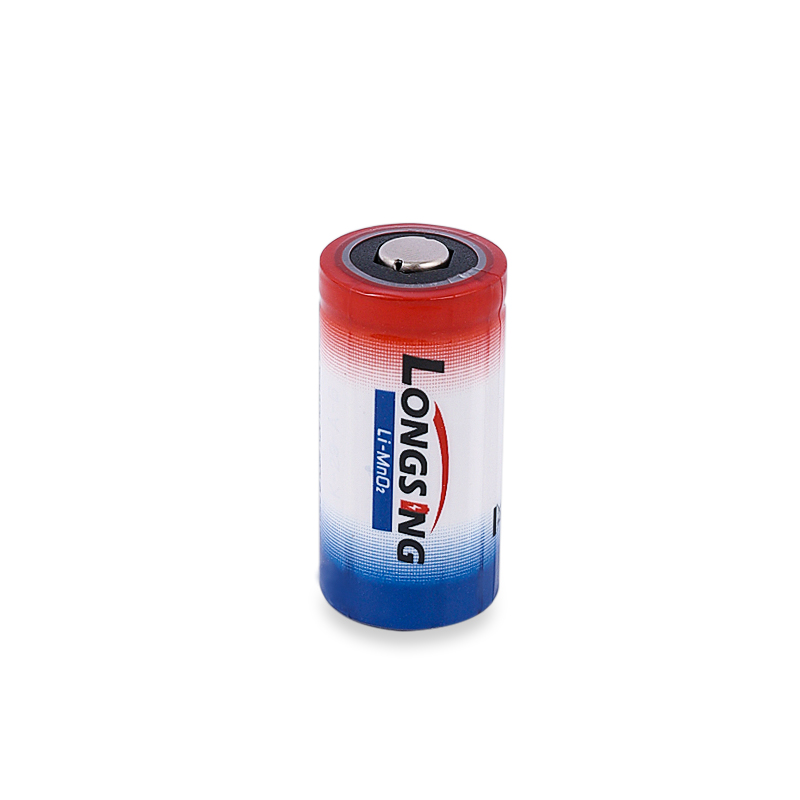
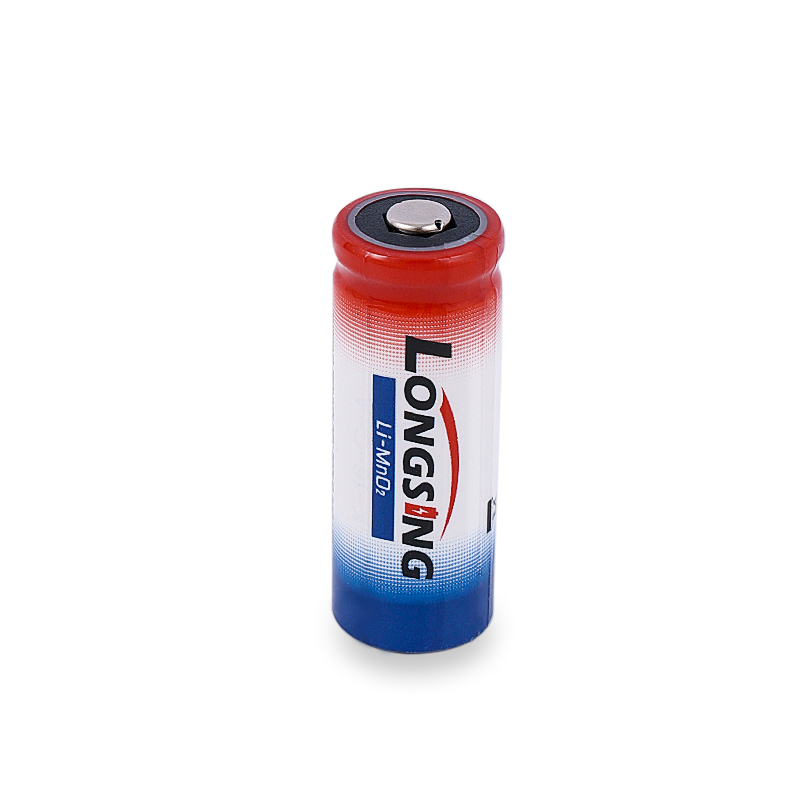

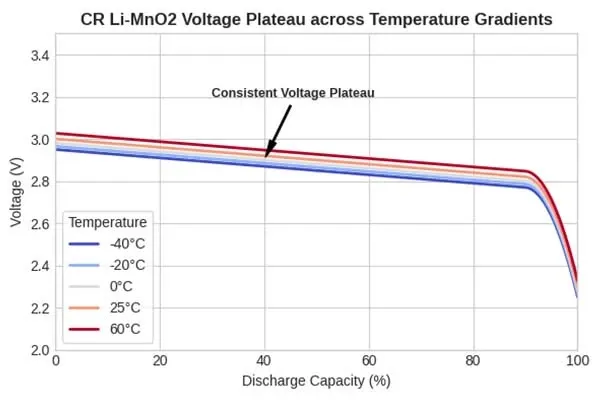
Li-MnO2 makes more sense when the device is designed around a stable 3V platform[7], needs moderate pulse capability without additional buffering, and the project benefits from a chemistry that fits established industrial electronics expectations.
In sourcing decisions, OEM Lithium Primary Battery Manufacturers should show how the selected chemistry matches the load profile and validation plan, rather than claiming one chemistry is universally “best.”
A balanced way to compare and avoid wrong assumptions
Chemistry selection is system engineering, not a spec-sheet contest.
Many teams choose chemistry based on nominal voltage and capacity alone. That can fail when real loads include burst currents, cold-start behavior, or long storage. Buyers should insist on device-specific test profiles and then evaluate the total solution cost: cell, pack, qualification time, and after-sales risk.
This is where primary lithium vs rechargeable li-ion becomes a useful boundary: rechargeable systems can be excellent, but they introduce charging, maintenance, and different compliance expectations. For long-life metering and long-term standby, lithium primary batteries remain common because they simplify lifetime maintenance assumptions.
| Decision dimension | Li-SOCl2 | Li-MnO2 |
|---|---|---|
| Best when | Long service life and low self-discharge dominate | 3V ecosystem and moderate pulses dominate |
| What to verify in tests | After-storage pulse behavior, voltage margin | Pulse stability and temperature response |
| Integration lever | >hybrid pulse capacitor buffering[8] where needed | Pack contacts and stable discharge fit |
When an RFQ includes multiple device SKUs, the supplier that can provide a consistent testing framework across chemistries is often the strongest among OEM Lithium Primary Battery Manufacturers, because it reduces the buyer’s internal engineering workload and shortens qualification time. For procurement, this is one of the clearest reasons to prefer mature primary battery suppliers with pack capability.
3. OEM/ODM Services: Tailored to Your Exact Specifications
Custom packs and structured OEM/ODM services reduce risk by turning chemistry into a verified subsystem with controlled interfaces, documented tests, and a repeatable production workflow that supports audits, PPAP-style expectations, and after-sales root-cause analysis.
In industrial procurement, OEM Lithium Primary Battery Manufacturers are often selected based on whether they can deliver custom lithium battery packs plus a clear Lithium battery OEM service process.
Customization capabilities in Lithium Battery OEM Process
Customization should be expressed as measurable specifications: connector type, wire gauge, weld method, insulation, labeling, and packing. For industrial lithium battery solutions, pack-level tests can prevent hidden losses caused by contact resistance or assembly variation, which can look like “cell problems” in the field.
| Customization area | Typical options | Factory test method |
|---|---|---|
| Electrical interface | Tabs, wire leads, connectors | Contact resistance, pull-force test |
| Pulse buffering | hybrid pulse capacitor parallel module | Pulse curve and voltage recovery verification |
| Mechanical protection | Sleeves, brackets, potting options | Vibration/drop checks (as required) |
| Traceability | Lot codes, barcodes, labels | Batch record audit and COA matching[9] |
The lithium battery OEM process is a sophisticated journey that transforms a unique energy concept into a high-performance reality. In an era where “off-the-shelf” solutions often fall short of specific spatial and power requirements, a structured OEM workflow ensures that every cell, protection circuit, and casing is harmonized for peak efficiency.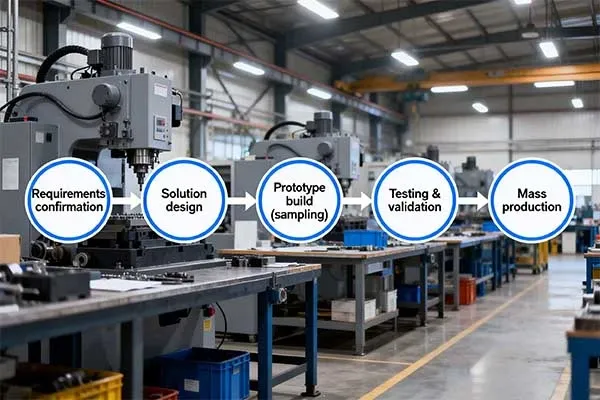
Long Sing Technology’s design phase includes 2D/3D CAD modeling, electrical schematics, thermal simulation, and protection circuit integration (PTC, diode, low-voltage cutoff). We optimize pack layout for IP67/IP68 sealing, shock/vibration resistance, and minimal footprint — critical for compact smart gas meters or industrial IoT devices.
Every design undergoes rigorous DFMEA (Design Failure Mode and Effects Analysis) to guarantee safety and longevity.
A practical 8-step OEM cooperation workflow
- Requirements capture: load profile, environment, lifetime target, compliance needs
- Chemistry shortlist: lithium thionyl chloride (Li-SOCl2) battery vs alternatives, based on tests
- Pack definition: wiring, connector, mechanical constraints, and custom lithium battery packs BOM
- Prototype build[10]: small quantity with full test records
- Validation plan[11]: pulse, temperature, storage, and pack-level checks
- Pilot run[12]: process stability checks and batch traceability confirmation
- Mass production: controlled sampling plan and ongoing COA
- After-sales: failure analysis timeline, corrective action, and change control
In this structure, the names matter because accountability matters:
Long Sing Technology can be referenced as an UL certified lithium primary battery factory and an OEM lithium primary battery supplier when the buyer’s vendor onboarding requires a compliance-oriented profile.
For price-driven tenders, the phrase competitive price lithium primary batteries is relevant only when paired with test evidence and traceability, which is how serious OEM Lithium Primary Battery Manufacturers stay qualified over multiple years.
4. Applications of Our OEM Lithium Batteries
Industrial deployments most often require primary cells and packs that deliver predictable voltage, low self-discharge, controlled pulse support[13], and documented production testing; the best fit depends on the load profile, environment, and service interval.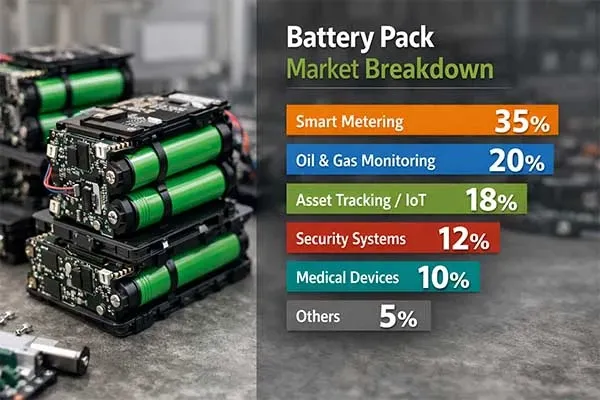
This is why serious procurement teams ask OEM Battery Manufacturers to provide application-specific validation plans, not only datasheets.
4.1 Smart Metering & AMI
Smart metering and AMI typically need long storage life, low self-discharge, and stable performance across temperature extremes, with validated pulse support for RF bursts and valve actuation.
In many designs, Li-SOCl2 chemistry is selected for energy density and 10+ year field targets, often combined with a hybrid pulse capacitor when the device has high transient currents. This is a common pathway for industrial lithium battery solutions.
How to select for AMI
- Validate the average current and peak pulse current separately.
- Confirm cutoff voltage and minimum operating voltage at end-of-life.
- Review storage conditions and shipment dwell time assumptions.
- Ask primary battery suppliers for pulse test plots[14] at temperature corners.
- Use Lithium battery OEM service to lock a control plan (incoming, in-process, outgoing).
4.2 Medical & Healthcare Devices
Medical and healthcare devices often prioritize safety, stable voltage, and predictable behavior under intermittent use, plus consistent quality documentation for audits.
For portable or wearable devices, LiMnO₂ can be selected where moderate pulse capability and 3V class performance match the device design, while Li-SOCl2 is frequently used when long service life and low self-discharge are the primary drivers.
Many programs also request custom lithium battery packs that package cells, protection features (when required), and connectors for controlled assembly.
4.3 Industrial Electronics & IoT
Industrial electronics and IoT nodes are diverse, but they commonly share harsh environment exposure, extended storage, and a requirement for predictable maintenance planning.
For deep cold or hot storage and extended shelf life, Li-SOCl2 can be attractive, while pulse-demanding radios may be stabilized with a hybrid pulse capacitor in parallel for transient support.
In many RF sensor architectures, industrial lithium battery solutions are evaluated by their worst-case voltage drop during transmit bursts and by how consistently the factory controls impedance distribution across lots.
4.4 What “application fit” really means in factory test terms
4.4.1 Smart Metering & AMI — critical validation logic
Even when two suppliers claim the same chemistry and nominal capacity, application fit is proven in test methodology.
For AMI, the key is not only capacity at a gentle load, but also the minimum voltage during short pulses at temperature extremes. When you evaluate OEM Lithium Primary Battery Manufacturers, require evidence that the pulse test is performed on representative lots, with a clear sample plan, acceptance criteria, and instrumentation limits.
If the design uses a hybrid pulse capacitor, confirm the combined system behavior rather than trusting standalone cell curves. This is also where custom lithium battery packs become meaningful: pack-level wiring resistance, weld quality, and connector choices can dominate pulse droop[15].
4.4.2 Medical & healthcare — quality records are part of the “battery”
Medical device programs often need disciplined traceability and change control. In practice, “battery qualification” includes batch records, calibration management, and failure analysis workflows.
Primary battery suppliers that can provide stable PPAP-like documentation[16] (as appropriate for the industry) reduce program risk. This is also a place where Lithium battery OEM service matters: your OEM partner should commit to process control plans and notification rules for any material or process change.
4.4.3 Industrial electronics & IoT — environment + logistics + field reality
IoT deployments are frequently limited by real-world constraints such as shipment dwell time, high humidity storage, or low-temperature starts.
For Li-SOCl2, passivation and “voltage delay” can become a system issue if the load profile includes large pulses after extended storage; this is one reason some system designs pair the cell with a hybrid pulse capacitor. The decision should be validated by an application-specific test plan, not by generic statements.
| Application | Typical load profile | Common selection focus | Recommended evidence to request |
|---|---|---|---|
| Smart metering & AMI | Low average, high short pulses | Pulse droop, cold start, shelf life | Pulse plots at -20°C / -40°C, impedance distribution, lot traceability |
| Medical & healthcare | Intermittent use, stable voltage | Consistency, documentation, safety | Process control plan, change control rules, FA workflow samples |
| Industrial electronics & IoT | Harsh environments, long storage | Self-discharge, temperature range | Accelerated aging plan, storage simulation, pack-level resistance control |
5. How to Evaluate an OEM Primary Battery Manufacturer?
To evaluate a manufacturer, you should confirm certification coverage, production controls, and engineering support, then validate the supplier with samples under a test plan that mirrors your real load profile. For procurement teams comparing OEM Lithium Primary Battery Manufacturers, the most useful question is not “who has the lowest price,” but “who can prove stable performance at scale with the same design intent.”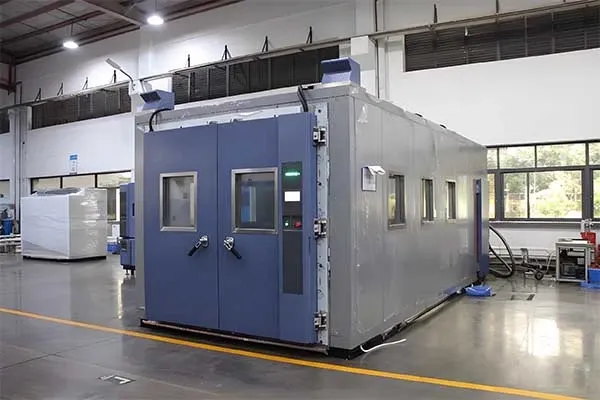
5.1 Certification checklist (UN38.3, IEC, CE, ISO)
A robust certification set reduces compliance risk and makes logistics predictable.
UN38.3 supports transport readiness, while ISO-style systems usually indicate a baseline of document control and continuous improvement. However, certification alone does not guarantee lot-to-lot electrical consistency, so you still need qualification testing.
In transactional sourcing, primary battery suppliers should be able to supply certificates plus traceability details that connect shipments to tested lots. This is a key differentiator among OEM Battery Manufacturers.
5.2 Production capacity & quality control
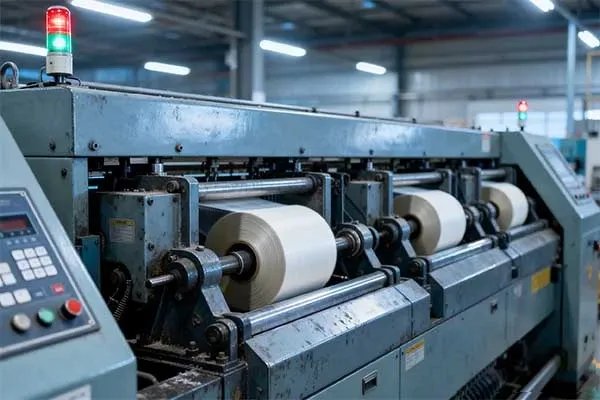
Production capacity should be evaluated together with quality control capability. A factory can run high volume but still fail industrial programs if it cannot control impedance, electrolyte fill, weld integrity, or moisture exposure. Buyers usually request:
- Incoming inspection standards for critical materials.
- In-process checkpoints (e.g., weld pull test, hermeticity screens where applicable).
- End-of-line electrical testing records.
- A documented quarantine and disposition process.
This is where industrial lithium battery solutions become measurable: your acceptance criteria must be translated into factory checkpoints.
5.3 Technical support & engineering capability
Technical support determines how quickly the supplier can converge on a validated design and resolve anomalies.
For example, designing custom lithium battery packs for unique space, connector, or termination requirements often needs rapid DFM feedback and a disciplined sample loop.
Buyers also ask for a named engineering interface; at Long Sing Technology, the chief engineer for custom solutions is Wilson Lu, and commercial coordination is typically handled by sales manager Luke Liu, which supports a structured Lithium battery OEM service experience.
What expert evaluation looks like beyond certificates
Evaluating OEM manufacturers is strongest when it follows a gated model: feasibility, sample validation, pilot, and mass production.
The most common sourcing mistake is treating certification as a proxy for performance. Instead, request a test matrix that includes temperature corners, pulse events, and storage simulation.
Ask how the factory controls measurement uncertainty and calibration schedules, because unstable test systems can hide real distribution risk. If your system uses a Li-SOCl2 cell, explicitly address passivation behavior in the validation plan.
Below is a customization practical workflow that procurement and engineering teams can audit:
This workflow is frequently used to deliver custom lithium battery packs and to formalize Lithium battery OEM service deliverables.
| Gate | Buyer deliverable | Factory deliverable | Typical exit criteria |
|---|---|---|---|
| Requirements confirmation | Load profile, environment, lifetime target | Feasibility + risk list | Signed requirement sheet |
| Solution design | Mechanical envelope, connectors, BOM constraints | DFM proposal + control plan outline | Design freeze draft |
| Prototype build | Sample quantity + test plan | Prototype pack build + lot traceability | Samples shipped with records |
| Testing | Performance + reliability test execution | FA support + corrective actions | Validation report accepted |
| Mass production | Forecast + incoming inspection plan | SPC / batch records + change control | Stable lot performance over time |
6. Detailed Technical Specs You Should Compare
You should compare capacity, discharge curve shape, temperature range, and self-discharge using the same test definitions, then confirm termination and assembly design choices do not add hidden resistance or reliability risks. Serious buyers working with battery manufacturers typically treat “specs” as a contract backed by test methods.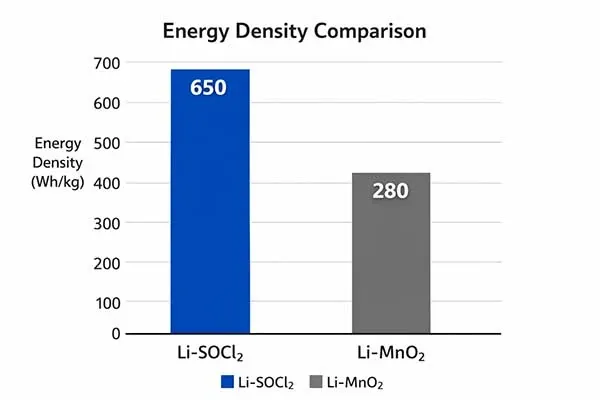
6.1 Capacity, discharge curve, temperature range, self-discharge
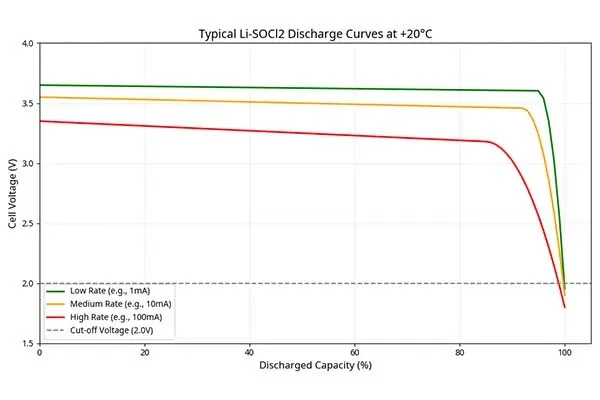
Capacity is meaningful only when the test current and cutoff voltage match your application. The discharge curve determines how much usable energy you can extract before your device hits its minimum voltage. Temperature range validation should include both steady-state and cold-start behavior. Self-discharge must be interpreted with storage time assumptions, because a “10-year” goal depends on true leakage and passivation behavior for Li-SOCl2.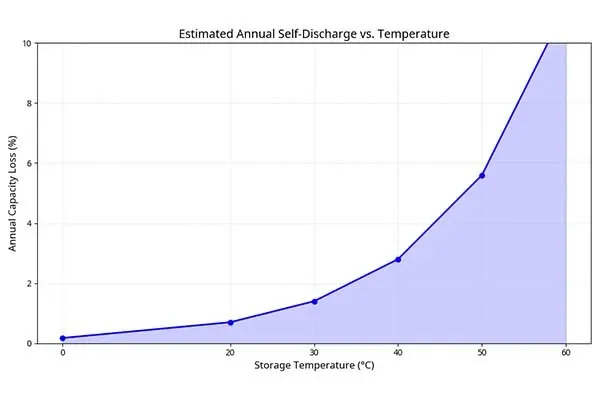
Also, buyers often ask for a comparison note like lithium thionyl chloride vs lithium manganese dioxide to confirm which chemistry best matches the duty cycle.
6.2 Design for different termination styles
Termination design can change real-world performance. Tabs, axial leads, wire leads, or connectors add resistance, and weld quality changes distribution. For custom lithium battery packs, you should request:
- Weld parameter windows and pull strength standards.
- Resistance measurement methods at pack level.
- Visual inspection standards for insulation and strain relief.
- Clear labeling and traceability.
This is where a disciplined Lithium battery OEM service reduces surprises between sample success and mass production.
6.3 Engineering-level comparison
How to compare specs without being misled
When procurement teams compare quotes from primary battery suppliers, spec tables often look similar. The difference is hidden in definitions. Require test conditions for every line item: current, temperature stabilization time, cutoff voltage, and measurement equipment.
For Li-SOCl2, include a “storage then pulse” scenario if your field deployment may sit idle for months before first activation. If pulse support is needed, a hybrid pulse capacitor can shift pulse energy away from the cell and reduce minimum voltage dips, but you must validate the combined impedance and leakage at temperature.
Battery selection guide
- Choose chemistry based on load profile, not only energy density.
- Treat termination as an electrical component, not a mechanical afterthought.
- Validate end-of-life at temperature corners, not only at room temperature.
- Convert “datasheet claims” into acceptance tests tied to your use case.
One-time comparison statements
- lithium thionyl chloride vs lithium manganese dioxide[17]: The former is often chosen for high energy density and long shelf life, while the latter can be preferred when moderate pulse capability and 3 V nominal design are central.
- primary lithium vs rechargeable li-ion[18]: Primary lithium is typically selected for long service life with low self-discharge in low-drain or intermittent applications, while rechargeable Li-ion is chosen when frequent cycling and recharging infrastructure are available.
| Spec category | What to compare | Why it matters | How to verify (factory test focus) |
|---|---|---|---|
| Capacity & discharge curve | Usable mAh/Ah to your cutoff voltage | Predicts replacement interval | Matched load test, voltage vs time plots, lot sampling plan |
| Temperature performance | Cold-start + steady discharge | Avoids field brownouts | Chamber tests at corners, pulse events included |
| Self-discharge | Annual loss under defined storage | Determines shelf + service life | Storage simulation, leakage measurement, retention checks |
| Termination style | Tabs, leads, connectors, weld design | Controls resistance distribution | Pull tests, resistance checks, visual standards, traceability |
7. Success Stories: Our OEM Partners & Cases
Success stories should be evaluated by what was measured, what failed, and what corrective actions were proven in retest. Buyers who shortlist OEM battery manufacturers often learn most from a supplier’s failure analysis discipline and the structure of its OEM engineering loop.
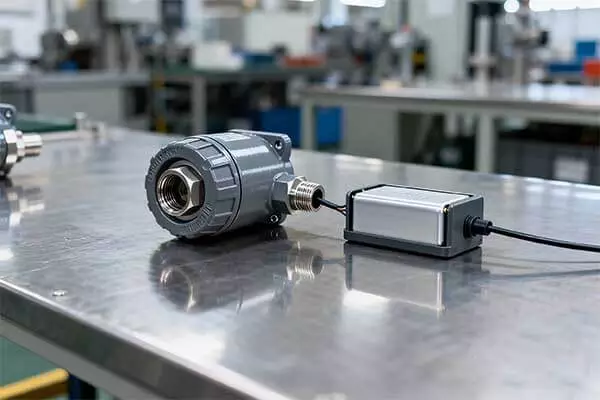
7.1 Case 1: Industrial monitoring battery
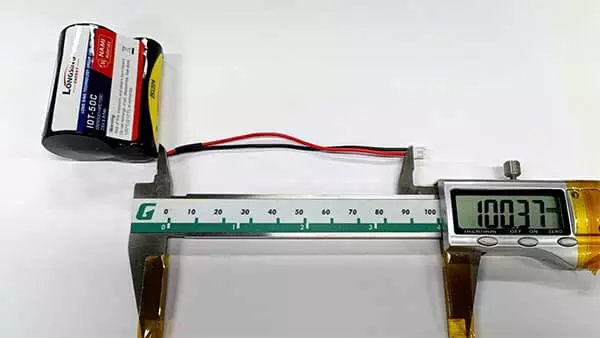
(1) Project Background:
- Country: USA
- Company Type: Infrastructure Monitoring Manufacturer
- Product: Remote Pipeline Pressure Sensors
- Solution: 3.6V ER14505 Li-SoCl2 + HPC1550 battery
- Date: October, 2024
- Required: 15-year service life from -40°C to +85°C, and compliance with UN38.3 and UL safety standards.

(2) Production Details:
①Cell Manufacturing Control
- Lithium foil purity ≥ 99.9%
- SOCl₂ electrolyte moisture content < 20 ppm
- Automated laser sealing to ensure hermetic integrity
- Internal resistance screening before assembly
- 100% OCV inspection
②Process Quality Control
- SPC (Statistical Process Control) monitoring[19]
- Batch traceability (lot coding + digital QC database)
- Vacuum drying phase prior to electrolyte filling
- Helium leak test for hermetic seal validation
③Testing condition
- Temperature Cycling(-40°C to +85°C, 200 cycles, capacity retention measured every 50 cycles)
- Pulse Load Testing(200 mA pulse for 100 ms, voltage recovery measured within 1 second)
- Vibration & Shock(IEC 60068-2-6 vibration test, 10g mechanical shock simulation)
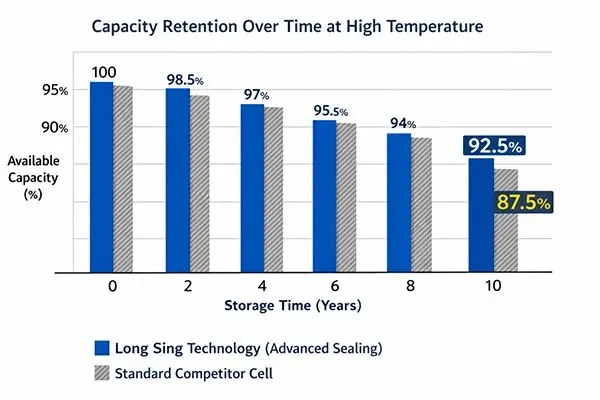
④Final Result
- Predicted field life: 14.8 years
- Annual self-discharge < 0.6%
- Zero failure in 18-month pilot deployment
Failure analysis loop
When a small number of units showed abnormal voltage behavior in the field, the corrective lithium battery OEM process followed a containment-first logic: identify affected lots via traceability, request returned samples, reproduce the event under controlled load, and classify whether the cause was cell behavior, contact resistance, or system integration.
This is where Lithium battery OEM service becomes measurable: an OEM process that can generate a root-cause conclusion, implement corrective action, and prevent recurrence, which procurement expects from OEM Lithium Primary Battery Manufacturers.
7.2 Case 2: Metering automation battery — OEM R&D, lifetime modeling, certifications?
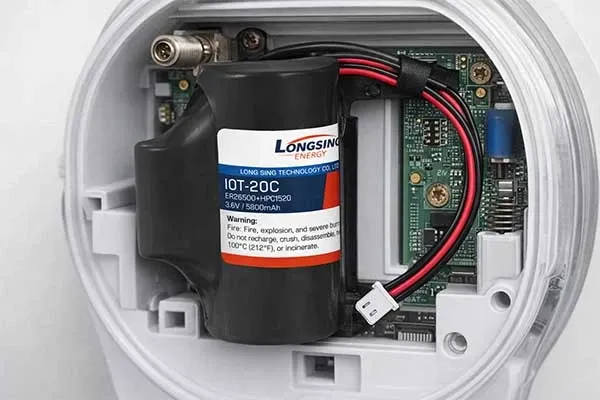 (1) Project Background:
- Country: Japan
- Company Type: Metering Equipment Manufacturer
- Product: Smart Gas Meters
- Solution: 3.6V ER34615 Li-SoCl2 + HPC1520 battery
- Date: June, 2025
- Required: 20-year service life expectation under ultra-low current consumption (<50 µA average)
(2) Production Details:
①Prototype Builds
- Standby current: 1–10 µA.
- Pulse current for data transmission (every 15 minutes): 100–150 mA for 1–2 seconds.
- Total annual consumption: ~10–20 mAh/year for low-power designs.
- Battery: Two ER34615(19Ah) and One HPC1520.
- Initial testing: Discharge at 10 µA for 24 hours to check voltage stability (hold >3.5 V). internal resistance (<100 mΩ).
- Integration with smart gas meter: Mount battery pack in meter housing, connect to NB-IoT module, implement low-power modes (sleep current <5 µA).
- Cost Estimate: $5–15 per pack for 10 Ah capacity.
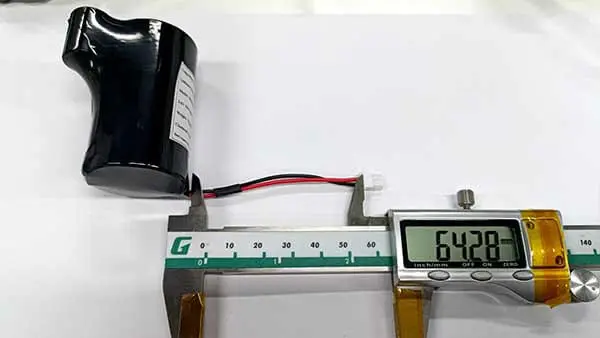
②Validation Procedure at Temperature Corners
- Corners: Low: -40°C (simulates arctic winters); High: +70°C (desert summers); Room: +25°C (baseline).
- Discharge Profiles: Mimic smart meter: Constant low current (10–50 µA) with pulses (150 mA, 1 s every 15 min).
- Loads: 750 Ω (high current, ~4.8 mA), 7.5 kΩ (medium, ~0.48 mA), 750 kΩ (low, ~4.8 µA).
- Duration: Until voltage drops to 2 V (end-of-life).
- Stabilize samples in chamber for 4 hours.
- At -40°C, usable capacity ~80% of nominal, MTBF >10 years for low-drain.
- At 70°C, capacity loss 10–20% after 1000 hours; reliable life decreases with temperature (MTBF peaks at 60°C for high-current, drops at 70°C due to aging).
- Capacity (Ah): >95% at 25°C, 80% at -40°C, 70% at +70°C.
- Voltage Profile: Flat discharge curve (3.6 V plateau) until 85% depleted.
- Failure Rate: Use Weibull analysis; shape parameter β >1 indicates wear-out failures at high temp.
For a Japanese metering automation customer, the program focused on lifetime modeling under intermittent duty and long storage exposure, plus documentation readiness for logistics and customer audits. The deliverable was not only samples, but also a verification package aligned with the customer’s certification expectations and procurement gates.
7.3 What these cases prove
In both cases, the decision criteria matched what experienced teams request from OEM Lithium Primary Battery Manufacturers: proof of process control, test repeatability, and transparent corrective action.
In transactional sourcing, the winning supplier is often the one that can translate requirements into measurable checkpoints. For example, in the U.S. industrial monitoring case, the investigation treated the pack as a system: cell impedance distribution, weld resistance, connector contact resistance, and temperature effects were measured.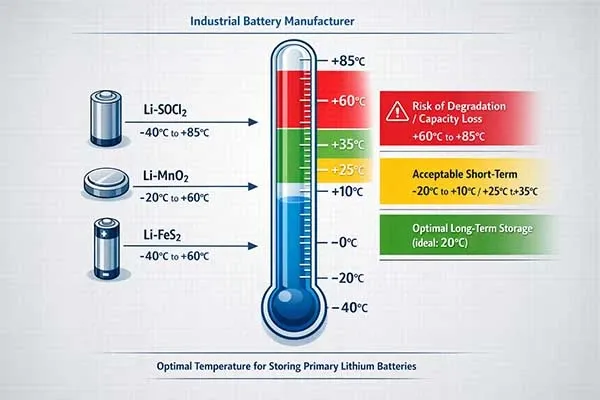
A root-cause hypothesis was then validated by controlled A/B builds and retest. This approach is central to industrial lithium battery solutions because it reduces field uncertainty.
USA case: example failure analysis pathway
The pilot anomaly was approached with a structured method: symptom definition, reproduction, containment, root-cause analysis, corrective action, and verification. Because the architecture used Li-SOCl2, the team also checked storage history and cold-start pulse conditions.
Where pulses were the trigger, a hybrid pulse capacitor pairing and pack resistance controls were treated as critical parameters. This work was executed under a defined Lithium battery OEM service loop rather than informal trial-and-error.
Japan case: OEM R&D flow
The Japanese metering program emphasized predictable life. The lithium battery OEM process followed requirement confirmation → solution design → sampling → testing → mass production, with engineering reviews at each gate.
Lifetime modeling tied current profiles and temperature exposure to expected minimum voltage behavior over time, and the verification package included transport and system documentation expectations such as UN38.3 plus ISO-aligned change control evidence.
This style of engagement is why many customers choose OEM lithium primary battery supplier partners that can co-own the validation plan rather than only ship cells.
| Case | Customer goal | What was built | What was tested | What was proven |
|---|---|---|---|---|
| USA industrial monitoring | Stable cold-start + pulse events | Pack with chemistry + pulse support | Temp corners, pulse droop, pack resistance distribution | Corrective actions verified by retest and lot controls |
| Japan metering automation | Lifetime predictability + audit readiness | OEM co-developed pack design | Profile-based validation + modeling alignment | Qualification package suited to procurement gates |
8. FAQ About Long Sing Technology OEM Manufacturer
Q:What is the MOQ for custom lithium batteries?
A:MOQ depends on chemistry and pack complexity. For Li-SOCl₂ cells and hybrid pulse capacitor packs, pilot runs typically start from several hundred units, while mass production requires higher volumes. Contact Long Sing Technology for project-specific MOQ evaluation.
Q:How long does the OEM development process take?
A:OEM development generally takes 4–8 weeks, including requirement analysis, design validation, prototyping, and reliability testing. Timeline varies depending on certification scope and customization complexity.
Q:What certifications do your batteries have?
A:Our lithium primary and hybrid pulse capacitor batteries comply with UN38.3, IEC standards, RoHS, and other application-specific certifications required for industrial and utility markets.
Q:What payment terms, pricing structure, and volume discounts do you offer?
A:We offer tiered pricing based on annual volume, with standard T/T terms. Long-term OEM projects qualify for volume discounts and framework agreements to ensure stable supply and pricing.
Q:What after-sales support do you offer?
A:Long Sing Technology provides technical consultation, failure analysis reports, root cause investigation, RMA handling, and lifecycle optimization support for industrial clients.
(More FAQ please click to unfold)
Q:What are lithium primary batteries?
A:Lithium primary batteries are non-rechargeable cells using lithium metal anodes. They offer high energy density, long shelf life (up to 10–20 years), and wide operating temperature ranges for industrial IoT and metering.
Q:Who are the top 5 lithium producers?
A:Major lithium producers include companies such as Albemarle, SQM, Ganfeng Lithium, Tianqi Lithium, and Livent, supplying raw lithium materials to global battery manufacturers.
Q:Who is the largest manufacturer of lithium batteries?
A:CATL is widely recognized as the largest lithium-ion battery manufacturer globally, serving EV and energy storage markets with large-scale production capacity.
Q:Do you provide samples for testing?
A:Yes. We provide engineering samples after technical confirmation. Sample cost depends on configuration and is often deductible from bulk orders after project approval.
Q:Do you offer custom battery packs?
A:Yes. We design custom Li-SOCl₂ and hybrid pulse capacitor battery packs including cell assembly, connectors, protection circuits, encapsulation, and special form factors for OEM applications.
Q:What safety certifications and compliance standards do your batteries meet?
A:Our products meet UN38.3 transport safety, IEC 60086 requirements, RoHS compliance, and other regional regulatory standards for industrial deployment.
Q:How do you ensure consistent quality and reliability in production?
A:We implement ISO-certified quality management, incoming material inspection, automated production controls, aging tests, and statistical process control to guarantee batch consistency.
Q:What is your production capacity and lead time?
A:Standard models typically ship within 2–4 weeks. Custom battery packs require 4–8 weeks depending on tooling and validation. Annual capacity supports large-scale OEM and utility projects.
Q:Can you provide references or case studies?
A:Yes. We can share application case studies in smart metering, industrial monitoring, and backup power systems under NDA to protect client confidentiality.
Q:What is your warranty policy?
A:Warranty terms vary by project, typically covering manufacturing defects and specified performance criteria within agreed service life conditions.
Q:How do you handle transportation regulations?
A:We comply with UN38.3 testing, MSDS documentation, and IATA/IMDG transport regulations to ensure safe global shipment of lithium primary batteries.
Q:How environmentally friendly is your production?
A:Our manufacturing follows RoHS directives, optimized material utilization, and supports battery recycling programs to reduce environmental impact and carbon footprint.
Conclusion
Top OEM Lithium Primary Battery Manufacturers like Long Sing Technology for 2026 industrial projects are those that can translate chemistry into verified system performance through documented factory tests, traceability, and a repeatable OEM workflow.
Buyers should start with load-profile-based selection, validate after-storage pulse behavior, and use pack-level engineering to control integration losses. A structured Lithium battery OEM service process, clear documentation, and defined after-sales handling reduce project risk across utility meters, industrial sensors, safety, healthcare, and backup power deployments.
Note:
[3]Batch traceability enables root-cause analysis and warranty confidence across years.↪
[4]Capacity planning evidence helps confirm supplier readiness for long deployments.↪
[5]UN38.3 is critical for cross-border shipping; learn what to look for.↪
[6]Learn about what is lithium thionyl chloride battery and when should you choose them.↪
[8]Describes buffering options to smooth pulses and extend device life.↪
[9]COA matching ensures batch integrity and regulatory compliance.↪
[10]Highlights how early builds enable fast learning and risk reduction.↪
[11]Ensures all tests (pulse, storage, temperature) are planned and traceable.↪
[12]Pilot runs verify process stability before full-scale mass production.↪
[16]PPAP-like docs improve traceability and audit readiness, reducing risk in regulated programs.↪
[18]Compare between lithium primary battery and rechargeable lithium ion battery.↪
[19]SPC monitoring maintains quality control across lots, reducing variability and risk.↪
Keep Reading further on Lithium Primary Batteries
- Lithium Primary Batteries: Types, Performance, and Selection Guide
- Choosing Li-SoCl₂ High Capacity Battery for IoT, Metering, and Monitoring Systems: What Buyers Need to Know
- Key Advantages: Design Considerations for Li-SOCl₂ Military Battery
- Bobbin Type vs Spiral Type Battery Long-Life Applications
- 2026 Procurement Outlook: Navigating Lead Times and Raw Material Trends in Lithium Coin Cell Battery
- CR123A, CR17450, and CR14505 The Ultimate CR Li-MnO2 Cylindrical Battery Comparison
- Survival in -40°C: Li-SOCl2 vs. Li-Po battery for Outdoor Monitoring
- Lithium D Batteries for Industrial Applications: Specifications, Lifespan, and OEM Solutions
- Primary Lithium vs. NiMH Batteries Engineering Trade-Offs for Long-Term Power Applications
- Battery Selection Guide: Primary vs Secondary Lithium Batteries for Industrial Projects?
- Solid state batteries vs lithium metal batteries: Which One Elevates Your Product Performance?

Continuous Monitoring: How to Prevent Battery Failure in Toxic Gas Monitor
Every year, industrial accidents happen because gas detectors fail at critical moments. The root cau

Lithium Metal Batteries for Long-Life Industrial Applications: Design and Performance Insights
Industrial applications devices often work for years without service, yet power failure still causes

Solid State Batteries vs Lithium Metal Batteries: Which One Elevates Your Product Performance?
The battery industry faces a critical challenge. Traditional lithium-ion technology hits performance