

Why Can’t Alkaline Batteries Be Recharged? An Engineering Failure Analysis
Are your devices unexpectedly dying, leaving you wondering if you can just plug the depleted power source into a usb port to revive it?
Discarding single-use cells feels wasteful, leading many to attempt dangerous recharges. However, understanding the chemical permanence inside alkaline batteries prevents catastrophic device damage.
Alkaline batteries cannot be safely recharged because their internal chemical reactions are not designed to reverse.
Attempting to recharge a standard alkaline battery, including a 9 volt alkaline battery or an aa alkaline battery, can cause gas buildup, leakage, or rupture due to internal pressure.
These risks aren't just theoretical. Below, we break down the chemistry, the manufacturing process, and what happens — physically — when someone tries to push current backward into a primary cell.
Table of Contents
- What Are Alkaline Batteries?
- What Happens During Recharge Attempts?
- What Are the Deep Differences Between Alkaline and NiMH Rechargeable Batteries?
- Alkaline Battery Manufacturing: Has Something Changed?
1. What Are Alkaline Batteries?
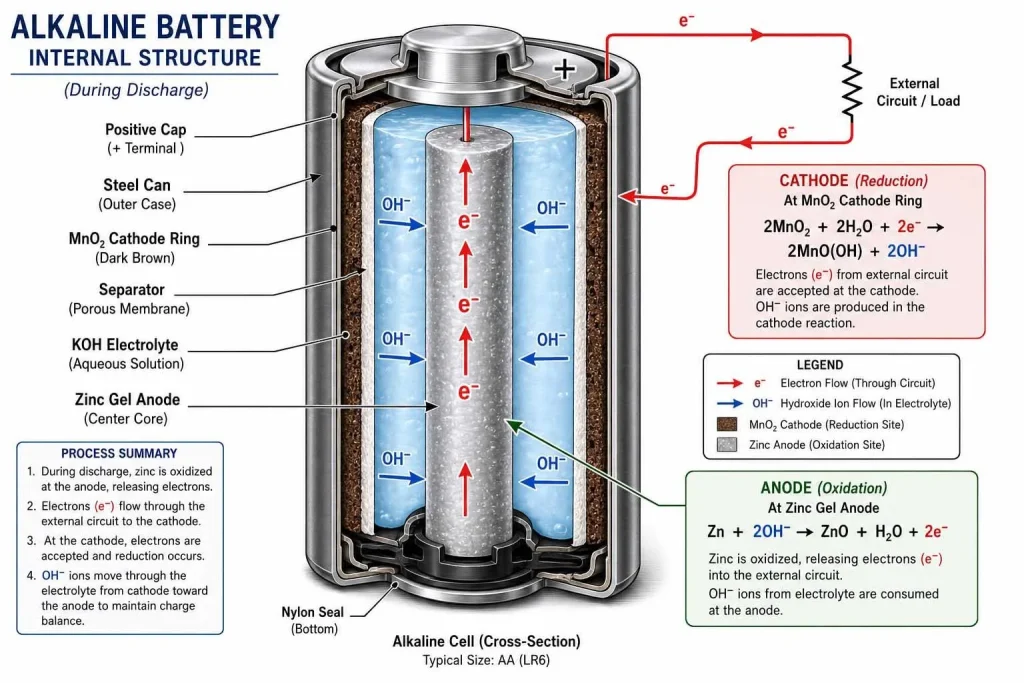
Alkaline batteries are primary (non-rechargeable) batteries that use a zinc anode[1], a manganese dioxide cathode, and a potassium hydroxide alkaline electrolyte to generate electricity through a one-direction chemical reaction.
This chemistry of alkaline batteries produces a stable 1.5V output, common across AA, AAA, C, D, and alkaline battery 12v formats used in everyday electronics.
Battery types alkaline span a wide range of sizes and shapes, and one detail that often gets overlooked is the actual battery size specification. Standard cylindrical alkaline cells follow IEC naming conventions — an AA cell measures roughly 14.5mm in diameter and 50.5mm in height, while an AAA cell is about 10.5mm by 44.5mm.
A 9V alkaline battery, by contrast, isn't cylindrical at all; it's a rectangular stack of six smaller 1.5V cells connected in series inside one casing, measuring approximately 48.5mm x 26.5mm x 17.5mm. An alkaline battery 12v configuration, often used in remote controls or specialty devices, is built the same way — multiple small cells stacked and wired in series to reach the higher voltage.
The reaction inside an alkaline cell involves zinc being oxidized at the anode while manganese dioxide[2] is reduced at the cathode, with hydroxide ions moving through the electrolyte to complete the circuit.
Once the zinc is consumed and converted into zinc oxide, the reaction has nowhere left to go in reverse — this is the core reason alkaline vs lithium comparisons always note that one chemistry is reversible (lithium-ion) and the other is not.
What Are Alkaline Batteries Used For
| Industry | Consumer Electronics | Home & Lifestyle | Healthcare & Personal Care | Education & Office | Industrial & Commercial | Safety & Security | Toys & Entertainment | Outdoor & Recreation |
|---|---|---|---|---|---|---|---|---|
| Application | Portable Electronic Devices | Household Appliances | Medical & Personal Care Devices | Office Equipment & Educational Tools | Industrial Instruments & Maintenance | Emergency & Security Devices | Toys, Gaming & Audio | Camping & Sporting Equipment |
| Product |
TV remote controls
Wireless computer mice
Wireless keyboards
Calculators
Portable radios
Digital clocks
|
Wall clocks
LED candles
Kitchen timers
Soap dispensers
Smart doorbells
Bathroom scales
|
Digital thermometers
Blood pressure monitors
Glucose meters
Hearing assistance devices
Electric toothbrushes
|
Laser pointers
Educational science kits
Portable projectors
Whiteboard accessories
Presentation clickers
|
Handheld test meters
Inspection flashlights
Barcode scanners
Portable measuring tools
Maintenance instruments
|
Smoke detectors
Carbon monoxide detectors
Emergency flashlights
Portable lanterns
Security sensors
|
RC toys
Electronic toys
Game controllers
Portable speakers
Handheld gaming devices
|
Camping lanterns
Headlamps
GPS accessories
Portable weather stations
Fishing electronics
|
Their appeal comes from low upfront cost, wide availability, and a long shelf life when stored at room temperature — often five to ten years before significant capacity loss.
However, for devices with continuous or high-current demands — digital cameras, GPS trackers, or industrial sensors — lithium options often perform better, since lithium primary cells maintain voltage more consistently under load and tolerate temperature extremes far better.
How to Remove Alkaline Battery Corrosion?
When an alkaline battery leaks, it releases potassium hydroxide[3], a corrosive but water-soluble substance.
To safely clean it: put on gloves and eye protection, remove the battery, and dab the white/crusty residue with a cotton swab dipped in a mild acid such as white vinegar[4] or lemon juice (this neutralizes the alkaline residue).
Wipe the compartment dry, check that contacts aren't pitted or broken, and avoid touching the residue with bare skin, as it can cause skin irritation.
2. What Happens During Recharge Attempts
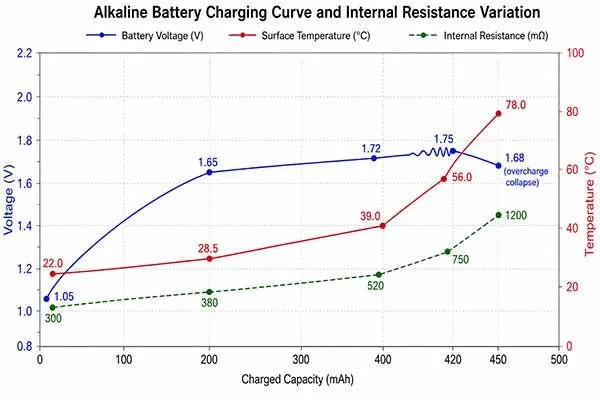
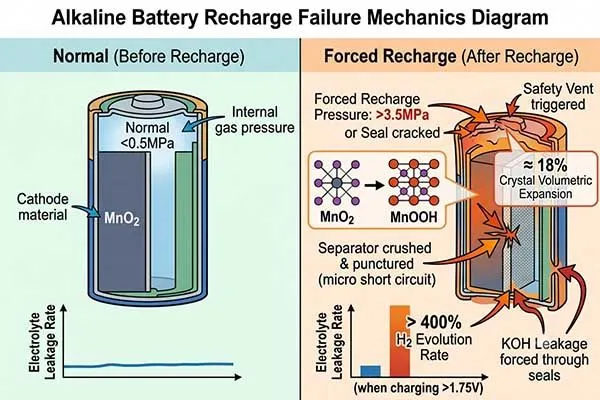
When a standard alkaline battery is placed in a charger, it generally won't explode in the dramatic sense often imagined, but it can swell, leak[5], vent gas, or in rare cases rupture. The risk comes from internal chemical byproducts that have no safe escape route once gas pressure builds beyond the cell's tolerance.
The desire to reuse depleted energy sources often leads well-meaning consumers and amateur technicians to ask, can alkaline batteries be recharged? The definitive engineering answer is no.
Charging a primary alkaline cell forces current in the reverse direction, which the zinc/manganese dioxide system isn't built to absorb. This produces several measurable, interrelated effects rather than a single dramatic failure.
| Recharge Risk | What Happens Internally | Visible/External Sign |
|---|---|---|
| Gas Generation | Reverse current electrolyzes water content in the electrolyte, producing hydrogen gas | Battery feels warm; case may bulge slightly |
| Pressure Build-Up | Hydrogen accumulates inside the sealed casing faster than the safety vent can release it | Swelling, deformation of the cylindrical shape |
| Leakage | Pressure forces electrolyte (potassium hydroxide) past seals | White/crusty residue around the battery terminals |
| Capacity Loss | The reverse reaction doesn’t restore active material to its original state — it degrades it further | Battery dies faster on the next discharge cycle |
| Safety Risks | In worst cases, the vent fails and internal pressure ruptures the casing | Audible hiss, visible rupture, chemical odor |
This is why why doesn't Duracell allow recharging is a frequently searched question — major manufacturers explicitly label their alkaline products "do not recharge" precisely because the failure modes above, while usually minor, are unpredictable across different charger types and cell conditions. An aa alkaline battery left in a charger overnight is far more likely to leak than one that's simply discarded after use.
3. What Are the Deep Differences Between Alkaline and NiMH Rechargeable Batteries?
Alkaline batteries use a zinc-manganese dioxide chemistry built for one-time discharge, while NiMH (nickel-metal hydride) batteries use a nickel oxyhydroxide[6] and hydrogen-absorbing alloy[7] system specifically engineered to absorb and release charge hundreds of times.
The internal electrode materials, separator design, and casing seals differ substantially between the two.
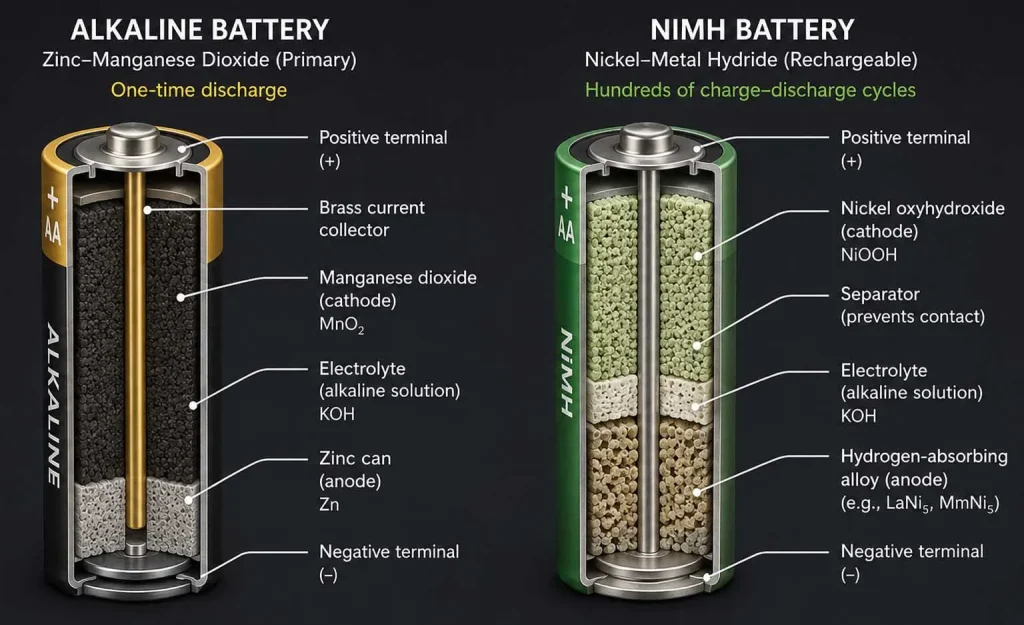
The question of alkaline battery rechargeable status often comes down to electrode reversibility.
In NiMH cells, the metal hydride alloy is designed to absorb hydrogen ions during charging and release them during discharge — a structurally reversible process.
In alkaline cells, the zinc anode physically transforms into zinc oxide, and that transformation isn't reversible at the atomic structure level without specialized equipment that most consumer chargers don't provide.
Comparing Alkaline vs Heavy Duty and Zinc Chemistries
The alkaline vs heavy duty comparison is really a comparison within the same family.
"Heavy duty" batteries[8] are typically zinc-chloride cells — an older, simpler chemistry than alkaline, with lower energy density and a shorter shelf life.
The alkaline vs non alkaline framing usually refers to this same distinction: alkaline cells use potassium hydroxide electrolyte and last longer, while zinc-chloride (sometimes marketed as "heavy duty") cells are cheaper but drain faster under continuous load.
| Attribute | Alkaline | NiMH (Rechargeable) | Zinc-Chloride (Heavy Duty) |
|---|---|---|---|
| Nominal Voltage | 1.5V | 1.2V | 1.5V |
| Rechargeable | No | Yes (typically 500+ cycles) | No |
| Shelf Life | 5-10 years | Self-discharges faster, ~1 year on shelf | 2-3 years |
| Best Use Case | Low-drain, long-storage devices | High-drain devices used frequently | Low-cost, light-duty applications |
| Cost per Use | Higher long-term if used often | Lower long-term despite higher upfront cost | Lowest upfront cost |
An alkaline vs zinc battery comparison highlights that "zinc" alone (zinc-carbon) sits below both alkaline and zinc-chloride in performance, while alkaline remains the more chemically refined and longer-lasting of the primary, non-rechargeable options.
For applications needing repeated cycling, NiMH remains the practical choice, but for devices that sit unused for months — like emergency flashlights — alkaline's shelf-stable chemistry still has an edge.
4. Alkaline Battery Manufacturing: Has Something Changed?
Yes — over the past two decades, alkaline battery manufacturing has shifted toward mercury-free formulations[9], improved seal designs to reduce leakage, and higher-purity zinc powders to extend shelf life. These changes improve safety and longevity but do not make the chemistry reversible.
How Are Alkaline Batteries Made?
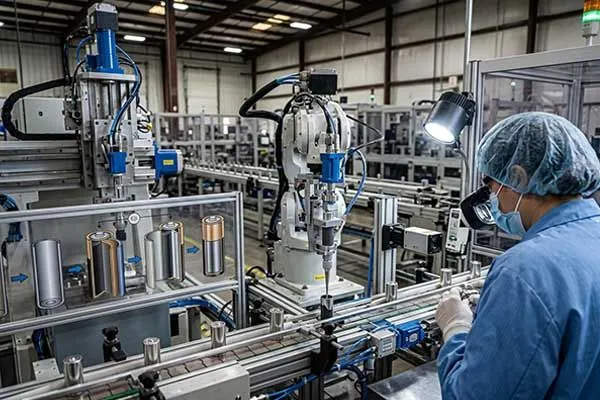
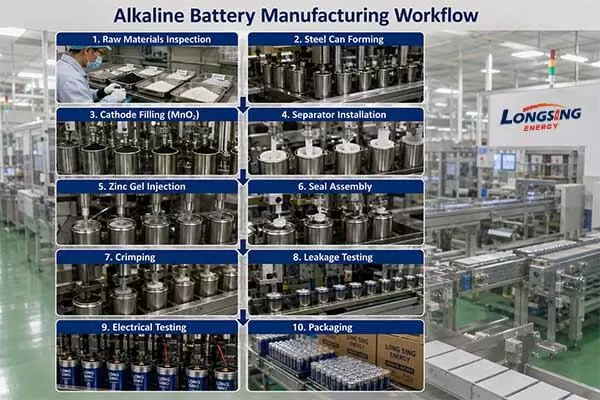
Manufacturing an alkaline cell starts with preparing the cathode mix — manganese dioxide blended with carbon for conductivity — which is pressed into rings and inserted into a steel can.
A separator soaked in potassium hydroxide electrolyte is placed inside this ring, followed by a zinc powder anode gel in the center. The cell is then sealed with a nylon or polymer gasket, and a current collector pin connects the anode to the negative terminal.
When designing these cells, manufacturers consider several interacting factors: the ratio of zinc to manganese dioxide (which determines capacity), the seal's resistance to internal gas pressure (which determines leak resistance over years of storage), the purity of raw materials (which affects self-discharge rate), and the vent mechanism[10]'s trigger threshold (which determines whether the cell vents safely or ruptures under abuse, including reverse-charging).
For applications where rechargeability, extreme temperature tolerance, or multi-year unattended operation matters more than low upfront cost, engineering teams often look beyond alkaline chemistry entirely.
This is where working with an OEM lithium primary battery supplier like Long Sing Technology becomes relevant — particularly for industrial metering, safety devices, and backup power applications where battery failure has operational consequences.
Case Study: Longer Lifespan Alkaline Batteries Solution
One illustrative case involved a UK-based smoke detector manufacturer that approached Long Sing Technology earlier this year. Their existing devices suffered from shorter-than-expected battery life and a tendency toward false alarms, which their engineering team traced back to voltage instability under the device's pulsed alarm current draw.
Long Sing's chief engineer, Wilson Lu, led the technical evaluation. The team established three core test targets based on the device's power profile: an average standby power consumption below 15 µW, a peak current draw during alarm activation under 100 mA, and a target operational lifespan of three years under typical residential conditions.
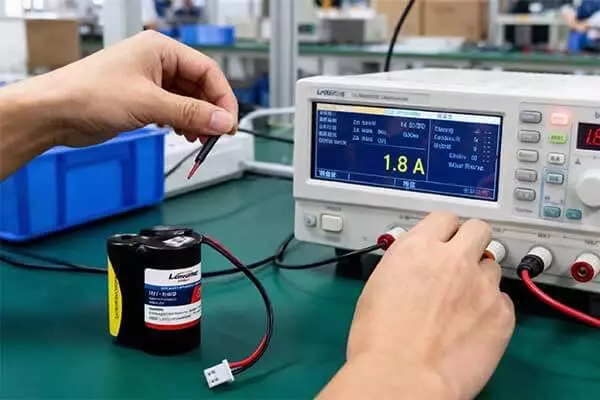
To validate against these targets, the lab ran a full-device power consumption test, cycling the smoke detector through standby and alarm states while logging current draw on an oscilloscope to confirm the 15 µW standby figure and the 100 mA peak held across temperature variations from -20°C to 60°C.
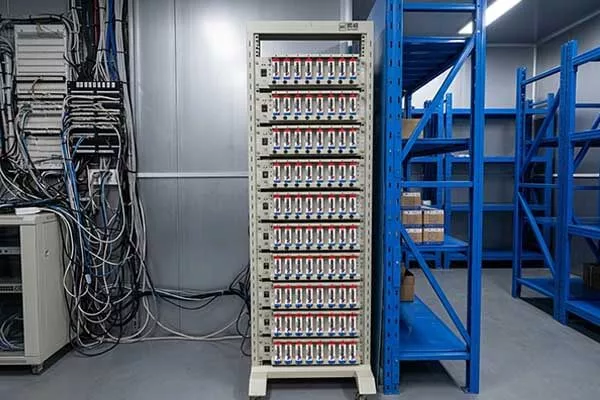
Capacity verification followed a Capacity Retention Test protocol, discharging sample cells under a pulsed load profile matching the detector's real-world alarm pattern rather than a flat constant-current discharge, since pulsed loads reveal voltage sag issues that steady discharge curves miss.
A Leakage Test assessed seal integrity under pressure and temperature cycling, while a High Temperature Test held cells at elevated temperatures for extended periods to accelerate any latent seal or separator degradation. Shelf Life Validation projected long-term capacity retention by combining accelerated aging data with the standby power draw figures gathered earlier.
When early samples showed marginal voltage sag during the alarm's peak current pulse — close to but not within the manufacturer's tolerance — the team conducted a failure analysis: disassembling tested cells, inspecting the separator and electrode interface for resistance changes, and comparing internal impedance measurements before and after pulsed cycling.
This identified that the issue stemmed from a sample batch's separator thickness variance, not the core electrochemistry, and a tighter separator tolerance specification resolved it in the next sample round.
After the revised samples passed the full Capacity Retention Test, Leakage Test, High Temperature Test, and Shelf Life Validation sequence, sales manager Luke Liu finalized an order for 10,000 alkaline battery units for the smoke detector application — sized appropriately given the device's actual low standby draw and pulsed (not continuous) high-current profile.
This kind of testing sequence — power profiling, pulsed-load capacity verification, environmental stress testing, and failure analysis when results land near tolerance — illustrates why companies like Long Sing Technology, recognized with an R&D 100 Award in 2022, are approached for battery validation work even on requests involving standard alkaline cells rather than only specialty lithium chemistries.
Conclusion
Alkaline batteries can't be recharged because their zinc-manganese dioxide reaction isn't reversible — forcing current backward causes gas buildup, leakage, or rupture rather than restored capacity.NiMH batteries use a different, reversible chemistry built for repeated cycling.
Manufacturing improvements have made alkaline cells safer and longer-lasting, but the fundamental one-way chemistry remains unchanged, which is why "do not recharge" warnings exist.
FAQ about Alkaline Batteries
(Click to Unfold)
Q:How to revive a dead alkaline battery?
A:You cannot safely revive a dead alkaline battery. Unlike secondary lithium-ion cells, alkaline batteries are primary (non-rechargeable) chemistries. Attempting to recharge them in a charger can cause chemical leakage, overheating, or rupture. Once depleted, they must be recycled responsibly.
Q:Is an alkaline battery the same as a regular battery?
A:It depends on what you mean by “regular.” Historically, “regular” referred to cheap zinc-carbon batteries. Alkaline batteries deliver higher energy density and a longer shelf life than zinc-carbon. However, in modern industrial IoT, lithium chemistries like Li-SOCl2 are now the standard for long-term reliability.
Q:When should you not use alkaline batteries?
A:Avoid alkaline batteries in extreme temperatures, high-drain pulse devices, or sealed, long-term deployments like utility meters. They suffer from high self-discharge and risk leaking corrosive potassium hydroxide, which can destroy sensitive electronic circuits over time.
Q:Are alkaline or lithium batteries better?
A:Lithium batteries are vastly superior for industrial, wide-temperature, and long-life applications. Primary lithium chemistries offer double the voltage, much higher energy density, and minimal self-discharge. Alkaline batteries are only preferred for low-cost, low-drain consumer devices where initial purchase price is the primary constraint.
Q:Why are alkaline batteries used?
A:Alkaline batteries are widely used because they are inexpensive, readily available, safe to transport, and perfectly adequate for household devices with low power demands, such as TV remotes, wall clocks, and basic flashlights.
Q:Is there any difference in alkaline batteries on the market?
A:Yes. Differences exist in structural sealing quality, purity of materials, and active chemical ratios. Premium brands offer better leak protection and slightly higher capacities for high-drain devices, but the fundamental chemistry and nominal 1.5V voltage remain identical across brands.
Note:
[1]Explore how zinc functions as the active anode material in alkaline batteries.↪
[2]Understand the electrochemical role of MnO₂ in alkaline battery discharge reactions.↪
[3]Discover why KOH electrolyte enables high conductivity in alkaline cells.↪
[4]Follow a proven method for neutralizing alkaline battery residue.↪
[5]Learn the root causes of alkaline battery leakage and corrosion.↪
[6]Learn how nickel-based electrodes support reversible charging.↪
[7]Discover the role of hydrogen storage alloys in NiMH cells.↪
[8]Compare battery performance across common primary chemistries.↪
[9]Learn how modern alkaline batteries eliminated mercury while improving safety.↪
[10]Understand how venting systems prevent catastrophic cell failure.↪

How to achieve 10 year battery smoke detector under Ultra-low self-Discharge and high reliability
A 10 year battery smoke detector is designed to lose only a minimal amount of energy over time, ensu
Bobbin Type vs Spiral Type Lithium Primary Batteries: Which Design Is Better for Long-Life Applications
Bobbin Type vs Spiral Type lithium primary batteries represent two fundamentally different internal

Solid State Batteries vs Lithium Metal Batteries: Elevates Product Performance
The battery industry faces a critical challenge. Traditional lithium-ion technology hits performance